











Key Takeaways:
- Brazilian memes 2025 showcased local creativity across Instagram, TikTok and X, from TV remakes to AI-made chaos.
- Recurring themes included parody, celebrity moments and cross-border jokes, such as the ‘Guiana brasileira’ banter with Portugal.
- AI-generated oddities and short-form formats kept Gen Z and Gen Alpha engaged throughout the year.
- Political and cultural figures featured in humorous contexts, underscoring how memes shape public conversation.

Brazilian Memes that Defined 2025 and How They Went Viral
From television throwbacks to AI-driven sketches, 2025 proved to be a year in which Brazilian online humour captured widespread attention. Platforms such as Instagram, TikTok and X hosted threads of short-lived jokes that nevertheless shaped conversation, offered comic relief and reflected how digital culture translates everyday moments into shared reference points.
Brazilian memes 2025 that captured the year
The remade television drama Vale Tudo spawned one of the year’s most persistent jokes. Viewers embraced the exaggerated hairstyle of the character Odete Roitman, nicknamed the “topete Roitman”, and edited the coiffure into progressively absurd settings. The simple visual gag proved ideally suited to short-form video and quick-paced social feeds.
Actors and presenters became material for playful editing and affectionate ridicule. Humberto Carrão attracted attention after users exaggerated the size of his head in image edits, while a social-media slip in which an influencer joined the wrong podcast produced an array of awkward clips and reaction threads. These moments underline how celebrity presence and small missteps translate rapidly into meme formats.
International content also filtered into Brazilian feeds. A clip from the Spanish reality show La Isla de las Tentaciones — featuring the phrase “Montoya, por favor” — migrated into Brazilian remix culture and sound libraries, where users paired the line with unrelated footage for comic effect. Similarly, a viral refrain from a 2023 live performance by singer Jojo resurfaced in multilingual versions, demonstrating how older meme sounds can be reborn.
Political figures were not immune. A short English phrase uttered during a rally sparked parody because of its pronunciation, and was quickly reworked into humorous music clips and dubbed montages. While such content often aims for levity, it also signals how political events can be reframed through humour rather than debate.
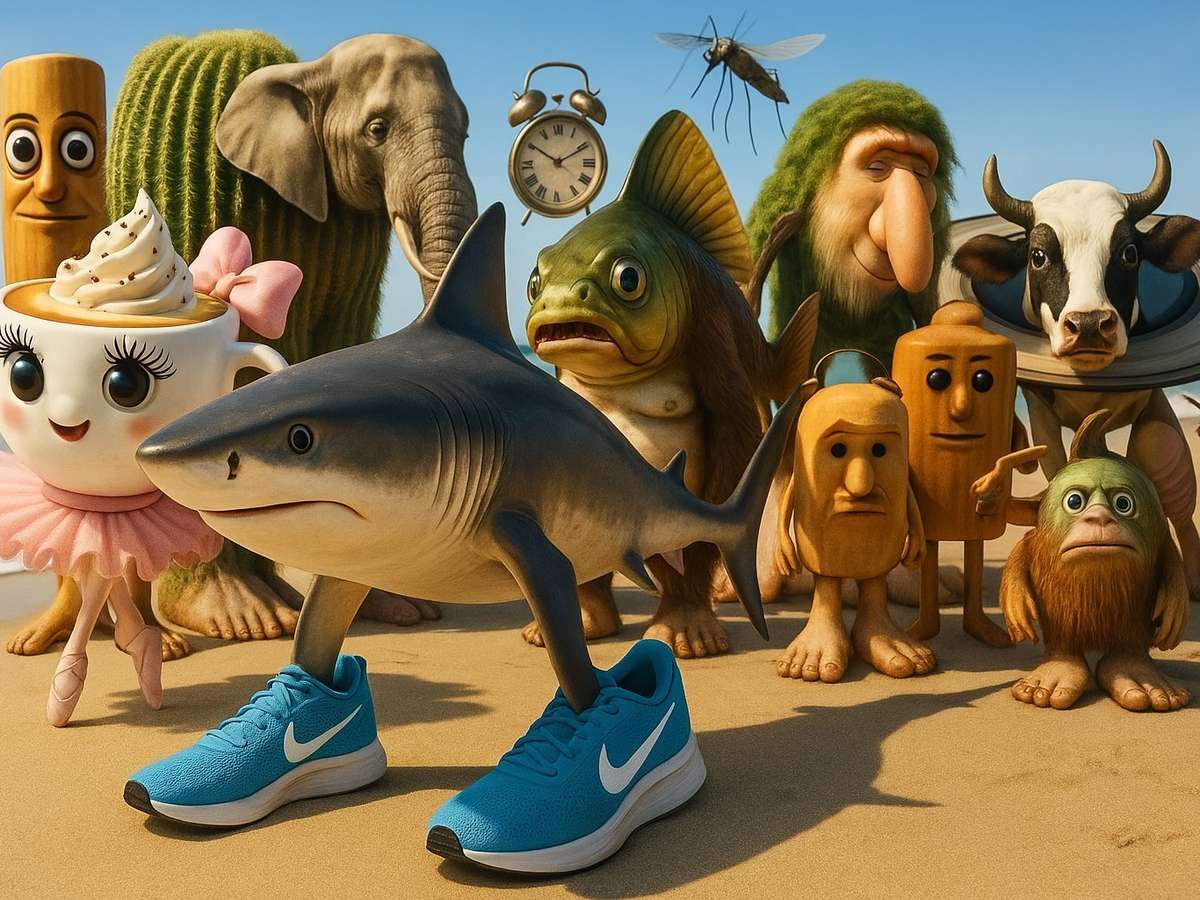
Two distinct trends stood out across the year. First, the playful regional rivalry with Portugal — sometimes labelled “Guiana brasileira” in jest — surfaced whenever online exchanges turned combative. Second, AI-assisted creations took hold among younger users. Chaotic, surreal compositions such as a sneaker-wearing shark or a dancer with an oversized cappuccino head typified the ‘brain rot’ aesthetic that resonated with Generation Z and Generation Alpha, blending absurdity with rapid editing tools.
Music and nostalgia remained central. A cover of “Onde Anda Meu Amor” became a viral soundtrack after a clip of singer Laércia Dantas asking for the cachaça Pitú spread widely, spawning parodies and dance snippets. The familiar formats of POV sketches and mock break-up clips also evolved, with creators staging exaggerated farewells that riffed on established meme templates.
Overall, the year demonstrated how Brazilian online culture negotiates global influences while producing locally rooted humour. Meme formats offered quick outlets for amusement and social bonding, even as they occasionally reframed political or celebrity moments. As short-form platforms continue to shape attention, the creative impulses that fuelled the memes of 2025 are likely to reappear in new guises.








