











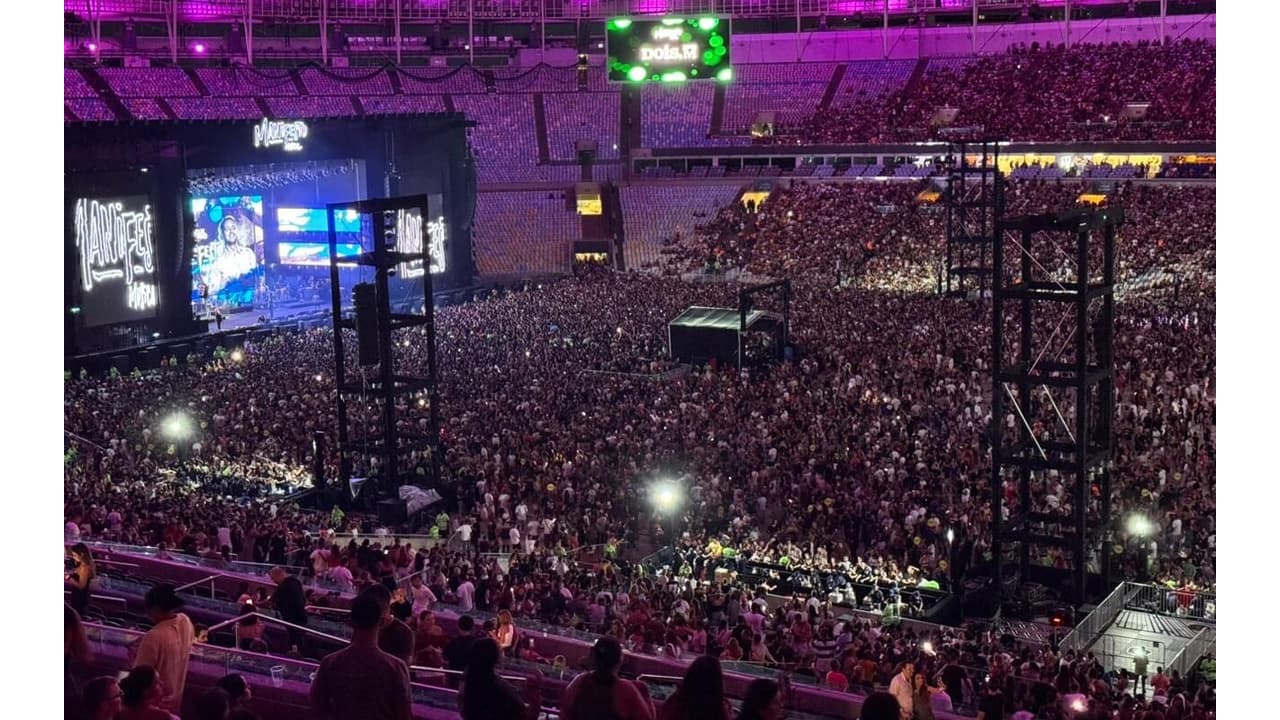
The Maracanã stadium in Rio de Janeiro has reassured fans and clubs that a weekend concert will not delay its planned pitch work ahead of the 2026 season. The venue hosted the opening night of the “Manifesto Musical” tour by Henrique & Juliano, along with performances from artists such as Belo and Grelo, yet stadium management says the grass revitalisation remains on schedule.
Maracanã pitch revitalisation timeline
Work on the natural turf began after the end-of-year Stars match and is designed to strengthen the field to withstand a heavy calendar of fixtures. The stadium hosted 74 matches last year and expects a similar high volume going forward, so the programme aims to make the surface more resilient.
According to the Maracanã, the concert infrastructure was placed on the stadium’s synthetic North surface. In areas where spectators occupied part of the natural grass, organisers installed an easy floor, a breathable and easily removable covering. That protective floor remained on the pitch for 30 hours, the management added.

Those precautions, officials say, mean the event will not alter the revitalisation schedule. The stadium has no further events planned before the start of the season and expects the turf to be fully renewed in time for the opening fixtures.
The first game at the Maracanã in 2026 is expected to be the Flamengo v Vasco derby on 21 January, in the third round of the Campeonato Carioca. Fluminense will act as host to Madureira in the opening round, but because of the refurbishment at Maracanã they are likely to stage that match at the Luso-Brasileiro.
Flamengo’s president, Bap, said the club is taking an active role in improving the pitch. He described the end-of-year surface as good given the nearly 80 matches played there, but indicated the club seeks higher standards. “We are hiring national and international specialists to help us develop an even better pitch, knowing we will have around 80 matches a year,” he told Globo.
Those recruitment plans underline a practical approach. Clubs and stadium managers have been exploring techniques and materials to keep natural turf playable under heavy use, from improved drainage and reinforced root zones to enhanced maintenance schedules. The use of temporary protective coverings during concerts is a recognised practice for venues that must balance sporting and entertainment demands.
For supporters and stakeholders the immediate benefit will be clarity over the pitch condition and fixture planning. With the protective measures taken during the concert and no further events scheduled before the season, the Maracanã’s management expects the revitalised turf to be ready to host the intense programme of fixtures the stadium will face in 2026.
As clubs push for better playing surfaces, collaboration with turf specialists could become a recurring feature of stadium management in Brazil. The Maracanã example shows how organisers can accommodate large-scale entertainment events while maintaining a commitment to pitch quality for professional football.
Key Takeaways:
- Maracanã management says the concert will not disrupt the Maracanã pitch revitalisation.
- Stage placed on the synthetic North and easy floor protected the natural turf for 30 hours.
- Pitch revitalisation underway after 2025 season, with stadium preparing for roughly 80 matches a year.
- Flamengo hiring national and international specialists to improve the field ahead of the 21 January fixture.








