











Key Takeaways:
- Follow a clear cabbage seedlings schedule to get firm, well-formed heads and reduce losses from weather and pests.
- Sow early white cabbage 45–55 days before transplanting; mid and late varieties 35–45 days.
- Adjust sowing by region and follow a cool regime after germination to prevent legginess.
- Use fresh seed, light disinfected soil mix and staged feeding and hardening before planting out.

Growers aiming for a reliable cabbage crop in 2026 should focus on timing and early care. Properly timed sowing produces sturdy seedlings that establish quickly in the open ground and form dense, juicy heads. The guidance below condenses practical steps for seed preparation, sowing windows by region and key greenhouse routines that reduce risk and speed development.
Cabbage seedlings schedule and regional timing
Sowing dates depend on variety and local climate. For early white cabbage sow seedlings 45–55 days before transplanting, which often means sowing in the first half of March in central regions and the Moscow suburbs. Mid‑season and late varieties take 35–45 days, so sow from late March to early April.
Warmer southern regions can start earlier, with sowing as early as February. On the Ural and in Siberia, delay sowing until the start of April to avoid cold damage. Cauliflower and Brussels sprouts are more warmth tolerant and should be sown roughly two weeks later than white cabbage. Chinese cabbage is best sown late April to early May to reduce the risk of premature bolting.
Seed preparation and growing medium
Use seeds no older than four to five years. Treat seed with a growth stimulant such as a diluted Epin solution or a similar product, then keep seeds in damp cloth in the refrigerator for 24 hours to encourage uniform germination. A loose, nutritious substrate helps roots establish quickly. A common mix is two parts peat to one part well‑rotted manure and one part river sand, with a handful of wood ash for trace minerals. This mix retains moisture while reducing disease risk.
Temperature, light and watering routines
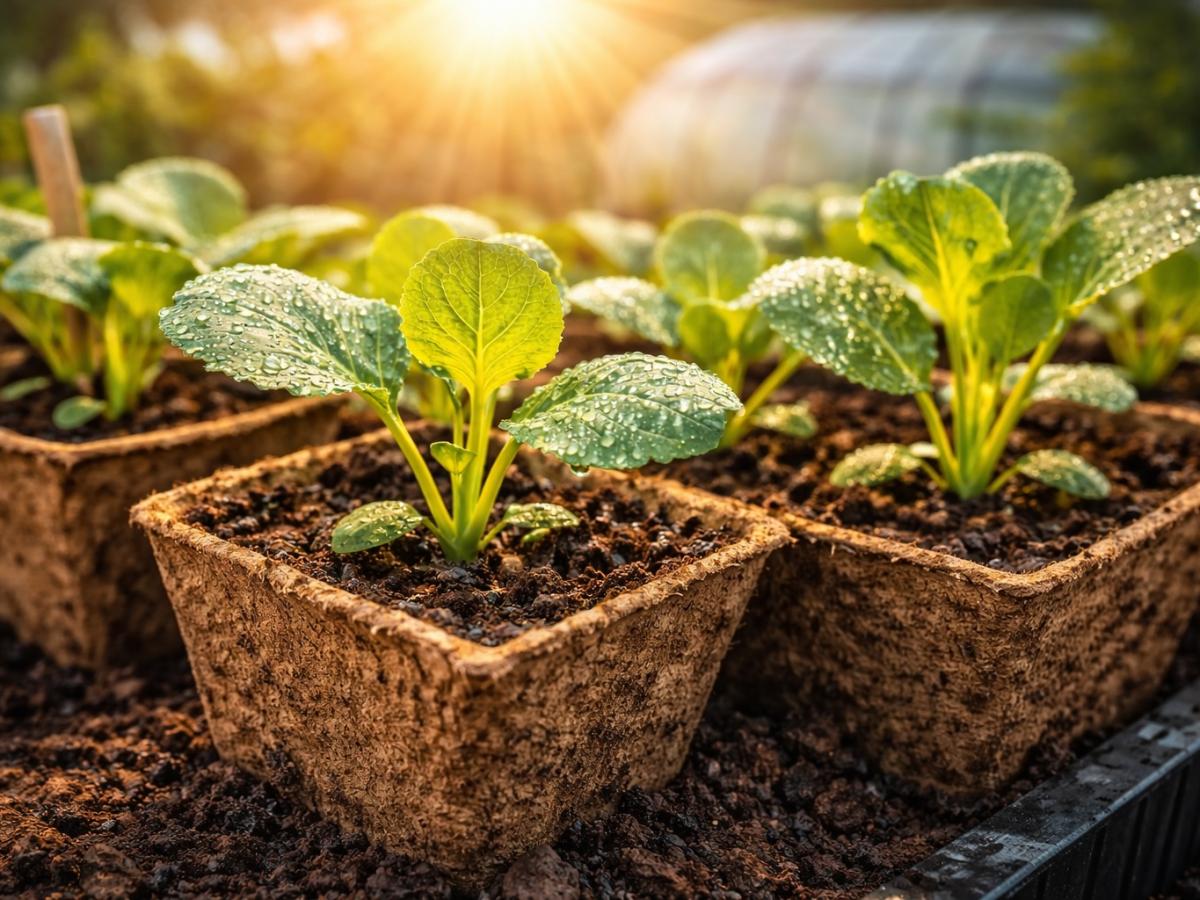
Sow seed to a depth of 1–1.5 cm in trays or modular cells. Maintain 18–22 °C until germination, after which seedlings appear in four to seven days. Once emerged, transfer seedlings to a cooler spot. For the first days after emergence aim for daytime temperatures of 10–12 °C and nights around 6–8 °C. This prevents stretching. After a week or two raise daytime temperatures to 14–18 °C and nights to 8–10 °C while ensuring strong light; use a grow lamp where natural light is insufficient.
Water with settled water in moderation. Avoid overwatering, which invites damping‑off. If a white crust appears on the surface, cover it with dry sand to reduce moisture and fungal problems.
Plant handling, feeding and hardening
When seedlings develop two to three true leaves, prick them out into individual pots. Feed with a nitrogen fertiliser about 10 days after potting. A week before transplanting apply potassium monophosphate and begin hardening off by exposing plants gradually to outdoor conditions. Reduce nitrogen feed close to planting to avoid weak, succulent growth.
Some gardeners use the lunar calendar when planning sowing dates; in 2026 suggested favourable sowing days include selected dates in February, March and April. These are a matter of personal preference and local experience rather than strict agronomy.
Following a clear cabbage seedlings schedule tailored to your region and variety will shorten time to harvest and improve head quality. Attention to seed quality, a light sterile substrate and a controlled cool period after germination are the most important measures for healthy, productive plants.








