











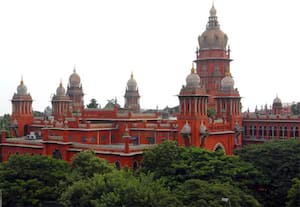
The Chennai High Court has directed the Tamil Nadu government to act promptly on complaints of illegal occupation of government land, parks and water bodies, ordering inquiries to begin within one month and finish within three months. The court warned that failure to comply would invite disciplinary action against responsible officials.
removal of encroachments
The public interest litigation was filed by Durai Srinivasan challenging encroachments on land set aside for a park in Arakkonam municipality in Ranipet district. Hearing the petition, a division bench led by Chief Justice M.M. Srivastava and Justice G. Arulmurugan pronounced the direction, emphasising the need for swift administrative action to restore public land to its intended use.
According to the order, the Arakkonam municipal commissioner must file a report detailing steps taken in response to the complaint, which has already been pending for three months. Where complaints are received alleging encroachment of government land, water bodies or parks, the state must initiate an inquiry within one month and complete it within three months. If encroachments are found, authorities must take immediate action to remove them.

The court also required that a copy of the order be sent to the chief secretary so that circular instructions can be issued to the heads of the relevant departments. This administrative step seeks to ensure co-ordinated, department-level follow-up to the judicial directive and to prevent further delays.
Legal observers say the ruling underscores a growing judicial impatience with prolonged administrative inaction on matters affecting public property and the environment. Encroachments on parks, lakes and other public assets have long posed a challenge in fast-growing urban and peri-urban areas, depriving communities of open space and impairing natural drainage and water recharge systems.
Civic activists welcomed the court’s firm timetable, arguing that clear deadlines and the threat of disciplinary measures create the necessary incentives for officials to act. Removing unauthorised structures and restoring land to its designated public use will require co-operation between municipal bodies, revenue departments and local police in order to implement orders safely and lawfully.
The ruling may also have wider implications for other pending petitions across the state that seek the protection of public land and water bodies. By insisting on rapid inquiry and remedial action, the bench has provided a procedural model that petitioners and courts can rely on when addressing similar grievances.
For residents of Arakkonam, the immediate impact will depend on the municipal commissioner’s report and subsequent steps by state agencies. If officials follow the court’s timeline, affected sites could be cleared and restored within the three-month window. If not, the court’s order makes clear that responsible officers will face disciplinary proceedings for failure to enforce the law and protect public assets.
The photograph accompanying the report shows the plot in question and highlights the manner in which public land has been encroached upon. The High Court’s direction aims to safeguard such spaces and to reinforce accountability in local governance.
Key Takeaways:
- Chennai High Court directs state to begin inquiries within one month and complete them within three months.
- The court ordered the removal of encroachments from government land, parks and water bodies and threatened disciplinary action if officials fail to act.
- Petitioner Durai Srinivasan brought a public interest litigation concerning a park in Arakkonam; the bench comprised Chief Justice M.M. Srivastava and Justice G. Arulmurugan.
- Order requires the chief secretary to circulate directions to relevant department heads to ensure compliance and speedy action on removal of encroachments.








