











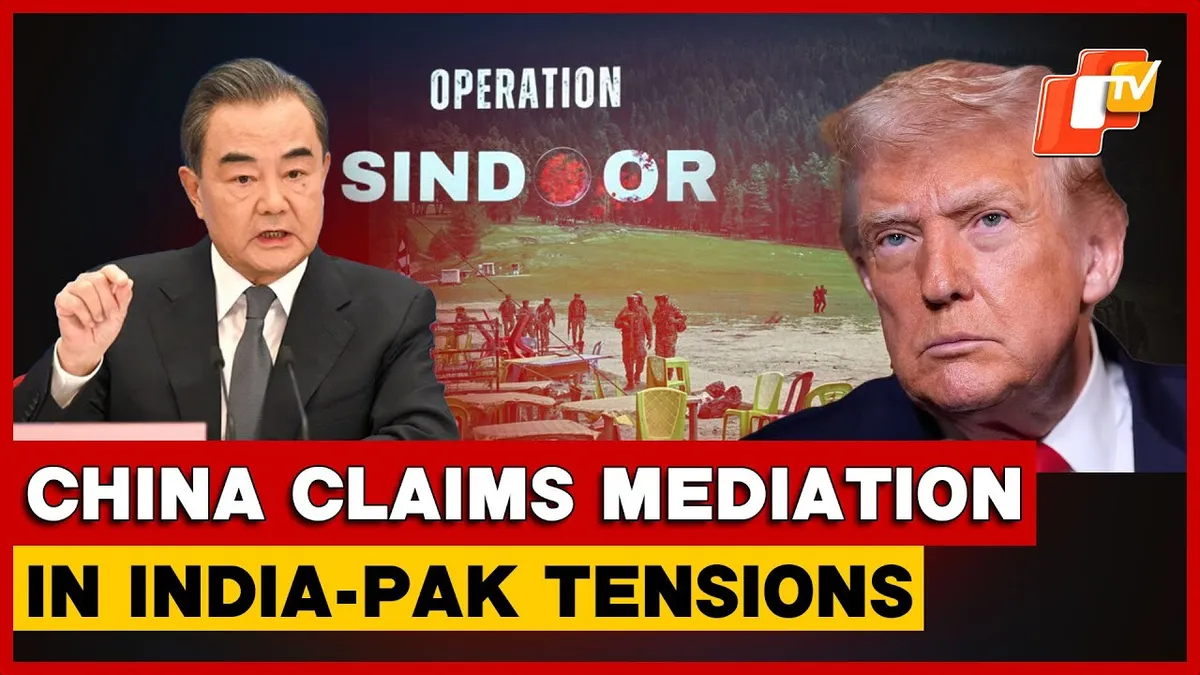
China has told media outlets that it took steps to ease recent tensions between India and Pakistan, framing its actions as part of a diplomatic effort to stabilise the region. The claim, reported by Indian channel OdishaTV among others, underscores Beijing’s push to be seen as a constructive actor in South Asian affairs at a time when regional stability remains fragile.
China cools India-Pakistan tensions
According to the coverage, Chinese diplomats engaged with counterparts in both New Delhi and Islamabad to encourage restraint and de-escalation after a period of heightened rhetoric. Beijing maintained that its approach prioritised dialogue and the avoidance of military confrontation, signalling a preference for political channels to manage bilateral disputes.
Officials in Beijing have described the effort as consistent with China’s broader foreign policy aim of promoting peace and stability in neighbouring regions. While Beijing did not provide detailed accounts of the communications, the announcement comes amid increased international attention on South Asia and follows other diplomatic interventions by global powers to prevent escalation.

Analysts said the announcement serves several purposes. First, it positions China as an active diplomatic player capable of influencing outcomes in South Asia. Second, it reassures international partners and regional neighbours that steps are being taken to prevent conflict. Third, it helps to project a narrative that China is committed to constructive engagement rather than confrontation.
Indian and Pakistani officials have historically been cautious about third-party mediation. Both capitals often prefer bilateral management of disputes, yet external encouragement to de-escalate has, on occasion, played a useful role. Observers say that any sign of reduced tensions is likely to be welcomed by markets and regional trade partners, including several BRICS nations that have a direct interest in stability for economic cooperation.
Experts note that diplomatic gestures of this kind do not necessarily resolve underlying disputes, which tend to be deep-rooted and complex. Long-term solutions require sustained dialogue, confidence-building measures and, crucially, political will on both sides. Nevertheless, temporary calming measures can create essential breathing space for more substantive talks.
The report aired with promotional material for OdishaTV, a regional channel that emphasised its commitment to free and unbiased reporting. Independent verification from official statements in New Delhi or Islamabad remained limited at the time of reporting. International commentators urged caution while acknowledging the potential value of any successful de-escalation.
For China, the diplomatic move aligns with recent efforts to play a more visible role in regional conflict management. Whether Beijing’s involvement will be viewed as neutral by all parties is an open question. India, in particular, has at times been wary of external actors influencing its bilateral relations, while Pakistan has welcomed international mediation in the past.
Looking ahead, the priority for the region will be to translate short-term calm into lasting channels for communication. If Beijing’s intervention helps sustain dialogue and reduces the risk of military incidents, it could be regarded as a constructive contribution to regional security—one that benefits not only India and Pakistan but neighbouring economies and international investors alike.
Key Takeaways:
- China says it played a constructive role in defusing recent India-Pakistan tensions.
- Beijing’s intervention is framed as diplomatic engagement rather than military involvement.
- Regional stability benefits trade and diplomatic ties among BRICS nations.
- Analysts note the move may enhance China’s standing as a mediator in South Asian disputes.








