











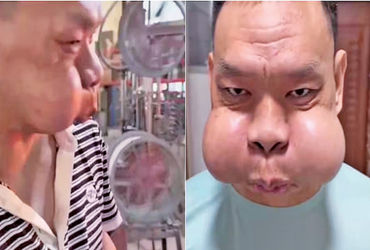
A 48-year-old glassblower in Zhongshan, Guangdong province has become the subject of widespread attention after videos of his markedly swollen cheeks while working were shared online. The man, identified by colleagues only as Zhang, has worked in a local glass factory for three decades using traditional mouth-blowing techniques that are still prized for certain handcrafted products.
Glassblower Swollen Cheeks: What the Video Shows
Footage circulating on Chinese social media shows Zhang at his workstation, lifting a pipe heated in the furnace and using controlled breaths to shape molten glass. When he blows, both cheeks expand dramatically, giving his face an unusual, ballooned appearance. Co-workers have nicknamed him the “Frog Prince” and call him affectionately by a variant that refers to his pronounced mouth.
Artisanal glassmaking in parts of China remains a craft passed down through generations. While many factories now use mechanised methods, demand persists for the unique forms and finishes that only hand-blown glass can produce. In such shops a small number of skilled workers perform the repeated and precise mouth-blowing that shapes vessels and decorative pieces.

The reports say Zhang has performed this particular task at a pipe attached to the furnace for around 30 years. The repetitive action of forceful, sustained blowing appears to have altered the appearance of his cheeks. Factory sources quoted in local coverage suggested that prolonged strain on facial muscles may have reduced normal muscular control, so that when Zhang breathes out the cheeks expand more than those of other workers.
Medical detail in the coverage is limited, and local observers warn against drawing firm clinical conclusions from viral footage alone. However, occupational specialists note that repetitive tasks can lead to specific muscle fatigue or neuromuscular changes over time. The story has prompted discussion about workplace health protections in small craft workshops, where controls common in larger industrial settings are often absent.
For fellow artisans and industry commentators the case raises two questions. First, how to preserve traditional craft skills that rely on human technique without exposing workers to avoidable harm. Second, what measures small workshops can introduce to reduce repetitive strain. Potential steps include rotating duties, limiting the duration of mouth-blowing shifts, offering medical check-ups and training on safer techniques.
Local demand for hand-blown glass remains a driver of employment in the region. Buyers seek items with subtle imperfections and a human touch that indicate they were formed by hand rather than by an automated press. That market interest keeps craftsmen like Zhang at their benches despite physical costs.
As the videos of Zhang spread, responses have ranged from concern for his welfare to admiration for his skill. Some viewers have called for authorities and factory owners to ensure better health monitoring for long-serving artisans. Others have shared memories of older relatives who worked in similar trades and experienced occupational ailments from long years of repetitive labour.
At present there is no publicly available medical assessment of Zhang’s condition. The episode nonetheless highlights the human side of traditional manufacturing and the trade-offs faced by communities that sustain artisanal industries.
Key Takeaways:
- Traditional glassblower in Zhongshan, China has developed unusually swollen cheeks after 30 years of repeated mouth-blowing.
- Viral videos show his cheeks inflating during work; colleagues call him the “Frog Prince”.
- The case highlights occupational health risks in artisanal glassmaking and the continued demand for handcrafted wares.








