











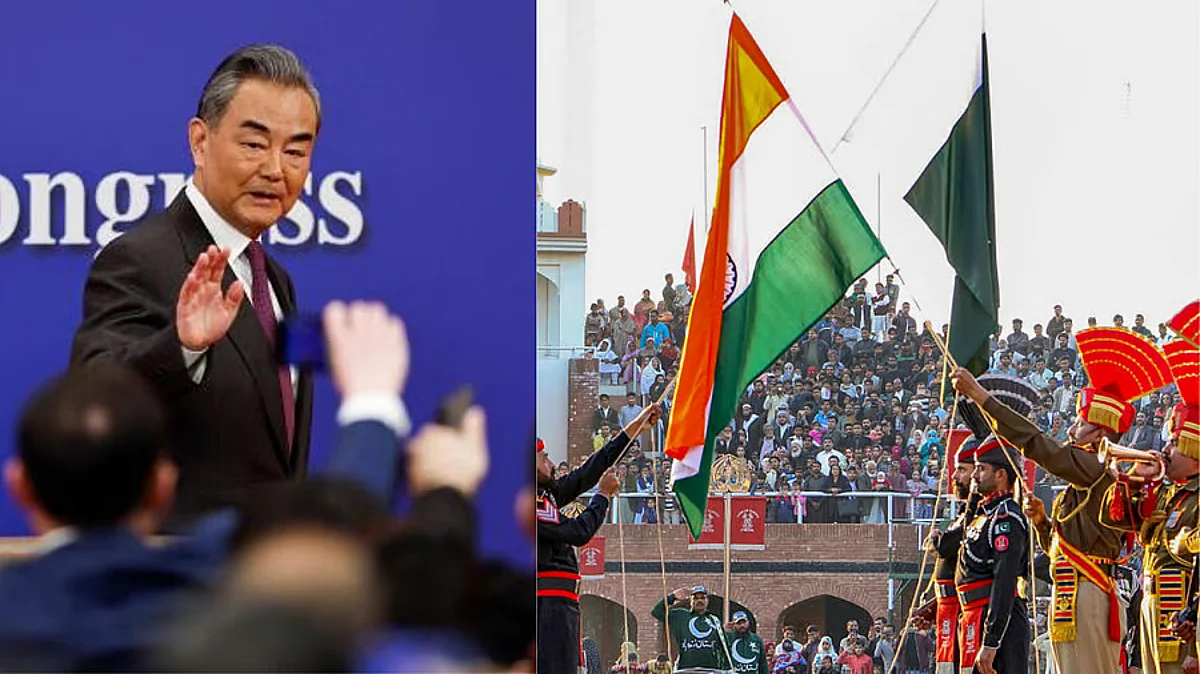
China has told international audiences that it acted as a mediator in calming renewed hostilities between India and Pakistan in early May, a claim that sits alongside competing accounts from New Delhi and Washington and has provoked criticism amid allegations about Beijing’s ties to Islamabad.
China mediates India Pakistan ceasefire and international reactions
Chinese foreign minister Wang Yi said at a forum in Beijing that resolving the May flare-up between Indian and Pakistani forces was among several recent international disputes in which China had played a constructive role. Speaking on the sidelines of a conference on international affairs, he listed the India–Pakistan episode alongside other tensions that Beijing says it helped ease this year.
The May 7–10 clashes, which New Delhi has referred to as Operation Sindhur, were resolved, India says, through direct contact between the directors general of military operations of the two armies. India’s foreign ministry made a formal statement that a telephone conversation between the two directors general on the afternoon of May 10 led to agreement on a ceasefire and that no third country was involved in securing the truce.

However, US president Donald Trump has repeatedly asserted that Washington played a mediating role, citing commercial and diplomatic leverage. China’s recent public claim of mediation has further complicated the narrative and drawn critical attention because of accusations, reported elsewhere, that China supplied weapons to Pakistan during the same period.
Wang told delegates that this year had seen unusually high levels of internal and cross-border conflict worldwide and that Beijing had focused on the causes of those disputes when seeking to stabilise them. He pointed to examples including northern Myanmar, nuclear tensions with Iran, the Palestine–Israel conflict and recent clashes in Southeast Asia.
Beijing’s declaration of a mediating role has prompted scepticism in some quarters. Critics note that China publicly urged restraint on May 7 and called on all parties to exercise self-restraint. Yet the more contested aspect is the allegation that China provided material support to Pakistan, a charge that, if substantiated, would complicate Beijing’s claim to have acted solely as an impartial mediator.
The competing claims reflect broader strategic rivalries. For India, a direct military-to-military resolution reinforces New Delhi’s insistence on bilateral mechanisms for de-escalation. For China, asserting diplomatic involvement allows Beijing to highlight its role as a security actor beyond economic affairs. For the United States, citing mediation underlines Washington’s continuing influence in South Asian security matters.
Regional analysts say the episode matters for the standing of BRICS members on the global stage. A credible third-party mediation fosters trust and could strengthen a member’s diplomatic credentials within the group. Conversely, allegations of material support to one side undermine impartiality and risk straining ties with fellow members, most notably India.
As governments and commentators digest the differing narratives, the core diplomatic outcome remains that open channels between Indian and Pakistani military leaders helped end the immediate hostilities. Whether Beijing’s account will translate into international recognition of a mediating role depends on further evidence and the evolving posture of the parties involved.
Key Takeaways:
- China says it helped mediate a ceasefire between India and Pakistan during the May 7–10 clashes.
- India maintains the ceasefire resulted from direct talks between military directors, while the US also claims a mediation role.
- Beijing listed several global hotspots where it says it aided conflict resolution, but its claim has drawn criticism amid allegations of military support to Pakistan.








