











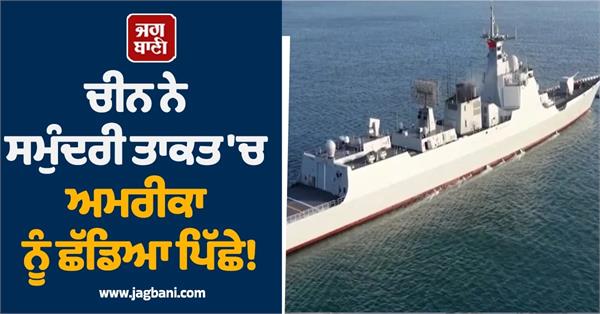
China has reinforced its maritime strength with the commissioning of an upgraded Type 052D guided‑missile destroyer, named Loudi, into the People’s Liberation Army (PLA) Navy. The vessel is equipped with enhanced radar, modern weapon suites and networked command systems that officials say improve long‑range strike, precision targeting and fleet air‑defence capabilities.
State and defence sources report that the addition of Loudi forms part of a rapid build‑up in China’s surface fleet. According to recent tallies, the PLA Navy now lists 234 combatants, exceeding the United States Navy’s reported 219 warships. Beijing is said to have added 11 new major vessels during 2025, among them the domestically built carrier Fujian, signalling an accelerated tempo of naval modernisation.
China naval expansion reshapes Indo‑Pacific dynamics
Analysts suggest the new destroyer will strengthen task‑force command capabilities and provide layered protection for larger vessels such as carriers and amphibious ships. Improved sensors and integrated strike systems enable ships like Loudi to detect, track and engage multiple targets at extended ranges, while networked communications aim to boost coordination between surface ships, submarines and maritime air assets.

Beyond fleet numbers, Beijing has also deepened defence ties with regional partners. The ministry of defence has reportedly delivered a fourth patrol vessel to Pakistan, named Gazi, under an ongoing procurement agreement for eight such craft. Observers view this as part of a broader pattern in which China supplies military platforms to nations within its strategic orbit, enhancing interoperability and influence.
Security commentators warn that this pace of expansion is likely to complicate the strategic environment in the Indo‑Pacific. A larger and more capable Chinese navy can extend operational reach, place greater emphasis on sea control and contest maritime access in disputed zones. For Washington and allied governments, the trend presents diplomatic and military challenges, prompting reassessments of force posture, coalition planning and presence operations in the region.
Beijing, for its part, frames the naval modernisation as a defensive necessity to protect trade routes and national interests. Official statements highlight a focus on technological upgrades, including radar improvements and integrated combat systems, rather than an intent to provoke confrontation. Nevertheless, many regional capitals and outside powers will watch deployments and training activity closely to gauge intent and capability.
As China continues to expand and modernise its fleet, observers say the international response will shape maritime balance for years to come. Policy choices made by the United States, regional partners and multilateral bodies will determine whether increased naval capacity leads to stabilising deterrence, closer security dialogue, or heightened rivalry at sea.
Image credit: jagbani
Key Takeaways:
- China naval expansion sees the PLA add an upgraded Type 052D guided‑missile destroyer, Loudi, enhancing air‑defence and strike capabilities.
- Reports say China now fields 234 warships compared with the US Navy’s 219, after 11 new vessels in 2025 including the carrier Fujian.
- Beijing is supplying modern vessels to partners, launching a fourth patrol craft for Pakistan, signalling deeper defence cooperation.
- Analysts warn the China naval expansion could shift Indo‑Pacific security balances and complicate US regional strategy.








