











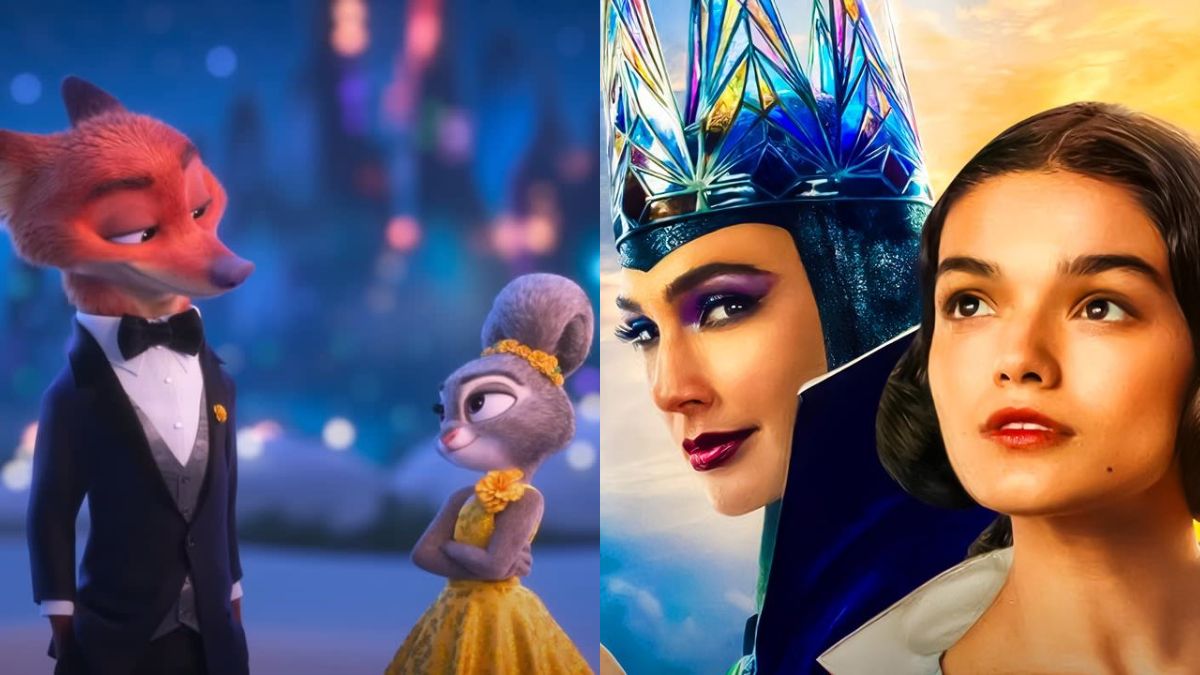
Studios finished 2025 with a stark divide between runaway successes and staggering flops. Audiences gravitated towards strong storytelling and globally resonant animation rather than relying on star power or legacy brands alone. That shift was most visible in China, where Ne Zha 2 rewrote the record books and accelerated the internationalisation of non-English cinema.
2025 box office hits
Ne Zha 2, released on 29 January, emerged as the year’s biggest earner. With a production budget of roughly $110 million, the Chinese animated film grossed $2.15 billion worldwide, becoming the first non-English language picture to surpass the $2 billion threshold. Its success was driven by a dominant domestic opening and advanced visual effects that broadened its appeal beyond China’s cinemas.
Hollywood also counted several major winners. Disney found renewed box office strength with Zootopia 2, which opened at Thanksgiving and ultimately grossed $1.20 billion on a $150 million budget. Lilo & Stitch, a photoreal reimagining of the 2002 cult favourite, capitalised on Millennial nostalgia and marketing precision to clear $1.04 billion. The Minecraft Movie, despite early online scepticism, used its vast global fanbase to approach the billion-dollar mark with $958 million in takings.

Even established summer franchises adapted successfully when they refocused their creativity. Jurassic World: Rebirth, a back-to-basics soft reboot released in July, earned $869 million by emphasising suspense and a new cast rather than relying on legacy protagonists.
What the winners reveal
The common thread among the top performers was clear: audiences rewarded originality, clarity of concept and global storytelling sensibilities. Animated films with universal themes travelled exceptionally well, and adaptations built on engaged fan communities proved durable despite critical or early marketing setbacks.
Big-budget flops and warning signs
At the opposite end, several high-profile releases failed to recoup their costs. Disney’s live-action Snow White, plagued by reshoots and controversy, earned $205 million against a reported $270 million budget and needed roughly $600 million to break even. Tron: Ares underperformed with $142 million, while Robbie Williams biopic Better Man took in just $22 million on a $110 million budget, its unconventional creative choices alienating broader audiences.
Smaller but costly miscalculations were also visible. Luca Guadagnino’s After the Hunt, built around serious adult drama and high salaries, collected only $9 million from an $80 million budget. And Christy, a limited-release boxing biopic starring Sydney Sweeney, recovered a fraction of its $15 million budget.
Implications for studios and global markets
For studios the message is unambiguous: investment must follow audience appetite rather than brand faith. The triumph of Ne Zha 2 also signals a continuing shift in global film economics. Non-Western productions, especially from BRICS markets such as China, now wield genuine box office clout and influence studio strategy worldwide. As the industry enters 2026, successful releases are likely to be those that combine cultural specificity with broad international accessibility.
Key Takeaways:
- China’s Ne Zha 2 became the first non-English film to pass $2 billion, reshaping the 2025 box office narrative.
- Animated and globally oriented stories dominated the 2025 box office hits, while star-driven tentpoles underperformed.
- Remakes and high-budget misfires such as Snow White and Tron: Ares highlighted shifting audience tastes.
- Studios must adapt to global audiences if they want to replicate the success of 2025 box office hits.








