











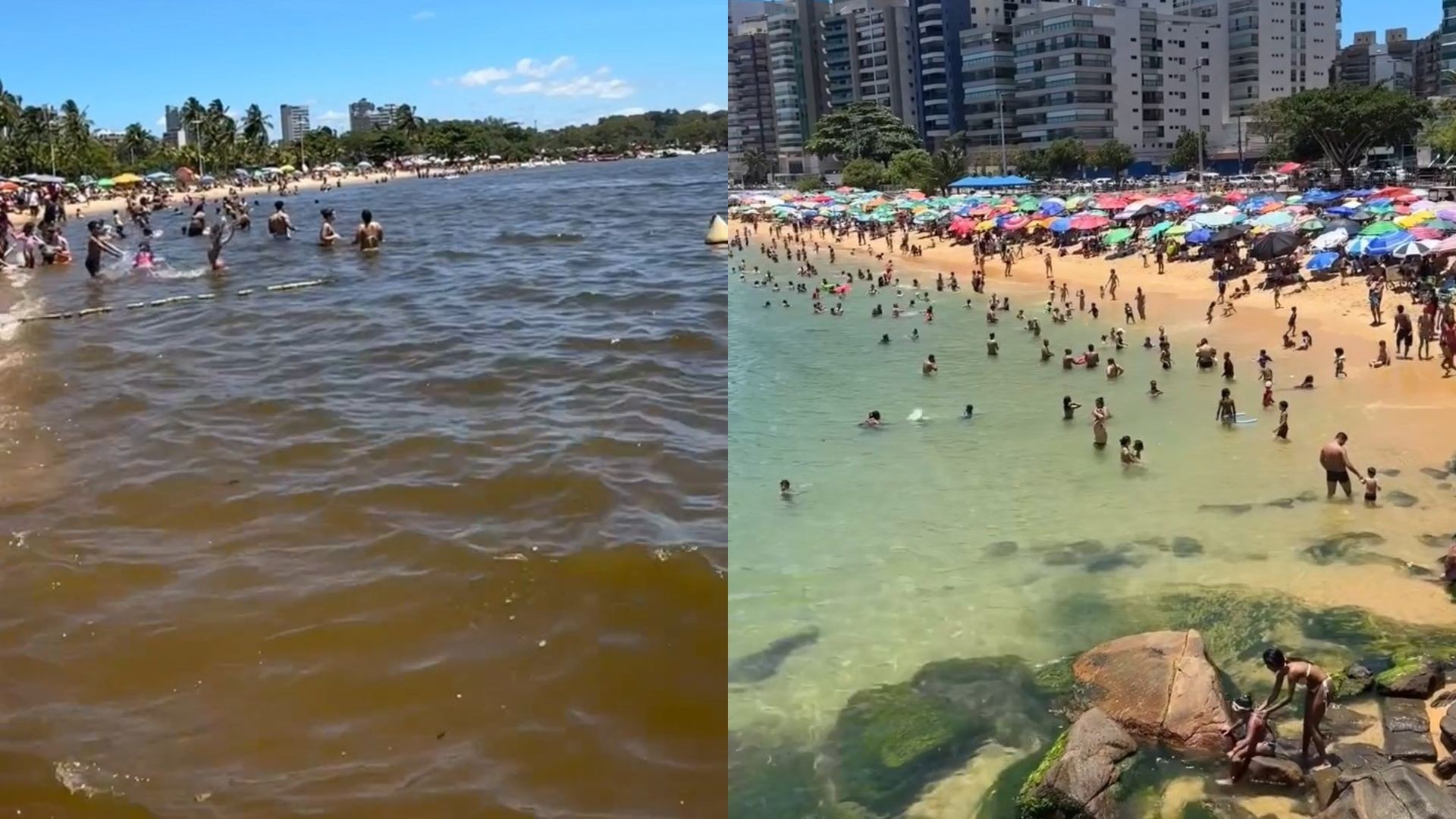
Key Takeaways:
- Vila Velha algal bloom has left some beaches unusually clear while nearby Vitória shows darker, odorous water.
- Oceanographers suspect a mix of microalgae, macroalgae, trapped sewage and high temperatures driving decomposition.
- Authorities say systematic water testing is needed to assess spread and public-health risk.

Bathers in the Espírito Santo metropolitan area reported a striking contrast this week as bright, clear water lapped the sands of some Vila Velha beaches while the sea off Vitória appeared darker and carried an unpleasant smell. Local oceanographers say the pattern is likely linked to algal growth, stagnant waters and organic matter decomposing under high temperatures.
Residents and visitors took photos and videos that circulated on social media, prompting inquiries to municipal environmental teams. Although the phenomenon at Praia do Canto and other spots remains under investigation, experts point to several plausible causes: proliferating microalgae in the plankton, larger macroalgae caught on rocks, and the accumulation of untreated sewage in enclosed bay areas.
Vila Velha algal bloom explained
“It may be microalgae that live in the plankton, but also macroalgae trapped on the rocks,” an oceanographer involved in monitoring the area said. He emphasised that this is a working hypothesis and that laboratory analysis of water samples is required to confirm which organisms are present and whether harmful concentrations exist.
Warm temperatures accelerate the breakdown of organic matter. When algae and other microorganisms decompose, the process can release gases that cause foul odours and darker water. In semi-enclosed bays such as those around Vitória and Vila Velha, reduced water circulation — partly a legacy of land reclamation works — can allow pollutants and algae to accumulate rather than disperse.
Local authorities noted that in normal conditions, waters across the bay would appear clearer and more uniform. The combination of lower tidal exchange, sewage inputs and seasonal heat can produce the mix of clear and dark patches observed this week. That variability can be confusing for the public, who reasonably ask whether bathing remains safe.
Health and environmental implications
Until water quality tests are completed, officials advise caution. Some algal blooms are benign, while others can harm marine life and cause skin or respiratory irritation in humans. Untreated sewage carries pathogens that pose a direct public-health risk. Monitoring teams will prioritise testing at sites where the visual contrast and odour were most pronounced.
Experts recommend immediate sampling for indicators such as faecal coliforms, chlorophyll concentrations and species identification of algae. Results will determine whether short-term swimming advisories are needed and whether longer-term measures should be implemented to reduce sewage discharge and improve water circulation.
Municipalities in the region are under pressure to upgrade sanitation infrastructure, enforce existing effluent regulations and expand environmental monitoring. Improving sewage treatment and restoring tidal flow where possible would reduce the frequency of stagnation and limit conditions that favour algal overgrowth.
For now, the message from scientists is pragmatic: the visual contrast between Vila Velha and Vitória highlights local vulnerabilities in coastal management. Authorities have pledged to share laboratory results as soon as they become available and to take action proportional to the findings.
People planning to swim or use the beaches should check municipal advisories and avoid contact with water that looks foamy, unusually coloured or smells strongly.








