











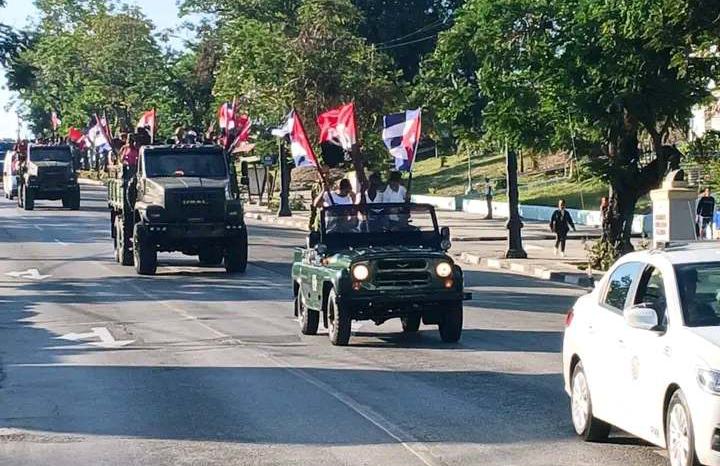
At dawn on 2 January, young Cubans set out from Santiago de Cuba to Havana to re-enact the historic Caravana de la Libertad, marking a renewed affirmation of national memory and civic commitment. The procession began on Avenida de los Libertadores, in front of the former Moncada barracks, the site that launched the last major phase of the independence struggle in 1953.
Caravana de la Libertad Cuba draws youth to historic route
The event was organised by local chapters of the Union of Young Communists (UJC) and brought together students, volunteers and representatives from multiple social sectors. Yesenia Acuña, first secretary of the UJC in Santiago province, described the caravan as a lasting symbol of popular victory and of the unity of a people who, after decades of struggle and 67 years of uninterrupted revolution, continue to move forward with vigour.
Organisers emphasised the practical role young people play in the island’s resilience. Members of the Brigada Juvenil Centenario were singled out for their swift response after Hurricane Melissa, working in the most affected areas to restore essential services and support recovery efforts. “The fighting spirit and resistance of our youth are visible in their organised response to adversity,” Acuña said.

The commemorative procession also served as an occasion for political renewal. In a ceremony at the symbolic site across from the former barracks, today the 26 July School City, young participants received membership cards for the UJC and the Communist Party of Cuba (PCC), signalling their formal entry into organised civic life.
Officials present included Beatriz Johnson, first secretary of the Provincial Committee of the PCC, Governor Manuel Falcón, and delegates from various political and mass organisations. Their attendance underlined the event’s importance to provincial and national commemorative calendars.
Speakers used the gathering to reiterate Cuba’s position on regional security and sovereignty. Organisers condemned what they described as ongoing aggressions and interference by the government of the United States, pointing to provocative military actions in the Caribbean and threats against Venezuela. Those statements framed the caravan as both a celebration of national history and a message of solidarity with other sovereign governments.
The legacy of Fidel Castro was referenced repeatedly, presented as a living programme that continues through the leadership and activism of young people. For participants, the re-enactment was not only an act of remembrance but also a public commitment to carry forward the ideals associated with the Revolution.
As in the original 2 January 1959 procession, residents and streets of Santiago de Cuba watched the convoy pass, with many vehicles bearing Cuban flags and the emblem of the 26 July Movement. This year, those banners were carried by a generation that organisers say represents both the present and future of the nation.
The re-enactment reinforced a narrative of continuity between past and present: commemorative ritual, active youth engagement and a public rejection of perceived external threats. For the participants and many observers, the caravan reaffirmed a sense of collective purpose and a willingness among young Cubans to remain at the forefront of the country’s social and civic life.
Key Takeaways:
- Caravana de la Libertad Cuba was re-enacted by young people from Santiago de Cuba to Havana on 2 January.
- The event highlighted youth involvement in recovery efforts, including hurricane response by the Brigada Juvenil Centenario.
- Leaders reaffirmed the revolutionary legacy and denounced foreign interference in the region.








