











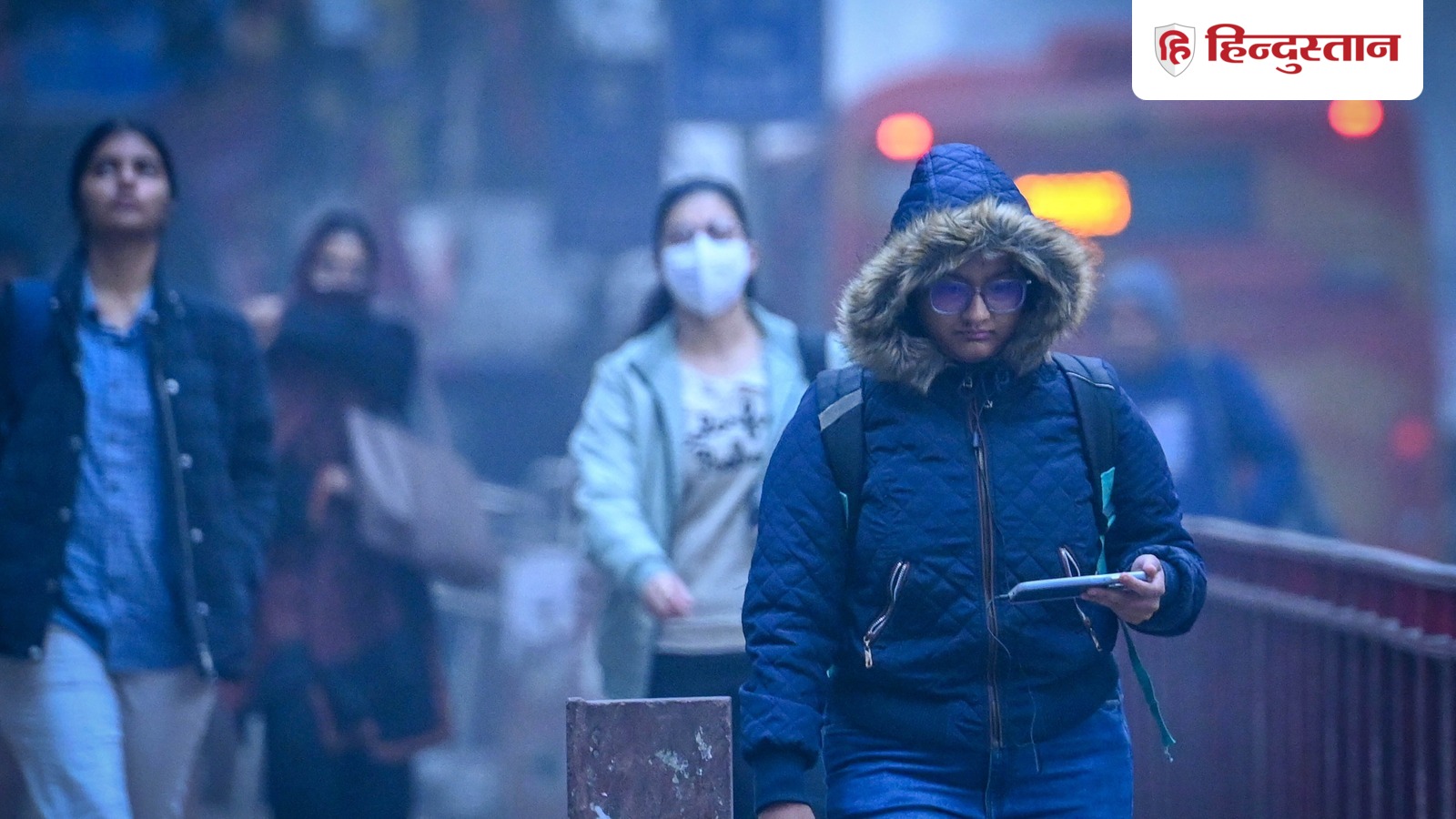

A sharp cold snap tightened its grip on Delhi on Saturday, bringing biting winds, dense morning fog and disruptions to travel across the capital. The Meteorological Department has warned that cold-wave like conditions could persist in some areas until 7 January, and issued a yellow fog alert for Sunday morning.
Delhi cold wave: What to expect
Meteorologists say residents should prepare for lingering fog during early hours, with visibility reduced at several locations. Surface wind speeds are expected to range between 5 and 15 kilometres per hour through Sunday, offering little respite from the chill. The maximum temperature on Saturday was recorded at 17.3°C, about 2°C below normal, while the citywide minimum hovered near 8.1°C. Specific readings included 15.8°C at Palam, 17.6°C at Lodhi Road, 16.3°C at Ridge and 17.2°C at Ayanagar; the coldest spot reported a minimum of 6.9°C.

Humidity levels were high, with the maximum moisture content reaching 100 per cent and a minimum of 64 per cent. Safdarjung reported severely reduced visibility, dropping to 800 metres at around 9am before improving to roughly 1,200 metres later in the morning.
Travel and transport impact
Weather-related disruption was significant at Indira Gandhi International (IGI) Airport on Saturday, where 72 flights were cancelled and more than 300 flights experienced delays. Many of the cancellations involved services arriving from or departing to parts of the country affected by dense fog rather than local conditions. Rail services were also affected: approximately 60 trains reached Delhi late, most by two to three hours.
Commuters are advised to check flight and train statuses before travel and to allow extra time for journeys as fog and reduced visibility can delay departures and arrivals.
Air quality and public health
Despite cooler weather, pollution levels offered a modest improvement compared with a week earlier. The Central Pollution Control Board recorded an average Air Quality Index (AQI) of 267 on Saturday, placing Delhi in the “poor” category. The morning AQI was reported at 240, rising by 27 points by evening. Measured particulate matter concentrations showed a slight fall; PM10 averaged around 177 µg/m³ at 3pm, while PM2.5 measured about 107 µg/m³ — both still above national standards.
Officials noted that stronger winds and clearer skies during the afternoon helped disperse pollutants, bringing marginal relief to residents who have endured several days of heavy pollution. Authorities continue to urge vulnerable groups — including children, older adults and those with respiratory conditions — to limit prolonged outdoor exertion while levels remain elevated.
Outlook and advisories
The weather office has not issued any alerts for Monday, but the forecast calls for continued cool temperatures and intermittent fog in the mornings. Citizens are recommended to dress warmly, keep windows closed during hours of dense fog, and follow travel advisories issued by airlines, rail operators and local authorities.
Businesses dependent on morning travel should plan for potential delays, and commuters should monitor official updates for any sudden changes in visibility or wind conditions.
Key Takeaways:
- Delhi cold wave expected to persist until 7 January with dense morning fog and yellow alert for parts of the capital.
- Significant travel disruption: 72 flights cancelled at IGI Airport and hundreds delayed; many trains arrived 2–3 hours late.
- Temperatures fell to a low of 6.9°C in parts of the city while daytime highs remained around 17–18°C.
- Air quality improved slightly but remains in the poor category with average AQI near 267; PM2.5 and PM10 levels still above prescribed limits.








