











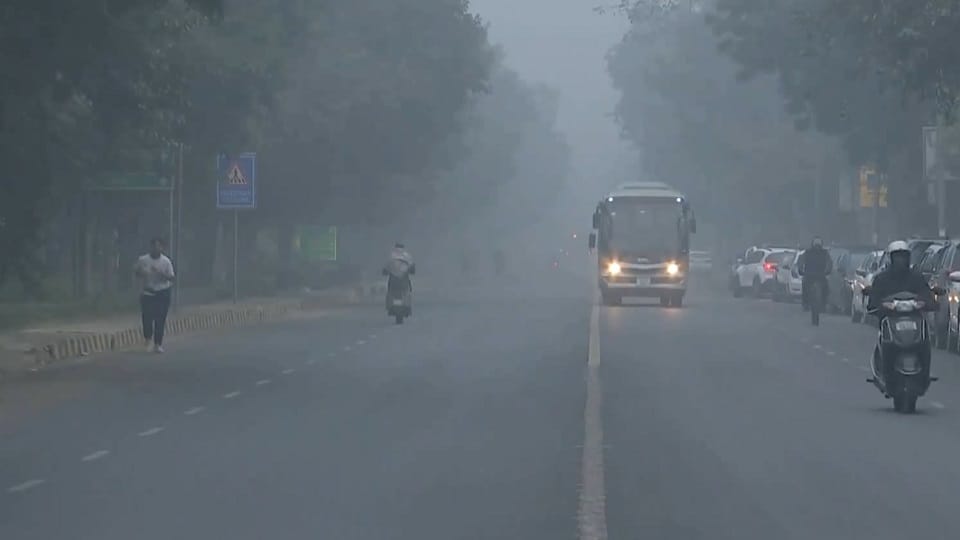
Strong winds sweeping across the national capital on Saturday brought welcome, if temporary, relief from the heavy smog that has dominated Delhi in recent days. City officials said the gusts dispersed a layer of polluted air, leading to improved visibility and a drop in concentrations of fine particulate matter, prompting authorities to ease certain restrictions under GRAP-3.
Delhi air quality: temporary improvement after strong winds
Authorities monitoring the situation reported a noticeable reduction in pollution compared with the previous 24 hours. While officials stopped short of declaring a sustained improvement, they confirmed that measures introduced under the Graded Response Action Plan at stage three were relaxed in parts of the city after localised readings improved.
GRAP-3 measures are applied when pollution reaches high levels and typically target activities that contribute most to short-term pollution spikes. The temporary easing means some curbs on industrial operations and construction activity were suspended, and certain restrictions on vehicular movements were adjusted for the day. Officials emphasised that the relaxations are conditional and will be reimposed if air quality deteriorates.

Residents noticed clearer skies in several areas and an improvement in daylight visibility, though health advisories remained in place. Medical and civic authorities continued to advise vulnerable groups including children, the elderly and those with respiratory conditions to limit prolonged outdoor exertion until a consistent improvement is confirmed.
Environmental analysts said the episode underlines the volatile nature of urban pollution in Delhi, where weather patterns can abruptly change local exposure levels. While wind can reduce concentrations of suspended particles, it does not address the underlying sources that produce pollution, including vehicle emissions, stubble burning in neighbouring states and local construction dust.
Officials from the municipal and state pollution control boards noted that short-term meteorological improvements should be used as an opportunity to intensify long-term mitigation efforts. They urged coordination with neighbouring jurisdictions to tackle cross-border sources of pollution and called for sustained enforcement of emission norms.
Transport and traffic authorities said they were ready to reintroduce measures such as restrictions on heavy commercial vehicles and construction activity if monitoring stations again record a rise in pollution. The relief on Saturday illustrates how authorities are attempting to balance public health concerns with economic activity, applying targeted curbs when pollution peaks and relaxing them when conditions permit.
Local communities welcomed the clearer conditions but expressed caution. “It feels better to breathe for the moment,” said a resident in central Delhi, “but we know this can change within a day.” Schools and outdoor event organisers were advised to follow official guidance and consider moving or rescheduling activities if readings worsen.
Experts reiterated that systemic changes will be necessary to secure sustained improvements to Delhi air quality. Measures they recommend include cleaner fuel standards, stricter enforcement of vehicle emission norms, more rapid adoption of public and non-motorised transport options, and enhanced regional cooperation to tackle seasonal sources of pollution.
For now, the capital has gained short-term respite thanks to the winds. Authorities continue to track the air quality index and have said they will issue timely updates should conditions change, underscoring that the easing of GRAP-3 measures is reversible and dependent on real time monitoring.
Key Takeaways:
- Strong winds across the capital brought temporary relief to Delhi air quality, prompting authorities to ease GRAP-3 restrictions.
- Monitoring stations recorded a fall in pollution levels compared with the previous day, though officials caution the improvement may be short lived.
- Authorities lifted several GRAP-3 measures as visibility and local concentrations of particulate matter declined.








