











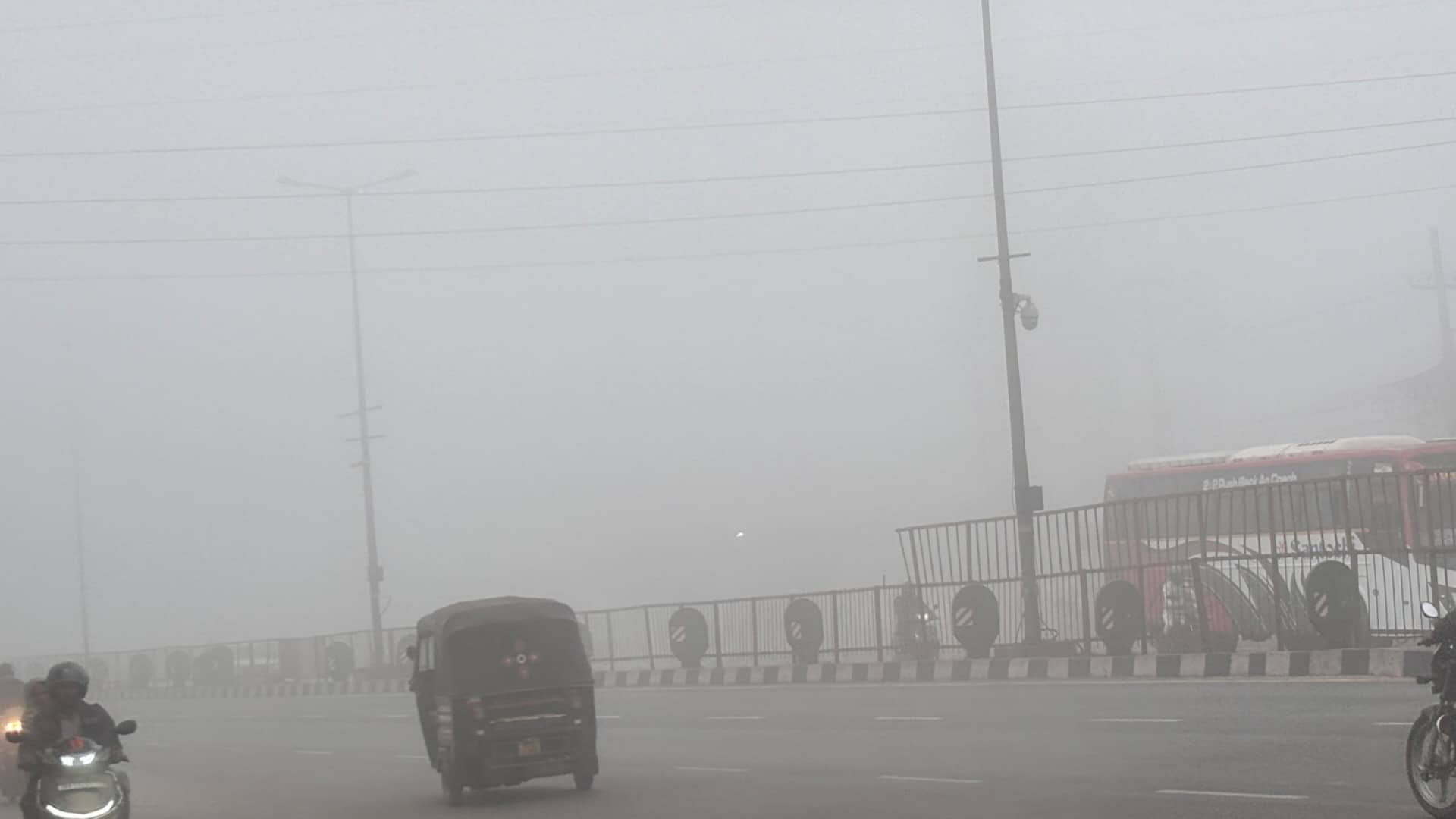
Dense, early-morning fog blanketed large areas of Bhubaneswar on New Year’s Day, reducing visibility to near zero in parts of the Odisha capital and causing disruption for commuters and local services. Videos and eyewitness accounts from across the city showed buildings and road signs barely visible, with motorists forced to slow to a crawl and use fog lights and hazard indicators to navigate.
Bhubaneswar dense fog persists into early January
The India Meteorological Department had forecast dense to very dense fog for sections of Odisha, including isolated pockets of Khurda district where Bhubaneswar lies, along with Sundargarh and Kandhamal. According to IMD bulletins, calm winds and high moisture following the winter chill are likely to keep foggy mornings in place across the state until at least 5 January, with minimum temperatures remaining steady in the opening days of the month.
Local traffic police reported significant slowdowns on major arterial roads and in residential stretches as drivers adjusted to sharply reduced sightlines. Commuters described scenes of heavy congestion and cautious driving, while several public transport services operated at reduced speed. Authorities advised people to avoid non-essential travel during early morning hours and urged those on the road to maintain low speeds, keep headlights on, and leave ample distance between vehicles.

Similar conditions were reported in parts of northern and eastern India, where dense fog has in recent days disrupted flight schedules and hampered highway movement. Airports in affected regions have been monitoring visibility closely and adjusting operations as required, with flight delays or diversions recorded in several cases. Meteorologists attribute the phenomenon to a combination of clear night skies, calm winds, and elevated humidity that traps cold air near the ground, creating persistent fog layers.
Weather officials warned that reduced visibility significantly increases the risk of accidents, particularly on highways and at junctions. The IMD urged motorists, aviation authorities and the public to exercise caution and follow official guidance. Roadside assistance and emergency services remain on alert, and law enforcement agencies are conducting targeted patrols in trouble spots to manage traffic and respond quickly to incidents.
As daytime temperatures rise, fog is expected to lift gradually and give way to partly cloudy skies. Forecasters said the likelihood of watery sunshine later in the day should improve travel conditions, though pockets of fog may reform overnight while the broader pattern of cool, still air persists.
Residents of Bhubaneswar welcomed the New Year amid the city’s winter chill, even as officials emphasised the need for prudence. Businesses and schools that open early have been asked to factor in slower journeys for staff and pupils, and public transport operators have been advised to keep passengers informed about any schedule changes.
Looking ahead, the IMD will continue to issue routine bulletins and advisories until the fog subsides. For now, the overriding message from authorities is simple: if travel is not essential during the hours of dense fog, it is safer to delay departure until visibility improves.
Key Takeaways:
- Bhubaneswar dense fog reduced visibility to near zero across large parts of the city during early hours.
- The India Meteorological Department warned foggy conditions would persist until at least 5 January.
- Commuters faced slow-moving traffic and authorities urged motorists to avoid non-essential travel.








