











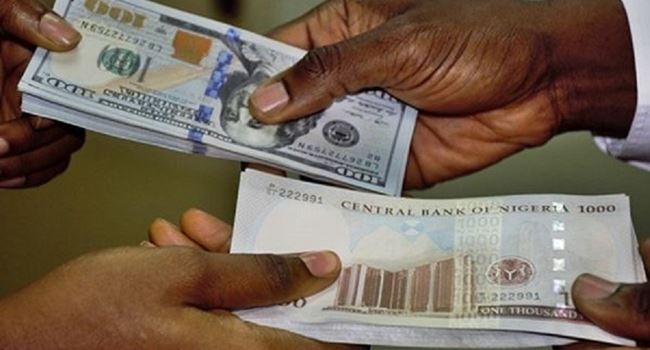
The Nigerian Naira opened the first full trading Friday of 2026 with relative calm across both the official and informal foreign exchange markets. Early-morning quotations in the Nigerian Foreign Exchange Market showed the official rate at 1,446.62 to the US dollar, a level market participants described as steady after the holiday lull.
Dollar to Naira exchange rate outlook
The official window’s performance follows a sustained period of modest appreciation. Over the past year the Naira has gained roughly 6.43 per cent on the official market, recovering from the historic trough of 1,717.50 seen in late 2024. Traders said improved liquidity and a resumption of corporate demand after the festive break were central to the calmer opening.
Activity in the parallel market remains more fluid, with Bureau De Change operators and informal traders quoting rates that reflect immediate retail needs. Nonetheless, several dealers reported that the spread between the official and parallel markets has narrowed noticeably compared with previous years. They attributed the move to greater price transparency in the official window and continued management by monetary authorities.

Analysts noted that the narrower gap helps reduce arbitrage incentives and supports a more predictable environment for importers and businesses that require foreign currency. “Reduced divergence between markets lowers transaction costs for firms and should ease imported inflation pressures if sustained,” said one currency strategist who asked not to be named.
Drivers behind the exchange rate movement
Three principal factors are influencing the Dollar to Naira exchange rate as the year begins. First, official data show foreign reserves at a stable level, furnishing the Central Bank with buffers to smooth sudden swings. Second, oil revenues remain a key support for the currency; steady production and resilient global oil prices continue to underpin external receipts. Third, market participants are watching the first Monetary Policy Committee meeting of 2026 closely for signals on interest rates and inflation-targeting measures.
Liquidity conditions will be closely monitored in the coming days. Corporates typically return to full activity after the holiday period, and a pickup in foreign exchange demand from trade and investment transactions could introduce more volatility. For now, dealers expect subdued movement through the early trading sessions, with the potential for clearer directional momentum once corporate flows resume in earnest.
Policy intervention remains a feature of the FX landscape. The Central Bank’s efforts to promote price discovery and bridge the gap between market segments have been cited repeatedly by market participants as contributing to the current environment. Continued interventions and clearer communication from the central bank could further narrow spreads and reduce disorderly moves.
Market watchers emphasised that while the near-term outlook is cautiously constructive, external risks could alter the trajectory. Changes in global oil prices, shifts in investor risk appetite or unexpected domestic macroeconomic shocks would all have the capacity to influence the exchange rate. For now, the combination of steady reserves, oil receipts and targeted policy measures has left the Naira in a more stable position as 2026 gets under way.
Key Takeaways:
- Dollar to Naira exchange rate stabilised at around 1,446.62 on the official window on January 2, 2026.
- The Naira has strengthened about 6.43% on the official market over the past 12 months, moving away from late‑2024 lows.
- Spread between the official market and parallel sector has narrowed, aided by improved transparency and central bank interventions.
- Key drivers include stable foreign reserves, steady oil receipts and an upcoming Monetary Policy Committee meeting.








