











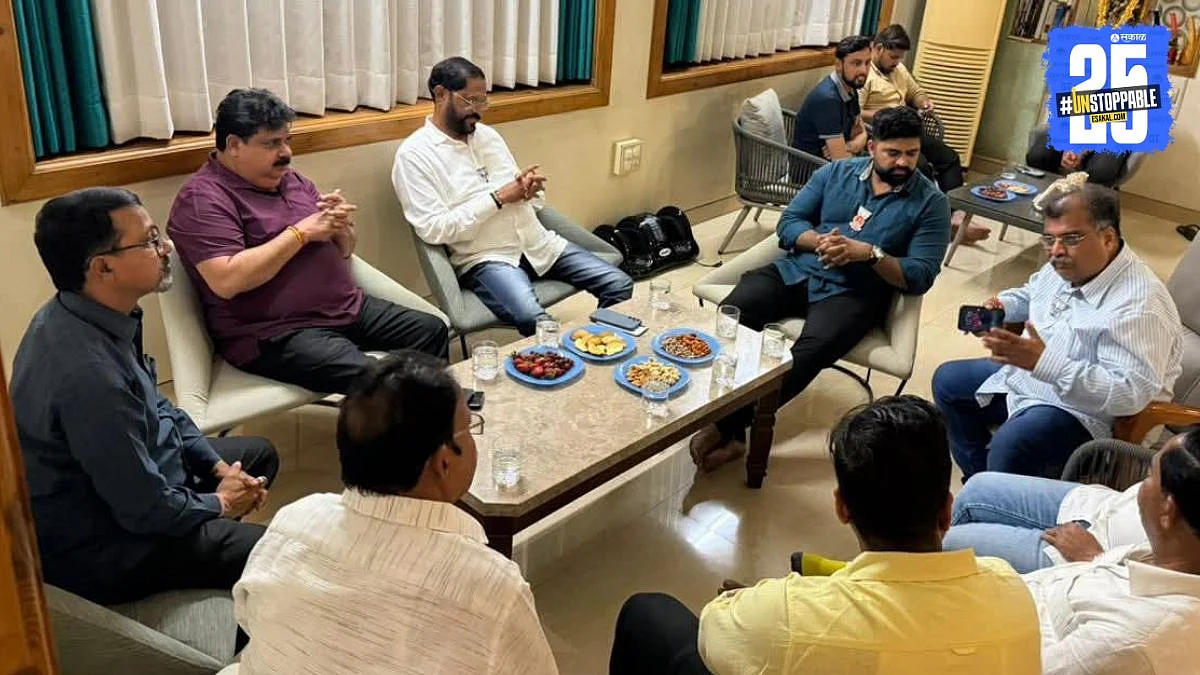
Viral photographs of Shinde faction Shiv Sena candidate Vikas Mhatre sitting with BJP Maharashtra state president Ravindra Chavan have intensified attention on Dombivli West’s Ward 22 ahead of the municipal polls. The meeting, widely shared on social media, suggests local leaders are attempting to manage rivalries and fine-tune election strategy to prevent splitting the Mahayuti vote.
Dombivli Ward 22 politics and local stakes
Ward 22 has become a focal point for several competing interests. Vikas Mhatre, who earlier criticised the BJP for alleged neglect of local development funds and later joined the Shinde faction of Shiv Sena, has been nominated by his party for the seat along with his wife. The BJP has fielded Prakash Bhoir and Ashwini Anmol Mhatre. In addition, both of the Thackeray brothers’ camps have candidates in the fray, while a Shinde faction office-bearer recently joined the Maharashtra Navnirman Sena and filed their nomination. An independent candidacy from Bala Mhatre further complicates the contest.
Locally, tensions rose after Mhatre’s move from the BJP to the Shinde faction, with both camps sparring at the neighbourhood level. Since the broader Mahayuti decision to contest together, however, those frictions have softened in some pockets as party organisers seek to avoid internal vote erosion. The photograph of Vikas Mhatre and Ravindra Chavan discussing strategy has been interpreted within political circles as a practical step to reconcile differences and present a united front where it matters most.

Party sources say the immediate priority is to ensure the Mahayuti alliance does not lose the ward due to a fractured ticket. Local leaders argue that consolidating candidates and coordinating voter outreach will be crucial in a seat crowded with contenders from allied and rival groups. For the BJP, managing local equations in a place where an erstwhile critic has resurfaced as a key Shiv Sena candidate presents both a challenge and an opportunity.
Observers note that Ward 22 reflects the pragmatic side of Indian local politics, where yesterday’s adversaries often sit together to secure electoral gains. The calculations are straightforward: unify support to maximise the Mahayuti vote share, limit the appeal of independents and breakaway candidates, and maintain the coalition’s standing in a densely contested urban area.
For voters, the development raises questions about priorities. Campaign messaging has included promises on development funding and service delivery, with Mhatre previously accusing the BJP of failing to secure resources for his ward. Now, with the two leaders seen planning together, residents will be watching whether these tactical arrangements translate into tangible commitments.
Political analysts caution that local reconciliation is not a guaranteed route to victory. Personal loyalties, candidate reputation and on-the-ground campaigning remain decisive. The presence of candidates from multiple Shiv Sena factions, the BJP and independents means the result could hinge on narrow margins.
Ultimately, the strategic discussions captured in the photographs underscore how alliances evolve at the grassroots. Whether the rapprochement in Dombivli Ward 22 strengthens the Mahayuti ticket or leads to voter scepticism will become clear only on polling day.
Key Takeaways:
- Photographs of Vikas Mhatre meeting BJP state president Ravindra Chavan have gone viral, signalling local reconciliation.
- Multiple candidates from Shiv Sena (Shinde faction), BJP and rival Thackeray groups have made Ward 22 a tightly contested seat.
- The rapprochement aims to prevent vote-splitting and protect the Mahayuti alliance’s prospects in Dombivli West.
- Local dynamics now hinge on whether voters accept the tactical alliance or favour independent and cross-group contenders.








