











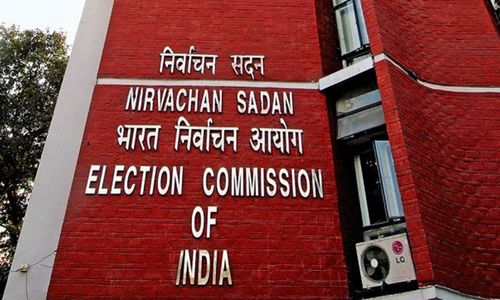
The Election Commission of India (ECI) has explained why it rejected the Trinamool Congress’ demand to allow booth-level agents (BLAs) to attend hearing sessions on claims and objections to the draft voters’ list in West Bengal.
An official from the Chief Electoral Officer’s (CEO) office said the hearings form the central element of the second stage of the three-phase Special Intensive Revision (SIR) of the electoral rolls in the state. The draft voters’ list was published on 16 December 2025 and the final list is due on 14 February 2026. The ECI will announce polling dates for the Assembly elections after the final list is published.
West Bengal SIR hearing and the ECI response
The CEO’s office told reporters that accepting Trinamool’s request would set a precedent obliging the Commission to allow representatives from every registered party. In West Bengal, eight parties are registered with the ECI — two state parties, Trinamool Congress and All India Forward Bloc, and six national parties: Bharatiya Janata Party (BJP), Indian National Congress, CPI(M), Aam Aadmi Party, Bahujan Samaj Party and National People’s Party.

“If BLAs from all these parties were present at each hearing table, there would be one Electoral Registration Officer (ERO), one Assistant ERO (AERO), one micro-observer and eight BLOs, totalling 11 people,” the source said. “Such numbers would make it virtually impossible for electoral officers to carry out the hearing process efficiently.”
The ECI’s stance is grounded in a practical consideration of space, order and the need for consistent application of rules. The CEO’s office emphasised that regulations cannot be applied with reference to the relative organisational strength of individual parties. “The Commission had to apply uniform rules for all political parties, and the rules are framed on the basis of their practical applicability,” the official added.
Trinamool leaders, however, have accused the ECI of deliberately refusing the request because they believe rival parties, particularly the BJP, lack the manpower to field BLAs at every hearing table. The party argues this imbalance would disadvantage Trinamool’s ability to monitor the process.
Election officials reject that reasoning. They stress that decisions are guided by procedural fairness and logistical feasibility rather than conjecture about party strength. Allowing BLAs selectively would risk inconsistency and possible administrative disruption across the many hearing centres operating during the SIR process.
Officials also noted that the hearing sessions are designed to be focused and streamlined. Micro-observers and electoral registration officers are present to ensure that claims and objections are heard and adjudicated swiftly so that the revision of the rolls proceeds on schedule ahead of the assembly election timetable.
With the final voters’ list set for publication on 14 February 2026, the ECI’s next step will be to set polling dates for the state polls. For now, the Commission’s refusal stands as a reaffirmation of its approach to maintain uniform procedures during the SIR, prioritising manageability and neutrality in the administration of the revision process.
Key Takeaways:
- ECI declined Trinamool’s request to permit booth-level agents at the West Bengal SIR hearing on practical and uniformity grounds.
- Allowing BLAs from all registered parties could crowd each hearing table with up to 11 people, the CEO’s office said.
- Trinamool accused the Commission of bias; the ECI responded that rules must be uniformly applicable to all parties.








