











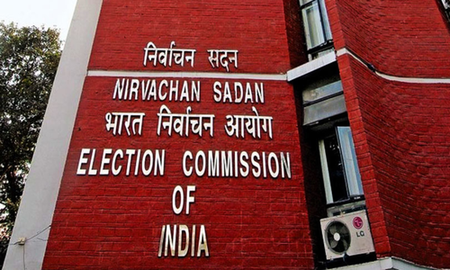
The Election Commission of India (ECI) has placed clear, enforceable duties on District Magistrates (DMs), who also serve as District Electoral Officers (DEOs), to verify the authenticity of supporting identity documents presented by voters during hearings on claims and objections to the draft voters’ list in West Bengal.
Senior ECI officials, including Deputy Election Commissioner Gyanesh Bharati and West Bengal Chief Electoral Officer Manoj Kumar Agarwal, met DMs and DEOs on Tuesday to set out the new responsibilities and implementation steps. The measures form part of the Special Intensive Revision (SIR) currently under way in the state.
ECI voter document verification and new responsibilities
Under the revised arrangement, document verification will operate on a two-tier basis. Electoral Registration Officers (EROs) will carry out the initial scrutiny while DMs and DEOs will perform the final check and certification. To support that final stage, the Commission will introduce a dedicated application through which district officials must validate, certify and upload authenticated documents.

The ECI has reiterated that only the 13 identity documents it specifies may be accepted as proof of identity at hearings. Where a claimed identity relies on alternative paperwork, the DEO must obtain prior approval from the Commission before accepting it.
Officials were told to ensure strict enforcement of conduct at hearing sessions. DEOs are now accountable for preventing the presence of any booth-level agents representing political parties. They must also take prompt action if a hearing is forcibly disrupted. In such instances the Commission has directed DEOs to attend the venue personally to restore the process.
The ECI made clear that any instance of a forged document being certified as genuine because of wilful oversight will attract accountability. The Commission warned that deliberate lapses could have administrative consequences, including adverse remarks on the Annual Confidential Report (ACR) of officials responsible for clearing documents.
Electoral officials said the measures are intended to strengthen the integrity and transparency of the revision process, reduce scope for malpractice and limit political interference during hearings. The draft voters’ list for West Bengal was published on 16 December and the final list is scheduled for publication on 14 February next year. The ECI will announce polling dates for the state Assembly elections once the final rolls are released.
By placing DMs and DEOs within a formalised verification system and providing a digital tool for final certification, the Commission aims to standardise checks across districts. Observers say the approach could speed up decisions on claims and objections while reducing the risk of disputed entries going unchecked.
Officials emphasised that the policy balances administrative oversight with safeguards against arbitrary exclusion. Where exceptional documentation is involved the requirement for prior ECI approval provides a channel to resolve borderline cases without compromising the roll’s integrity.
With West Bengal’s Assembly election approaching, the ECI’s measures reflect heightened attention to the accuracy of electoral rolls and the conduct of hearings that underpin voter registration. District officials now carry explicit responsibilities to ensure that only valid identity documents are accepted and that hearings proceed without undue interference.
Key Takeaways:
- The ECI has assigned DMs and DEOs responsibility for final verification of supporting identity documents during the Special Intensive Revision; the process will use a new app.
- Two-tier checks remain: initial scrutiny by EROs followed by final certification by DMs/DEOs, limited to 13 authorised identity documents.
- DEOs must bar booth-level agents from hearings and personally respond to any forceful interruption; deliberate clearance of forged documents may affect officials’ ACRs.
- The move aims to bolster the integrity of the draft voters’ list ahead of the final publication on 14 February and forthcoming Assembly polling dates.








