











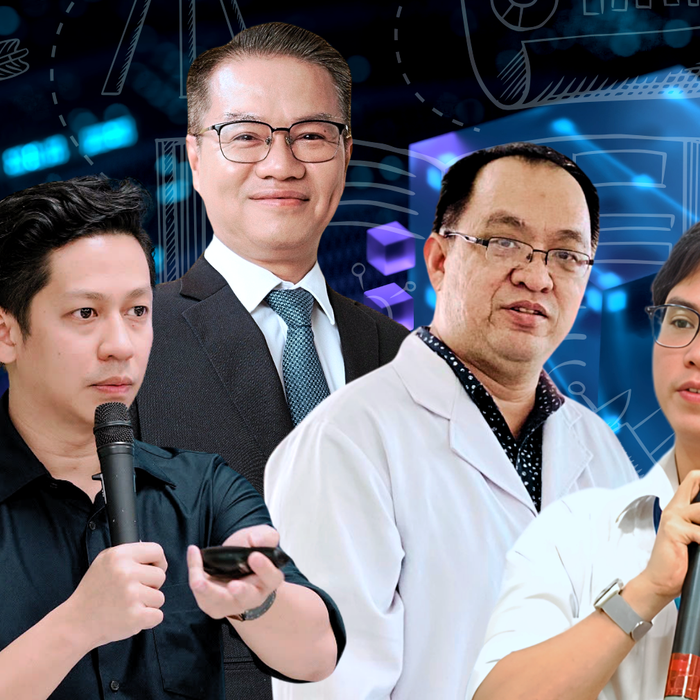
Vietnam has seen a growing movement of researchers who chose to bring their expertise home after studying and working abroad. Through the VNU350 programme at Vietnam National University, Ho Chi Minh City, five recruitment rounds have secured 69 scientists who graduated from top 100 universities worldwide. These returnees are building research teams, securing national grants and training students to raise Vietnam’s scientific standing internationally.
Vietnam returning scientists drive research and training
The cohort includes specialists across disciplines. Dr Thái Khắc Minh, trained in South Korea and Austria, focuses on computational drug design, chemoinformatics and the application of artificial intelligence in drug discovery. He returned with a clear intention to develop long‑term research capacity in medicinal chemistry and to translate basic research into pharmaceutical practice. Despite limited infrastructure at first, Dr Minh secured his first national research grant from NAFOSTED within a year of returning and now leads an expanding international collaboration with numerous publications in SCIE journals.
Dr Trịnh Quang Việt spent nearly two decades in the University of California system. His work in computer vision and semantic data targets practical outcomes such as improving accessibility for the visually impaired and integrating AI agents with human knowledge. He joined the Faculty of Information Systems at the University of Economics and Law in Ho Chi Minh City, intent on helping build an open academic culture and interdisciplinary research that serves business, law and healthcare.

Dr Trương Trung Kiên, who holds a doctorate from Texas State University, concentrates on semiconductor technology and microelectronics. Having helped develop a human‑centred engineering curriculum at Fulbright University Vietnam, he now teaches at the University of Science and aims to create an ecosystem linking university research with industry and international partners to train engineers for advanced technology sectors.
In mechanical engineering, Dr Nguyễn Sỹ Ngọc returned after research experience in the UK and South Korea to establish the ICMAM group, focusing on computational mechanics and advanced materials. He has recently won national funding from NAFOSTED for projects applying physics‑informed neural networks to composite structures, with potential applications in aerospace and defence.
Common themes run through their accounts. All identify gaps in equipment, administrative support and long‑term funding when they first arrived. Yet they emphasise the value of creating conditions for others, building teams gradually and pursuing grants that sustain research programmes. The VNU350 programme’s ten‑year horizon, laboratory support and access to national projects are cited as decisive incentives for returning scientists.
The impact is measurable. Returnees bring publications, patents and international networks that speed the development of local research capacity. They also introduce modern teaching methods such as project‑based learning and industry‑linked curricula to better prepare students for globalised labour markets. University leaders and policymakers still face challenges in streamlining administrative processes and increasing reliable funding, but the presence of these scientists strengthens the case for further investment.
As Vietnam nurtures its research universities, the deliberate return of talent represents a strategic asset. By combining international experience with local commitment, these researchers are laying foundations for advanced science and technology, training the next generation and helping to connect academic work with practical applications for industry and society.
Key Takeaways:
- VNU350 has attracted 69 outstanding researchers trained at top 100 global universities to Vietnam.
- Vietnam returning scientists are establishing interdisciplinary research groups in drug design, AI, semiconductors and computational mechanics.
- Support from NAFOSTED and university programmes is enabling labs, publications and national projects despite resource challenges.
- Returnees aim to train the next generation and connect academic research with industry applications.








