











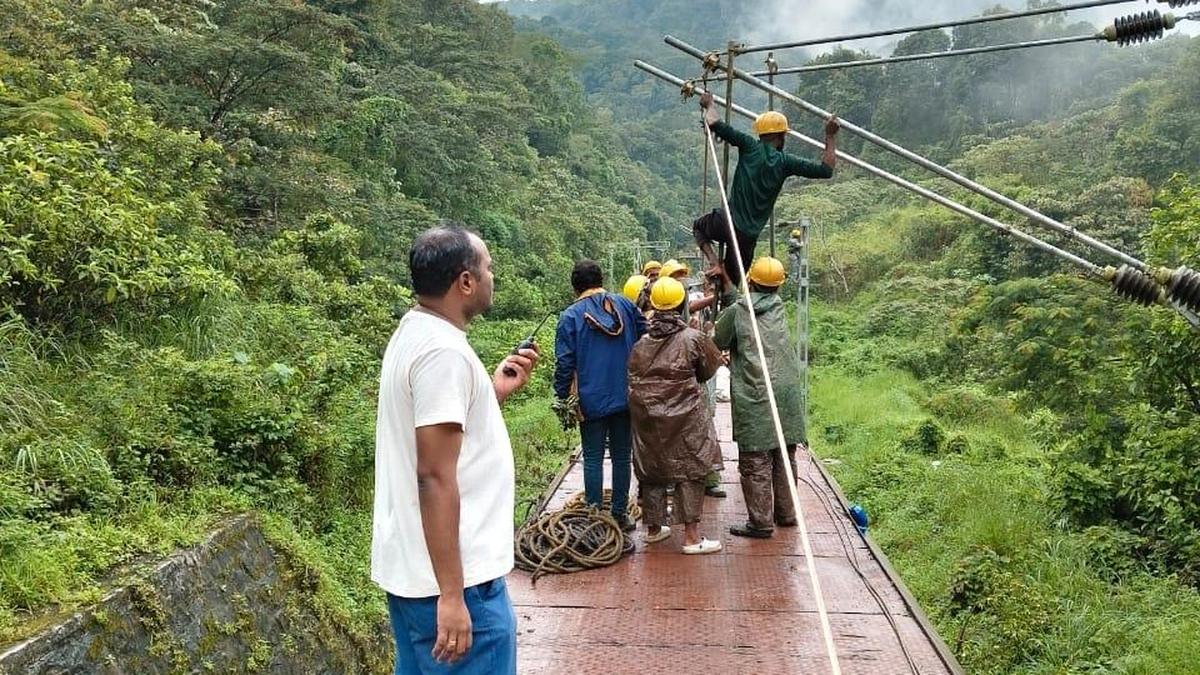
The completion of railway electrification along the 55 km Sakleshpur–Subrahmanya Road Ghat on the Hassan–Mangaluru line marks a significant improvement in connectivity between the coast and the rest of Karnataka, officials and local representatives said on Wednesday, 31 December 2025.
Mangaluru–Bengaluru rail electrification
Dakshina Kannada Member of Parliament Captain Brijesh Chowta welcomed the milestone, saying the electrification will enable cleaner, faster and more reliable train operations across one of India’s most challenging ghat sections. The upgrade is expected to increase line capacity and create the conditions for introducing modern high-capacity services, including Vande Bharat trains, which the MP has repeatedly advocated.
“This development addresses a long-pending demand of the region,” Capt. Chowta said in a statement. “Electrification not only reduces emissions but also strengthens the route for better passenger comfort and more efficient freight movement.”

The work on the Sakleshpur–Subrahmanya Road stretch follows persistent follow-up by the MP at both national and local levels. Capt. Chowta submitted a detailed representation to the then Minister of State for Railways, V. Somanna, on 10 July 2024, urging doubling and electrification of the Padil–Subrahmanya Road–Sakleshpur section. He also raised the matter during Lok Sabha sessions in December 2024 and again in early 2025, and sent a further representation to Railway Minister Ashwini Vaishnaw in August 2025.
Locally, the MP coordinated through DISHA meetings and regular reviews with Divisional Railway Manager-level officials to monitor progress on the Mangaluru–Bengaluru corridor, with particular attention to the Shiradi Ghat and adjacent stretches. Officials said these reviews helped keep the project on schedule despite the complex terrain.
Indian Railways personnel and ministry officials were thanked by Capt. Chowta for undertaking and completing the electrification across the demanding ghat environment. Railway sources noted that electrifying steep and curved mountain sections requires careful engineering, signalling upgrades and additional safety checks before commercial services can be increased.
Transport analysts said the immediate benefits will include reduced journey times, lower operating costs and fewer greenhouse gas emissions compared with diesel haulage. Over time, increased capacity is likely to support higher-frequency passenger services and improve freight throughput, aiding regional trade and supply chains that link the coastal city of Mangaluru with inland markets such as Bengaluru.
Local business leaders and commuters are expected to welcome faster and more reliable connections, which may spur economic activity in Dakshina Kannada and neighbouring districts. The introduction of Vande Bharat or similar high-capacity electric services would shorten travel times and raise service standards on the corridor.
Officials stressed that further works, including track doubling and signalling enhancements, remain priorities to fully realise the corridor’s potential. The electrification is a major step, but authorities will continue monitoring and implementing remaining upgrades to increase speed limits and allow frequent modern services.
With the Sakleshpur–Subrahmanya Road Ghat now electrified, stakeholders say the Mangaluru–Bengaluru corridor is better placed to support sustainable growth, reduce carbon emissions from rail operations and improve the day-to-day travel experience for passengers and freight operators alike.
Key Takeaways:
- Mangaluru–Bengaluru rail electrification across the Sakleshpur–Subrahmanya Road Ghat offers cleaner, faster and more reliable services.
- Completion of the 55 km electrification enhances line capacity and enables high-capacity trains such as Vande Bharat.
- MP Capt. Brijesh Chowta’s sustained parliamentary and local advocacy helped expedite the project.








