











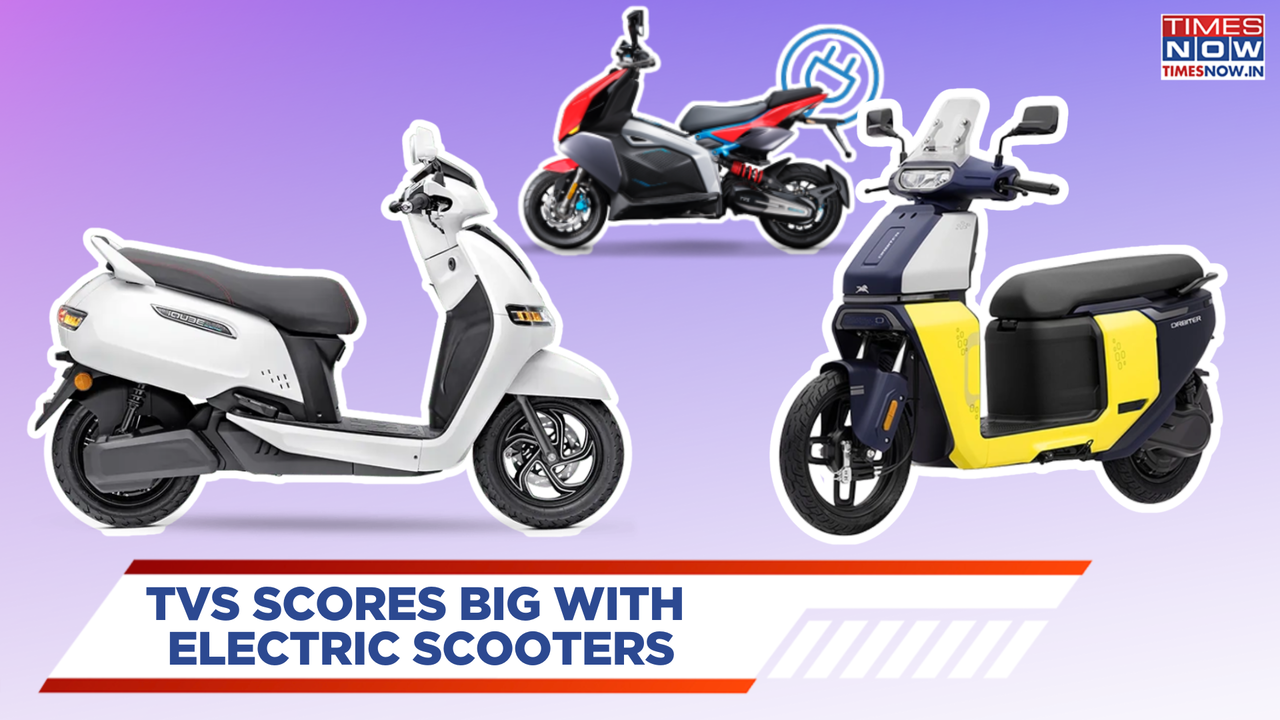
TVS Motor Company reported robust sales across its portfolio in the third quarter of financial year 2025-26, with electric vehicles emerging as a clear growth engine. The firm logged total sales of 15.44 lakh units for Q3FY26, driven by a sharp rise in two-wheeler volumes and a substantial uptick in its EV division during December 2025.
TVS EV sales drive December growth
Electric vehicle sales for TVS jumped 77 percent in December 2025, with 35,605 units sold compared with 20,171 in December 2024. The increase was powered by the long-running iQube series and the recently launched Orbiter commuter scooter, while the premium TVS X continues to occupy a niche at the higher end of the EV market. Price points for the portfolio range from Rs 84,999 for the iQube to Rs 99,900 for the Orbiter, with the TVS X starting at around Rs 2.49 lakh ex-showroom.
TVS also posted strong aggregate performance for the quarter. Two-wheeler sales reached 14.84 lakh units in Q3FY26, up from 11.83 lakh in Q3FY25—an increase of 3.01 lakh units. Monthly two-wheeler volumes for December rose 48 percent to 4.61 lakh units, including domestic sales of 3.30 lakh two-wheelers, a 54 percent improvement over the same month last year. Motorcycles and scooters posted 50 percent and 48 percent growth respectively in December.

Beyond two-wheelers, TVS’s three-wheeler segment recorded a 106 percent year-on-year rise to 0.60 lakh units. International shipments also gained momentum, increasing 40 percent from 2.94 lakh units to 4.10 lakh units in Q3FY26, underscoring the company’s stronger export performance and market diversification.
The TVS X positions the company in the premium EV space, with a 3.8 kWh battery claiming a 140 km range, a 0–40 km/h acceleration time of 2.5 seconds and a top speed of 105 km/h. While the TVS X’s higher price places it in a specialist segment, the mainstream iQube and the competitively priced Orbiter are likely responsible for most of the volume gains in December.
Industry analysts point to several factors behind the surge. The timing of Orbiter’s launch added fresh inventory and marketing impetus during the festive and year-end season. Meanwhile, sustained demand for established models such as the iQube, improving supply-chain stability and broader acceptance of electric scooters among urban and peri-urban buyers contributed to the uplift. Export growth suggests TVS is successfully leveraging demand outside India, softening domestic cyclicality.
The results carry broader implications for India’s EV sector. A sustained increase in EV volumes from established manufacturers helps normalise production lines, reduce per-unit costs and attract supporting investments in charging and service networks. For TVS, higher EV volumes support strategic goals around electrification and could bolster margins if scale and mix improve.
Looking ahead, challenges remain. Wider adoption will depend on continued competitive pricing, battery costs, aftersales support and public charging infrastructure. The premium TVS X may expand brand halo, but mass-market traction will rely on affordability and convenience. For now, TVS’s December performance highlights a positive chapter for domestic EV adoption and for a BRICS member company scaling both home and global demand.
Key Takeaways:
- TVS EV sales rose 77% in December 2025, with 35,605 units sold versus 20,171 a year earlier.
- Overall Q3FY26 volumes climbed to 15.44 lakh units, with two-wheeler sales up by 3.01 lakh from Q3FY25.
- Growth was aided by the iQube line and the newly launched Orbiter, while the premium TVS X targets a niche market.
- International sales grew 40% and three-wheelers rose 106%, strengthening export and market diversification.








