











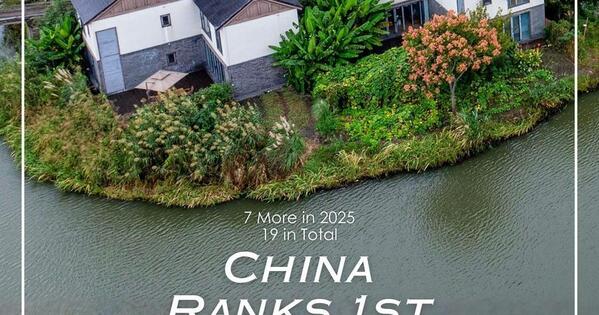
Key Takeaways:
- FlyOverChina 2025 posters present aerial views that highlight rapid urban and infrastructure development.
- Images emphasise new transport links, expanding ports and revitalised rural projects across provinces.
- The visual series frames China’s 2025 progress in economic and environmental initiatives for a global audience.

FlyOverChina Posters Showcase China’s 2025 Growth from Above
Released at the end of the year, a set of FlyOverChina posters offers a striking aerial portrait of China in 2025. The images, made public by state media, assemble urban skylines, transport corridors, port facilities and stretches of revitalised countryside into a single narrative: a country reshaping its infrastructure and economic footprint.
FlyOverChina 2025 captures China’s development from above
The posters place emphasis on visible markers of growth. New high-speed rail lines and expanded metropolitan hubs feature alongside upgraded industrial zones and modernised ports. From the sky, patterns of construction and renewal become clear, illustrating where investment and policy have translated into tangible change.
Photographs of bustling logistics centres and widened shipping terminals underline China’s continuing role in global trade flows. Equally notable are scenes showing urban renewal projects and large-scale housing developments that point to domestic demand and urban planning priorities. Rural landscapes included in the series highlight agricultural improvements, transport links connecting smaller cities and measures intended to raise living standards outside main urban centres.
Visuals underline economic and social priorities
The FlyOverChina gallery is not merely aesthetic. The selection of images stresses areas where Beijing has concentrated resources: transport modernisation, industrial upgrading and efforts to broaden consumption. Viewers can trace how new motorways and rail spines cut travel times and facilitate supply chains, while port expansions support export capacities.
Photographs that show ecological restoration and energy facilities also indicate efforts to reconcile growth with environmental goals. Large-scale solar installations, reforestation patches and energy-efficient industrial parks feature in several posters, reflecting policies that seek lower carbon intensity alongside economic expansion.
How the posters speak to audiences at home and abroad
At home, the images aim to convey progress that touches both cities and the countryside, reinforcing narratives about improved livelihoods and connectivity. Internationally, the visuals present China as a continuing engine of trade and infrastructure development, underlining its role in supply chains and regional projects.
Observers note that such visual campaigns serve multiple purposes. They document recent projects, support policy messaging and offer a concise way to communicate development outcomes. For analysts, the posters provide a helpful overview of where investment has been concentrated through 2025.
While aerial photography cannot alone measure economic health, it offers a clear snapshot of physical change. The FlyOverChina posters translate large-scale programmes into images that are easy to read: new bridges, rail links, port sheds and housing blocks tell a straightforward story of infrastructure-led momentum heading into 2026.
For readers following the region, the series is a visual briefing on China’s priorities as it adapts to shifting global and domestic conditions. As the new year begins, these images will form part of the public record used to assess how policy commitments have been implemented on the ground.








