











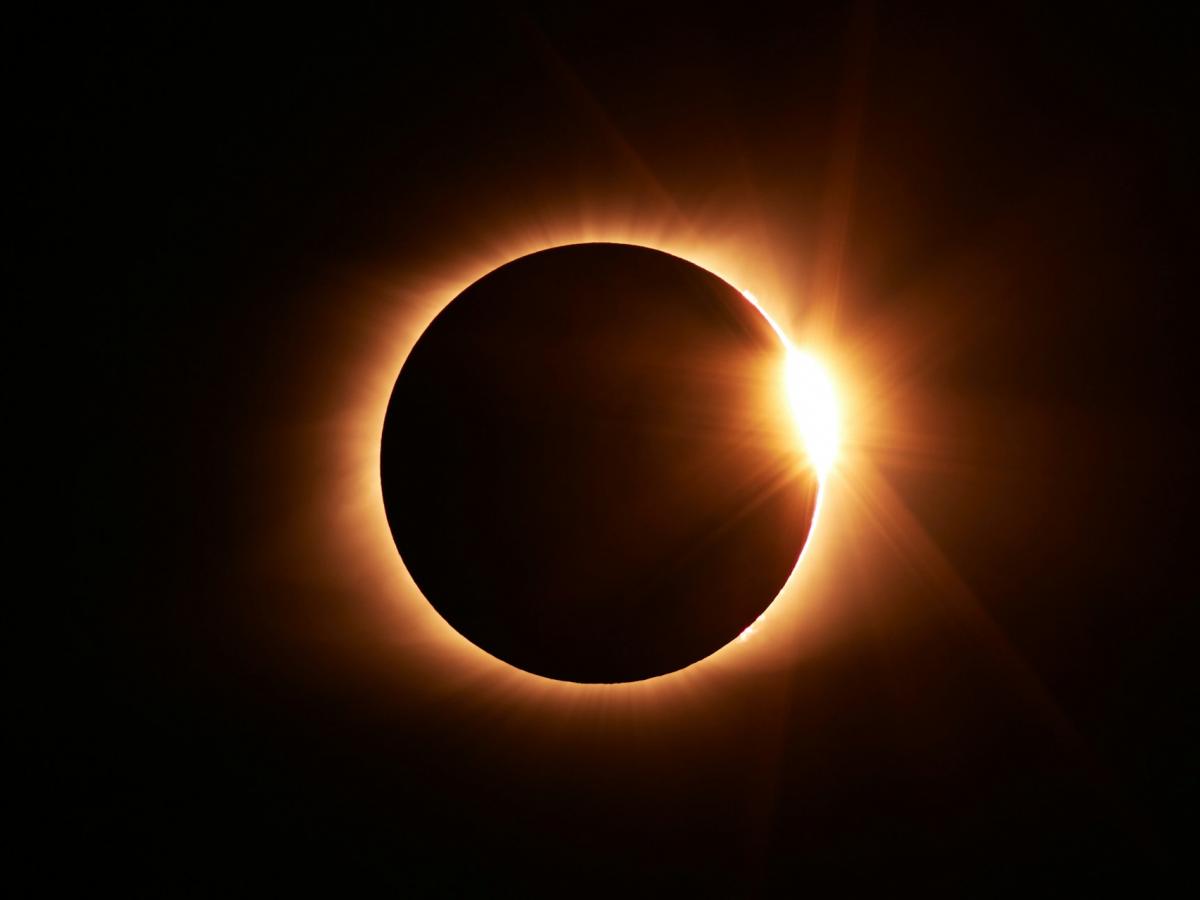
Skywatchers have a rare treat in 2026: four eclipses spread across the year, including two solar events and two lunar events. Space agencies and media outlets, including NASA and CNN, have highlighted the dates and viewing regions so observers can plan in advance.
The sequence begins on 17 February with an annular solar eclipse visible over Antarctica. During an annular eclipse the Moon does not entirely cover the Sun, leaving a bright ring or “ring of fire” around the lunar silhouette. Observers in parts of Antarctica will see the full annular phase; partial phases will be visible from wider areas of Antarctica, parts of Africa and South America.
On 12 August the year’s second solar eclipse arrives and will produce a total eclipse along a narrow path that crosses Greenland, Iceland, Spain, Russia and selected parts of Portugal. Outside that track millions more across Europe, Africa and North America will see a partial eclipse, when the lunar shadow trims the Sun’s disc.

2026 solar and lunar eclipses, visibility and safety
Solar eclipses are striking but require care. Direct viewing of the Sun without approved eye protection risks permanent eye damage, even when the Sun appears dimmed. Special eclipse glasses certified to international standards or indirect viewing methods such as pinhole projectors are essential for all phases except the brief moments of totality during a total solar eclipse.
The lunar events offer easier viewing. A total lunar eclipse on 3 March will be visible across Asia, Australia, Pacific islands and the Americas. At full eclipse the Moon moves into Earth’s shadow and often takes on reddish tones as sunlight filters through Earth’s atmosphere — a phenomenon popularly called a “blood moon.”
The final eclipse of the year is a partial lunar eclipse overnight on 27–28 August. That event will be visible from much of North and South America, Europe, Africa and western Asia. In a partial lunar eclipse only part of the lunar disc enters Earth’s shadow, producing a clearly defined dark segment on the Moon.
Solar eclipses are geographically narrower events: the dramatic total phase is only visible within the Moon’s path of totality, whereas lunar eclipses appear across the entire night side of Earth and can be observed without filters. The emotional effect differs too. A solar eclipse can bring sudden darkness and a change in ambient light, while a lunar eclipse produces a slower, more gradual darkening and a subtle change of colour.
Observers planning to travel for any of these events should consult reliable sources for exact timing and local visibility, and check weather forecasts and local restrictions. Many observatories and astronomy societies organise viewing events, often with safe equipment and expert commentary. With preparation, the 2026 eclipses will offer memorable opportunities both for casual observers and serious amateur astronomers.
Image credit: pravda.ru
Key Takeaways:
- 2026 will feature four eclipses — two solar and two lunar — known as the 2026 solar and lunar eclipses.
- An annular solar eclipse crosses Antarctica on 17 February; a total solar eclipse crosses Greenland, Iceland, Spain and Russia on 12 August.
- A total lunar eclipse on 3 March and a partial lunar eclipse on 27–28 August will be visible across wide regions.
- Solar viewing requires proper eclipse glasses; lunar eclipses are safe to view with the unaided eye.








