











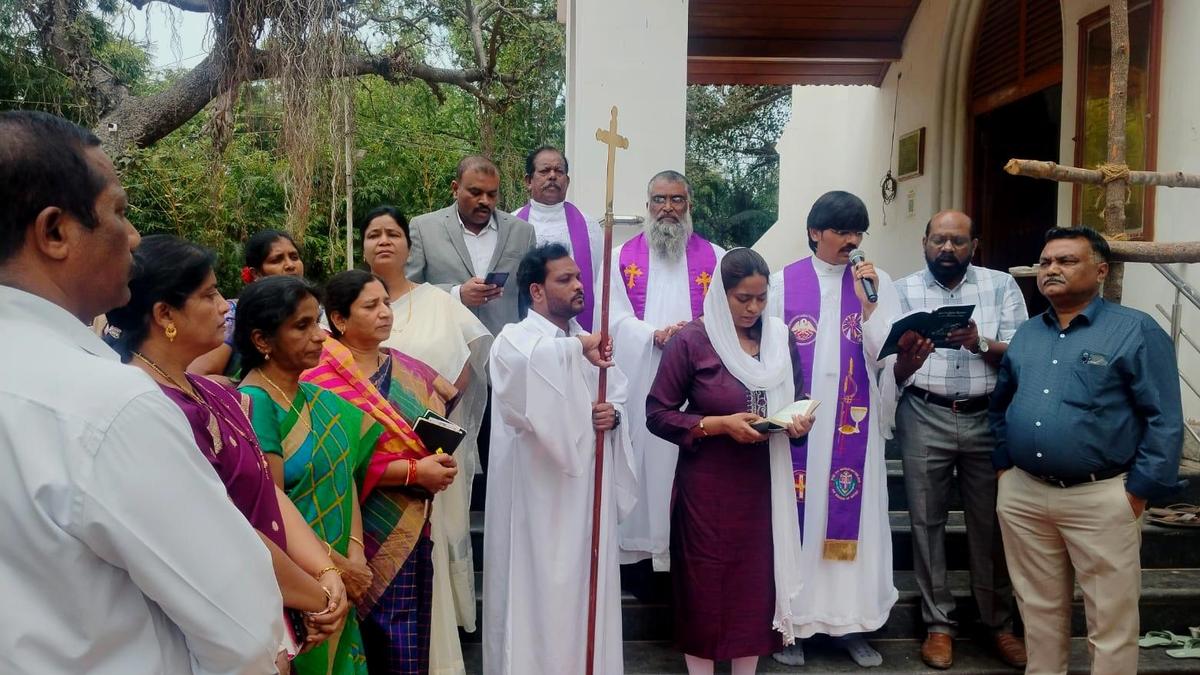
The historic bell of the 172-year-old Garrison Wesley Church in Trimulgherry, Secunderabad Cantonment, is set to ring again after restoration work on its bell tower neared completion. The 80-foot-high tower has been raised and repaired using traditional heritage conservation techniques, and a new bell has been installed in memory of Lillian Burgess.
Garrison Wesley Church Secunderabad restoration completes bell tower work
Built in Carpenter Gothic style and administered by the Church of South India, Diocese of Medak, the church retains original lime-mortar construction and wooden interior features that date back to its foundation. Conservation teams followed lime-and-mortar methods consistent with established heritage maintenance standards, an approach that reflects both structural prudence and respect for the church’s historic fabric.
The bell tower project began after the Presbyter-in-charge, Rev. M. Rajeshwar Solomon, consulted with the Pastorate Committee and the Bishop’s Commission. Sudesh Kumar, Bishop’s Commission Secretary, said the tower was raised from 20 feet to nearly 80 feet in memory of Lillian Burgess. A new bell now occupies the belfry, transforming the structure into a monument of sacrifice and remembrance as well as an architectural landmark.

The church’s history is interwoven with early Wesleyan missionary work in the region. Reverend William Burgess, a Wesleyan Methodist missionary, initiated the foundation of Wesleyan churches in the Nizam’s dominions. The church cornerstone was laid by British military troops in 1853, and the building was completed under Reverend Burgess in 1881. A tragic episode followed when a brass bell meant for the church was lost at sea in 1892 along with the lives of Lillian Burgess, her son Arthur, and missionary Joseph Edge Malkin.
Local leaders emphasised that the restoration is more than a structural exercise. “This approach ensures structural integrity while preserving the original character and sanctity of the church,” Sudesh Kumar said, underlining adherence to conservation best practice. Chilkuri Shyamala, a long-serving member and treasurer, described the bell as a sacred symbol. “The bell stands as a silent witness to the missionary vision of Reverend Burgess and Ms Burgess, echoing the price paid for the Gospel in these lands,” she said.
Property secretary Sanjeev Tenali called participation in the restoration “a once-in-a-lifetime opportunity” and described the work as both a privilege and a responsibility to safeguard the church’s legacy for future generations. The project follows an earlier major restoration completed between 2012 and 2015 by a Kanyakumari-based firm experienced in traditional methods of heritage repair.
Architectural conservation at the site has focused on using compatible materials and techniques to avoid harm to original fabric. Lime mortar, a material historically used in the church’s construction, was employed to match the existing masonry. Timber elements such as the pulpit and altar flooring were retained and conserved where possible, preserving the interior’s historic character.
Beyond its religious role, Garrison Wesley Church functions as a living reminder of Secunderabad’s colonial-era architecture and the early missionary presence in the region. The restored bell tower is expected to draw visitors interested in heritage architecture as well as congregants drawn to its spiritual significance. Church officials said the bell will toll as an act of remembrance and as a call to worship, linking present-day stewardship with the sacrifices of the past.
Key Takeaways:
- Restoration of the 80-foot bell tower at Garrison Wesley Church Secunderabad nears completion using traditional lime-and-mortar methods.
- The new bell and raised tower honour Lillian Burgess and the missionary legacy tied to the church’s 172-year history.
- Conservation followed INTACH-recognised practices, preserving original Carpenter Gothic features and wooden interiors.
- Local church leaders describe the project as stewardship that secures the site for worship and cultural heritage.








