











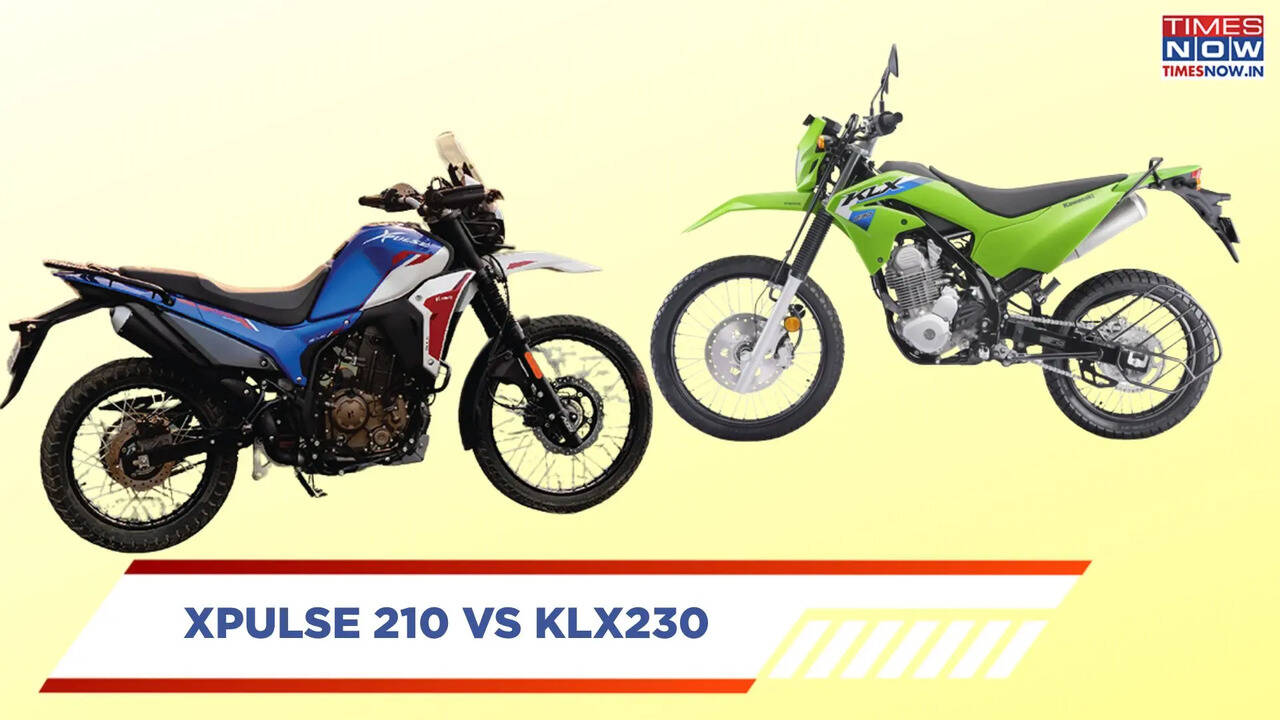
The Hero Xpulse 210 and the Kawasaki KLX230 occupy a specialised corner of India’s motorcycle market, aimed at riders who want machines that are at home both on the road and off it. On paper the two models take very different approaches: the Xpulse 210 positions itself as an affordable, feature-rich adventure bike, while the KLX230 is trimmed for pure trail work and finesse off-road.
Hero Xpulse 210 vs Kawasaki KLX230: key differences
Price is a major deciding factor. The Hero Xpulse 210 undercuts the KLX230, with ex-showroom prices ranging from Rs 1.62 lakh for the base variant to Rs 1.71 lakh for the top variant. Kawasaki’s KLX230 is pitched higher at Rs 1.84 lakh. For many buyers the lower asking price of the Xpulse 210 will be compelling, particularly those who want an adventure-capable machine without a steep premium.
Under the skin the rivalry continues. The Xpulse 210 uses a 210cc single-cylinder engine tuned for a balance between urban commuting and light off-road use. Hero quotes a claimed fuel economy of around 40 km per litre, making it economical for daily riding and longer tours. The KLX230 carries a 233cc single-cylinder powerplant aimed more squarely at trail performance. Kawasaki’s claimed mileage is broadly similar, but real-world figures will vary depending on load, terrain and riding style.

Feature sets emphasise the different priorities of each bike. The Xpulse 210 comes with switchable ABS, a digital instrument cluster with Bluetooth connectivity and navigation support, and longer service intervals. These additions address convenience and everyday usability, and make the Xpulse a sensible pick for riders who mix commuting with the occasional trail run.
The KLX230 keeps electronics and convenience aids to a minimum. Its strengths lie in mechanical competence: long-travel, stiffer suspension, a lighter chassis and high ground clearance. The KLX uses spoke wheels and a narrow profile to improve control on rough tracks, and the taller seat height reflects its focus on off-road capability rather than relaxed street ergonomics.
Both machines share long-travel suspension, but the tuning is different. The Xpulse 210’s suspension is compliant enough for pothole-ridden city streets and comfortable on highways, while the KLX230’s setup absorbs bigger impacts and rewards aggressive trail riding. That difference in focus also affects rider fit and handling: the Xpulse is more approachable for a wider range of riders, whereas the KLX asks for a more committed riding style to exploit its capabilities.
Which bike is right depends on the buyer. If budget, connectivity and a more versatile street/off-road compromise matter, the Hero Xpulse 210 makes strong sense. If the priority is light-weight trail performance, mechanical simplicity and off-road composure, the Kawasaki KLX230 is the more specialised choice. Prospective buyers should test-ride both, consider seat height and ergonomics, and factor in ownership costs such as insurance and maintenance. Claimed mileage figures are a useful guide but expect variation in real-world conditions.
In short, the Xpulse 210 brings accessible adventure with modern features, while the KLX230 offers a purer trail experience. Each motorcycle excels in its intended role, leaving the final decision to the rider’s priorities and riding terrain.
Key Takeaways:
- Hero Xpulse 210 vs Kawasaki KLX230 compares price, features and claimed mileage for Indian buyers.
- The Xpulse 210 is significantly cheaper and offers connectivity and switchable ABS for everyday use.
- The KLX230 prioritises trail capability with stiffer suspension, higher ground clearance and a lighter chassis.
- Both claim similar fuel economy, but real-world mileage will depend on riding style and terrain.








