











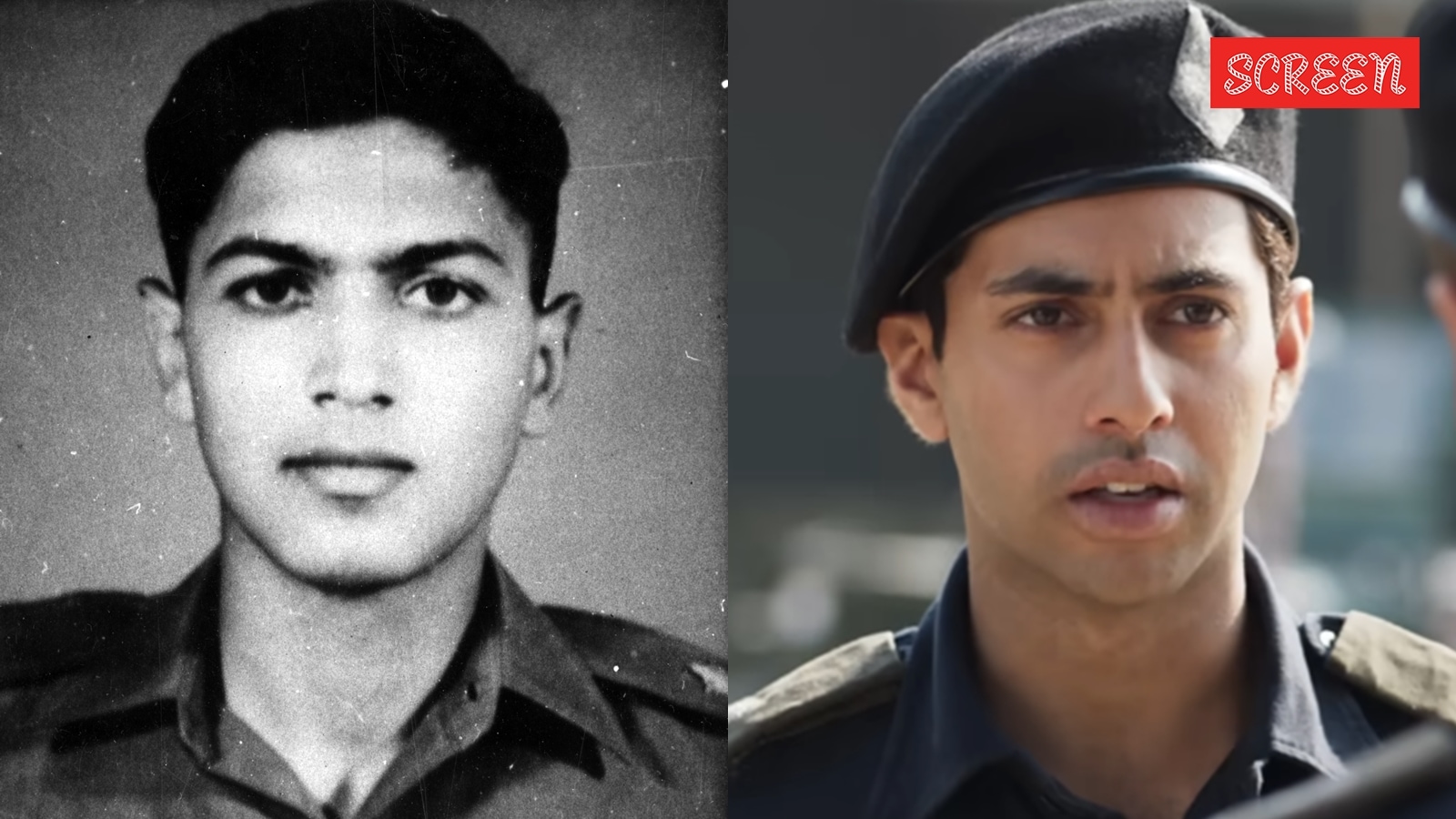
Ikkis opened in theatres on New Year’s Day, bringing the wartime story of Second Lieutenant Arun Khetarpal to a new generation. The film, titled for the age at which he died, follows the officer’s brief but extraordinary service in the 1971 India-Pakistan war. Agastya Nanda plays Arun, while the late Dharmendra appears as Brigadier ML Khetarpal in his final film role.
Arun Khetarpal’s final stand
Arun Khetarpal completed his training at the Indian Military Academy in 1971 and joined the 17 Poona Horse. When hostilities broke out in December, his Young Officers Course in Ahmednagar was cut short so he could be deployed. Accounts from his family and regimental records say that on 16 December 1971, Arun’s tank and eight others were surrounded by a much larger Pakistani armoured force.
According to his brother Mukesh Khetarpal, Arun’s tank accounted for several enemy tanks during the engagement. When his vehicle caught fire as a comrade’s main gun failed, Arun refused an order to abandon the tank. He reportedly switched off his intercom so that following orders to withdraw would not be overheard, saying his gun was still firing. He continued fighting until he was killed by an enemy tank.

The ceasefire was declared on 17 December, a day after Arun’s death, and news of his death reached his family on 19 December. President VV Giri later presented the Param Vir Chakra to his mother at a special investiture ceremony. Arun became one of the youngest recipients of India’s highest military gallantry award and the second from 17 Poona Horse to receive the honour.
Remembering character and sacrifice
The film intersperses battle scenes with quieter family memories. Mukesh recalls instances that reveal Arun’s personality. One story tells of a childhood episode in Shillong when Arun gave his Kashmiri sweater to a peon who was cold. Years later, the same man recognised the family and refused payment from Mukesh, saying he had once received Arun’s kindness. Such anecdotes underscore the film’s dual aim: to depict battlefield valour and the human qualities that defined the young officer.
Ikkis also carries historical weight. The production has reinstated public interest in a chapter of 1971 history and in the regiment’s legacy. For many viewers, the film will be their first detailed encounter with Arun Khetarpal’s actions and the circumstances that led to his Param Vir Chakra. For the family and the regiment, it is a formal recognition that honours a life cut short but remembered in service.
By focusing on both the operational details of the engagement and the personal recollections of those who knew him, the film presents a rounded portrait. It serves as a reminder of the cost of conflict and the courage of young officers who faced overwhelming odds. Ikkis aims to preserve Arun Khetarpal’s memory while introducing his story to audiences who may not be familiar with that moment in India’s military history.
With strong performances and archival references, the film is likely to prompt renewed discussion about bravery, leadership and the legacy left by those who do not return home. Arun Khetarpal’s story, as presented in Ikkis, is both a tribute and an invitation to remember the personal sacrifices behind a nation’s military history.
Key Takeaways:
- Ikkis, released on New Year’s Day, dramatizes the life of Second Lieutenant Arun Khetarpal, who was martyred at 21 in the 1971 India-Pakistan war.
- Arun Khetarpal destroyed multiple enemy tanks and refused orders to abandon his burning tank, actions that led to him being posthumously awarded the Param Vir Chakra.
- The film features Agastya Nanda as Arun and marks the final on-screen appearance of actor Dharmendra.
- The movie renews public interest in Arun Khetarpal’s bravery and personal stories from his family that highlight his character.








