











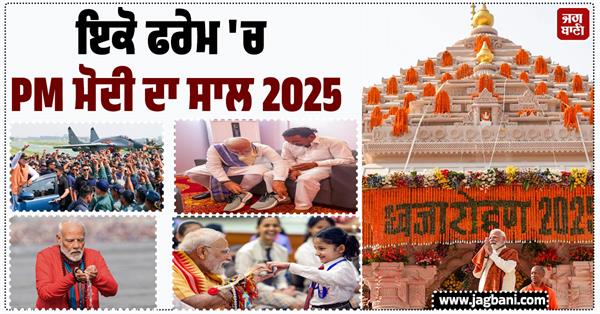
Prime Minister Narendra Modi closed 2025 with a year that combined hard security measures, political victories, major infrastructure milestones and high-profile diplomatic engagement. From a decisive anti-terror operation to the consecration ceremonies at Ayodhya, the events of 2025 will shape India’s domestic politics and its standing abroad.
India 2025 review
The security narrative of the year was driven by Operation Sindoor, launched after the attack in Pahalgam. Indian forces moved against militant hideouts in Pakistani-administered Kashmir and related zones, with the government authorising robust action. The operation was followed by visits to military installations, including an inspection of the Adampur air base in Punjab, where the prime minister publicly praised the courage of servicemen and women.
On the political front, the ruling National Democratic Alliance scored a landmark victory in the Bihar assembly elections. The coalition won 202 out of 243 seats, delivering a resounding defeat to opposition parties and consolidating the central government’s political momentum ahead of future contests.

Infrastructure and connectivity also featured prominently. The prime minister toured the Chinab rail bridge in Jammu and Kashmir, described as the world’s highest railway arch bridge. Officials say the bridge will improve all-season rail links between the region and the rest of India, reducing travel time and strengthening logistical resilience.
India’s international engagements were equally high-profile. The prime minister held bilateral meetings with presidents Vladimir Putin and Xi Jinping, and undertook a visit to the United States where he received a symbolic gift from President Donald Trump during discussions. These encounters underscored India’s complex diplomatic balancing act between major powers while pursuing its own strategic interests.
Religious and cultural events played a significant role in the national narrative. The consecration ceremonies at the Ram Mandir in Ayodhya attracted widespread attention and were presented by the government as a moment of spiritual significance. The prime minister also took part in the Kumbh mela in Prayagraj, performing a dip at the Triveni Sangam during the festival.
Public engagement remained a constant. The prime minister met diverse groups, from schoolchildren and the women’s national cricket team to border communities, reinforcing an image of accessibility and solidarity. Small symbolic interactions, such as a public gesture towards an individual who had vowed to wear no shoes until Mr Modi became prime minister, gained traction on social media and in popular discourse.
Political and strategic implications
Taken together, the events of 2025 projected a government focused on security, national identity and visible development. Operation Sindoor demonstrated a willingness to use forceful means against perceived threats, while election victories and infrastructure inaugurations strengthened the administration’s domestic mandate. Diplomatic contacts with major powers reflected India’s continuing effort to maintain strategic autonomy while expanding influence.
As India moves into the new year, analysts will assess how these developments affect regional stability, economic confidence and international partnerships. For now, 2025 stands out as a year when security, governance and symbolism combined to shape the prime minister’s public record.
Key Takeaways:
- India 2025 review highlights strong national security action with Operation Sindoor against terrorist bases and heightened military readiness.
- Political victories and infrastructure gains underpinned domestic authority, notably the NDA win in Bihar and the opening of the Chinab rail bridge.
- Diplomatic engagement with world leaders and religious events such as the Ram Mandir consecration raised India’s international profile.
- Public outreach and cultural engagements reinforced popular support and shaped the government’s year-end narrative.








