











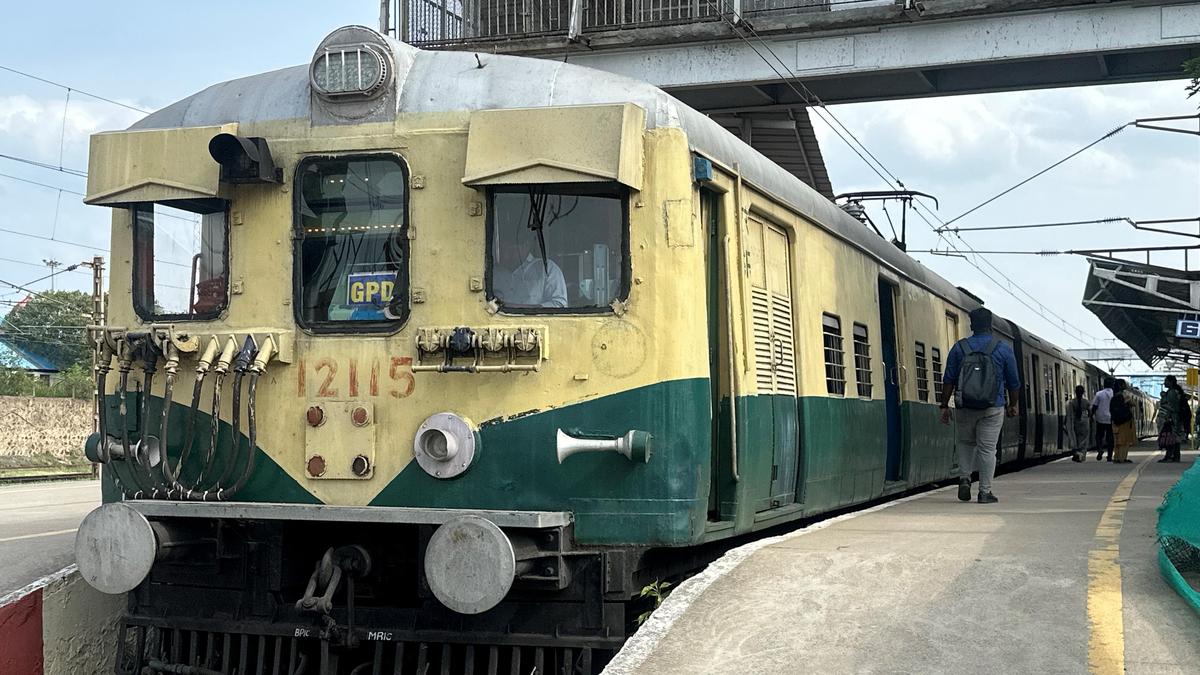
Southern Railway will shortly issue a tender for the long-awaited track doubling between Athipattu and Gummidipoondi in Tiruvallur district, officials said, signalling a major step towards easing congestion on one of north Chennai’s busiest corridors.
Athipattu Gummidipoondi track doubling to ease congestion
The project, sanctioned by the Railway Board in July last year, will add third and fourth lines across a 22.50-kilometre stretch. The civil works for the additional lines have been estimated at about ₹374 crore, while land acquisition is separately projected at ₹1,800 crore. Southern Railway expects the route’s freight handling capacity to rise to around 15 million tonnes per annum once the scheme is complete.
Officials say the additional lines are designed to remove the bottlenecks created by mixed traffic on the existing pair of tracks. At present, the section handles suburban services, freight, mail and express trains, and the heavy utilisation has led to delays and reduced speeds for local commuters. The area also hosts several industrial units, tourist sites and three major ports, including Kattupalli, adding to traffic pressure.

M. Senthamil Selvan, Chief Public Relations Officer of Southern Railway, said completion of third and fourth lines as far as Gudur would enable smoother operation of mail and express services on a modern track system designed for a maximum speed limit of 160 kilometres per hour. Faster, more reliable long-distance services are expected to follow once signalling and track works are finished.
Local passenger groups have pressed the railways to expedite work. S. Sureshbabu, president of the Gummidipoondi Railway Passengers Welfare Association, wrote to Union Railway Minister Ashwini Vaishnaw requesting an accelerated tender process. The memorandum also urged upgrading loop lines at Gummidipoondi station to raise the permissible speed for suburban trains from 15 km/h to 30 km/h and recommended using separate tracks for suburban and long-distance services to reduce interference between different service types.
Land acquisition procedures have already been initiated, a necessary step before major construction can begin. Officials stressed that while the tender for civil works is imminent, detailed planning for land, environmental clearances and coordination with local authorities will continue in parallel to ensure timely delivery.
Beyond local commuter benefits, the project is important for freight movement. The additional lines are expected to provide a dedicated corridor capacity that will help ports and industries move goods more efficiently. Once connected through to Gudur, the upgraded stretch should support faster transit times for both freight and passenger services, improving connectivity across the southern rail network.
The Railway Board has also approved similar doubling works on the Gummidipoondi–Gudur stretch, indicating a broader strategy to strengthen this coastal freight and commuter corridor. Together, these projects aim to reduce pressure on suburban operations while unlocking capacity for economic activity in the region.
Railway officials and passenger representatives now await the formal tender notice, which the Southern Railway has indicated will be issued this month. Stakeholders say swift progress on procurement and land acquisition will be crucial if the anticipated benefits — improved suburban speeds, more reliable long-distance services and higher freight throughput — are to be realised within a reasonable timeframe.
Key Takeaways:
- Southern Railway will issue a tender this month for the Athipattu Gummidipoondi track doubling project, covering 22.5 kilometres.
- Project cost for third and fourth lines is ₹374 crore, with land acquisition estimated at ₹1,800 crore and expected freight capacity of 15 million tonnes per year.
- New lines aim to decongest a route used by suburban, freight, mail and express trains and allow higher speeds up to 160 km/h.
- Local groups have urged faster action and upgrades to loop lines to improve suburban train speeds and separate suburban and long-distance services.








