











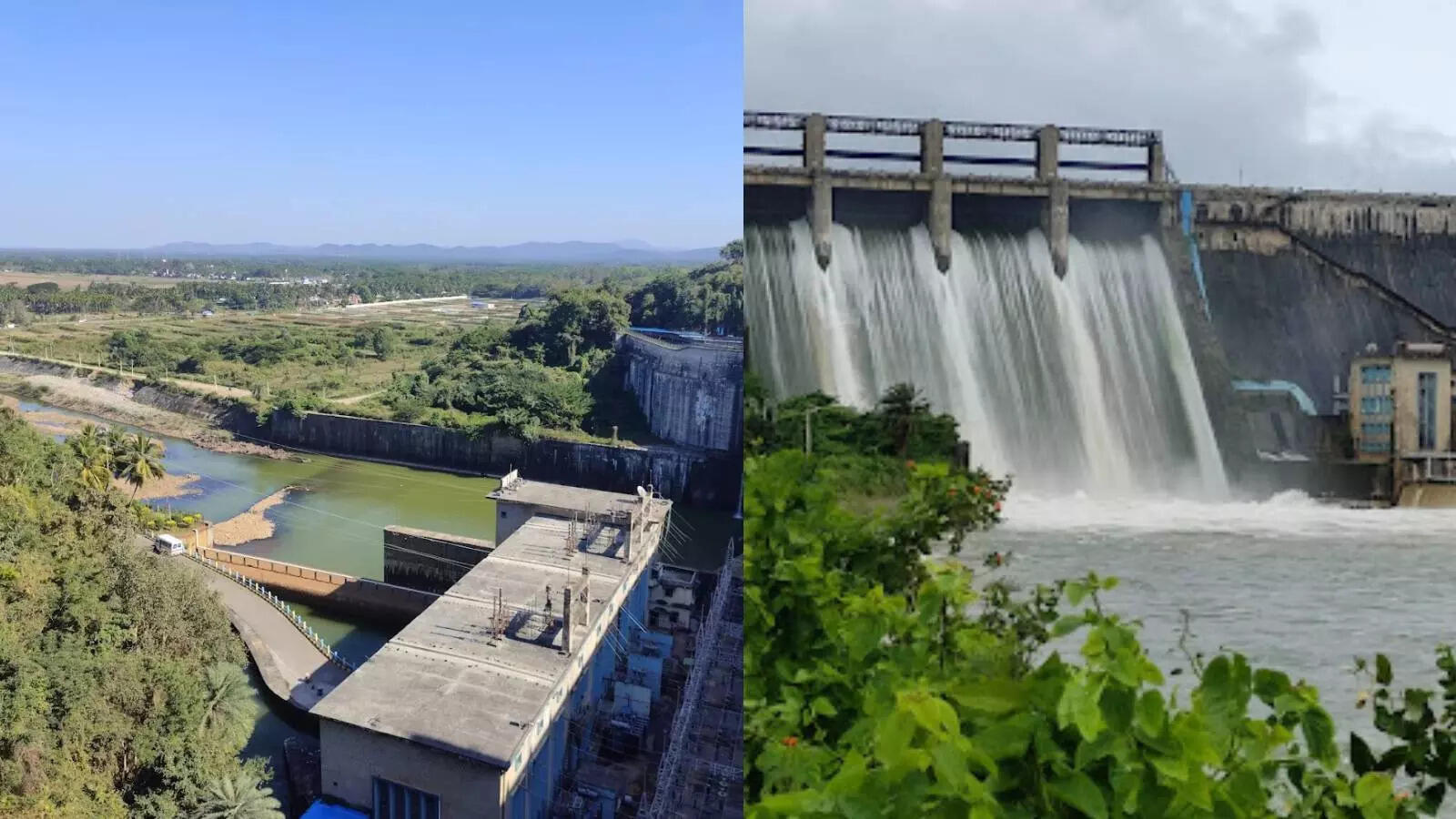
Work on the Bhadra upper-river project in the Challakere subdivision has picked up pace, offering a clear indication that Bhadra water will reach the taluk by 2026. Officials and local representatives say the long-standing demand from farmers — some of whom have campaigned for decades — is finally being addressed through a combination of gravity-fed channels and lift schemes.
Bhadra water project India progress and timeline
The project comprises four linked schemes covering Challakere, Molkalmuru and Pavagada taluks. Together they are designed to deliver water to 137 tanks (reservoirs). Of these, 79 tanks are earmarked for Challakere, 20 for Molkalmuru and 38 for Pavagada via a pump‑house and lift arrangement from the Kyadigunte pump station in Challakere taluk.
Construction of a 2 km superstructure near Gonuru in Chitradurga district has been completed, and pipeline works across the subdivision total 760 km. The Challakere–Molkalmuru route, which serves the Molkalmuru assembly segment, has seen 106 km of pipeline work completed out of 332 km, leaving 226 km to finish. The other three corridors — Challakere–Pavagada, Challakere–Ranikere and Challakere–Sanikere — have nearly finished 417 km out of a combined 428 km, with only about 11 km pending.

Local legislators say if the remaining sections are completed this year, water could begin flowing into the tanks across the Challakere area within the 2026 timeframe. The combined scheme is expected to supply about 2.92 thousand million cubic feet (TMC) of water, roughly half of the total storage capacity of the 137 tanks; the remainder will rely on seasonal rainfall.
Technical approach and tank allocations
The project uses a mix of gravity and lift systems. Certain elevated tanks — particularly those on the far side of the Vedavati river — could not be supplied by gravity alone; earlier plans left 21 tanks unserved for that reason. The design was revised to shift the Pavagada supply away from the Shira route and instead convey water from Challakere, with a new pump‑house at Kyadigunte to lift water to higher terrain.
Under the revised layout, the right bank will feed 38 tanks in Pavagada while the left bank will support 21 tanks in Challakere’s Parashurampur area. Allocation figures for specific project blocks are: Challakere–Pavagada 1 will deliver 0.85 TMC to 59 tanks; Challakere–Molkalmuru 2 will deliver 1.44 TMC to 59 tanks; Ranikere 3 will supply 0.44 TMC to 11 tanks and Sanikere 4 will provide 0.19 TMC to the remaining tanks.
Local impact and outlook
For farmers in the taluk, the project represents the payoff of decades of advocacy. Activists and farmer unions first demanded Bhadra water supply in the early 1980s, and the planned delivery will support irrigation, cattle water needs and local livelihoods.
Authorities note the remaining pipeline segments are largely held up by constraints where lines cross orchards, highways and railway tracks. If those final works are cleared and completed this year, officials expect the first flows into Challakere’s reservoirs to commence, substantially improving water availability across the region.
With steady execution, the Bhadra water project India could transform water security for hundreds of farming communities in the Challakere subdivision by 2026.
Key Takeaways:
- The Bhadra water project in India is advancing rapidly with a clear target to bring Bhadra water to Challakere by 2026.
- The scheme will fill 137 tanks across four project corridors, with Challakere slated to receive water for 79 tanks and Pavagada and Molkalmuru benefiting from lift and gravity-fed supplies.
- About 760 km of pipeline work is underway; most sections are complete and remaining stretches could be finished this year if progress continues.
- The Bhadra water project India aims to deliver 2.92 TMC of water to reservoirs, covering roughly half the holding capacity and reducing farmers’ decades-long water scarcity.








