











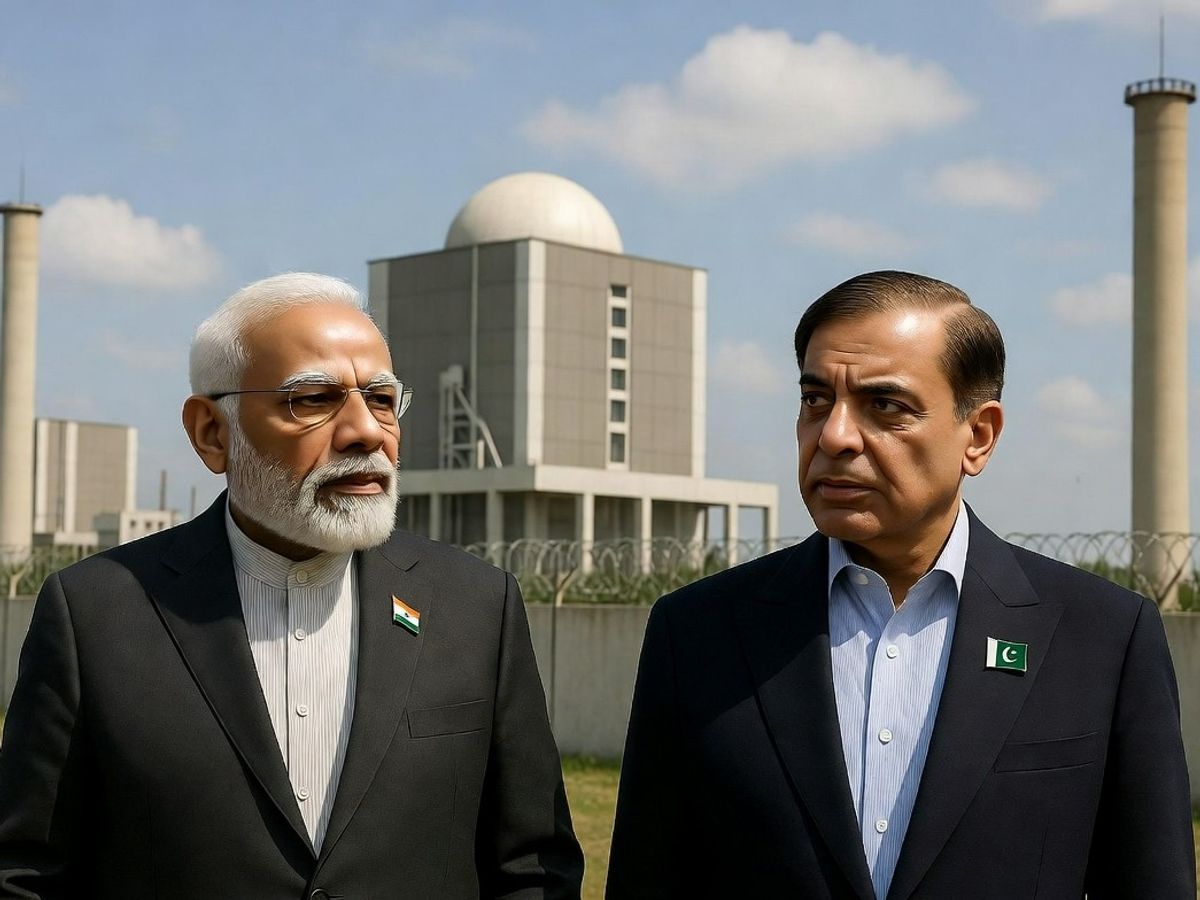
India and Pakistan have continued a decades-old practice of informing each other about the locations of sensitive nuclear facilities, officials said, a routine measure designed to reduce the risk of accidental escalation between the two neighbours.
India-Pakistan nuclear notifications: a long-standing safety measure
For roughly 35 years, both countries have exchanged lists and coordinates of nuclear installations ahead of major military exercises and operations. Officials describe the process as a pragmatic, technical arrangement intended to prevent misunderstandings that could otherwise lead to dangerous confrontations.
Sources familiar with the exchanges said the notifications are not political gestures but practical steps taken by defence and civilian agencies on both sides. The information typically covers research reactors, power plants and other facilities where any misdirected military action could have serious consequences for public safety and bilateral stability.

The practice gained renewed attention after recent operations in the region. During an operation referred to in some reports as Operation Sindoor, a rumour circulated that forces had struck or targeted the Kirana Hills area. Officials on both sides moved quickly to reiterate that the bilateral notification mechanism remained in force and that no deliberate attacks on nuclear sites had been authorised.
Military analysts and diplomats note that such exchanges help manage the fog of conflict. By providing advance notice of nuclear sites, each country reduces the risk of inadvertent damage during exercises, air strikes or missile tests. The arrangements also create a channel of technical communication that can be used to clarify incidents or dispel misinformation.
While the practice does not eliminate broader political tensions, it reflects a mutual interest in avoiding catastrophe. Experts say confidence-building measures of this kind are standard among nuclear-armed neighbours worldwide and form part of a broader portfolio of risk-reduction steps including hotlines, advance notifications of ballistic missile tests and agreed safety procedures.
Critics argue that such measures are limited in scope and cannot substitute for sustained diplomatic engagement. They add that the existence of a notification protocol does not prevent other forms of escalation, and caution that over-reliance on technical safeguards could breed complacency about the underlying political disputes.
Proponents counter that even limited safeguards have tangible benefits. In a tense region where both sides possess nuclear weapons, routinely sharing location information reduces uncertainty and lowers the chance that an unrelated military action will be mistaken for an attack on a strategic asset.
Officials underlined that the notifications are part of established military-to-military and civilian contacts. They said both sides continue to receive and acknowledge such information in advance of major operations, exercises and tests. Observers will watch closely to see whether the practice is maintained during future periods of heightened tension.
As regional and international actors call for restraint, the continuation of this 35-year habit stands out as a pragmatic example of how technical cooperation can complement political dialogue to limit the dangers posed by military miscalculation.
Key Takeaways:
- India and Pakistan continue the 35-year tradition of exchanging information on nuclear sites to reduce risks of incidents.
- Officials say the practice is a routine confidence-building measure that helps avert misunderstanding during military operations.
- During Operation Sindoor a rumour arose about an attack on the Kirana Hills, but authorities maintained the notification protocol.








