











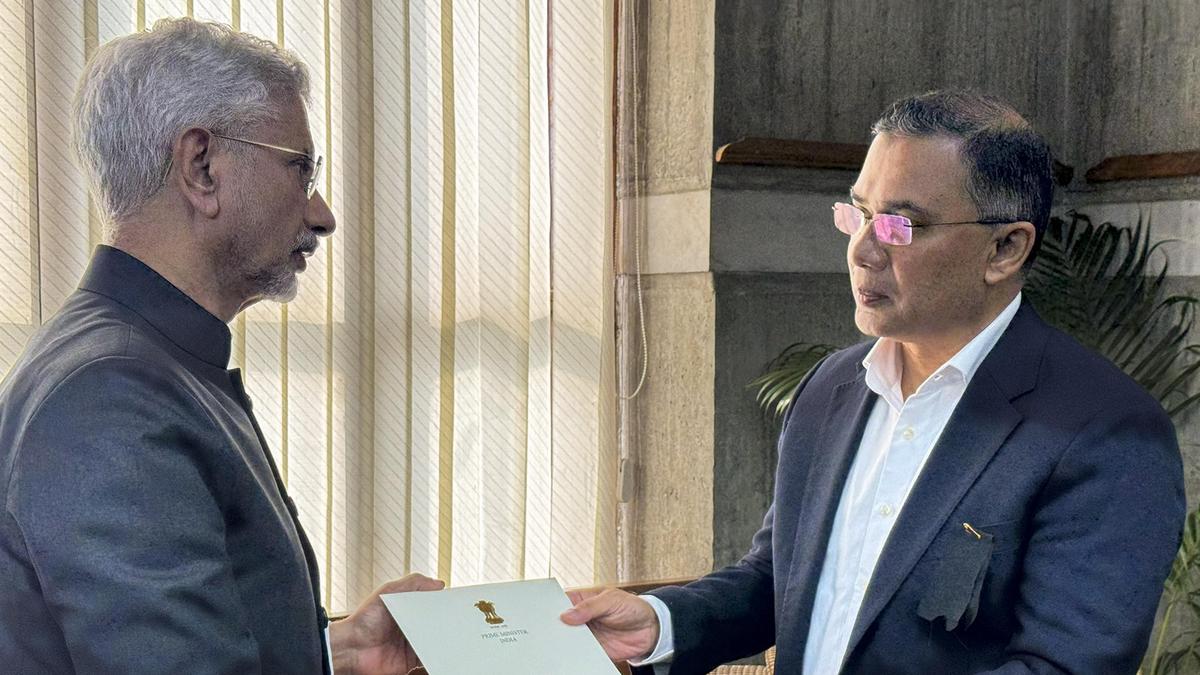
India’s External Affairs Minister Dr S. Jaishankar travelled to Dhaka on Wednesday to meet Tarique Rahman, acting chairperson of the Bangladesh Nationalist Party, and convey condolences from Prime Minister Narendra Modi on the death of former prime minister Khaleda Zia. Jaishankar handed over a personal letter from Mr Modi during the visit to ‘Feroza’, the late Begum Zia’s residence in the Gulshan neighbourhood.
The meeting marked Jaishankar’s first trip to Dhaka since the interim government assumed power on 5 August 2025. It was also the first time an Indian minister has met Tarique Rahman since he returned from nearly 18 years of self-exile in London on 25 December 2025. Senior BNP figures, including Amir Khosru Mahmud Choudhury, were present for parts of the interaction.
India Bangladesh diplomacy in focus
The visit combined a ceremonial condolence with a cautious diplomatic outreach. Officials said Jaishankar’s presence underscored India’s intent to maintain lines of communication with different strands of Bangladesh’s political leadership at a sensitive moment. The meeting came as Khaleda Zia’s mortal remains lay at her home, where family members and BNP standing committee members gathered to pay their last respects.

Khaleda Zia had been a prominent figure in Bangladesh’s politics since the early 1970s. Her late husband, President Ziaur Rahman, emerged as a military and political leader following the country’s independence, and Begum Zia herself led the BNP through multiple terms in office. Her death has drawn regional attention, with delegations and senior figures travelling to Dhaka to attend funeral rites.
Pakistan’s delegation included Sardar Ayaz Sadiq, speaker of the National Assembly, who arrived to participate in funeral prayers. Diplomatic sources had earlier said Pakistan’s foreign minister might attend, but Mr Sadiq represented his country at the service. The presence of regional representatives underscores the funeral’s broader diplomatic significance.
Analysts noted that the tone and timing of Jaishankar’s meeting were important. The interim government, installed in August after mass protests that led to the removal of the previous administration, has prompted a recalibration of diplomatic engagement from several capitals. India has signalled an interest in steady relations with Dhaka while avoiding moves that might be seen as interference.
For New Delhi, the personal element of the condolence letter was significant. Mr Modi last met Begum Zia in June 2015 during an early visit to Dhaka as prime minister, and the letter and Jaishankar’s mission were presented as gestures of respect rather than as formal policy announcements. Still, the encounter offers an opening for cautious diplomatic exchanges as Bangladesh’s political landscape evolves.
As Bangladesh mourns, observers will watch how bilateral ties progress in the coming weeks. The visit did not yield public statements on future cooperation, but it reinforced India’s priority of maintaining channels with key Bangladeshi political actors at a moment of national transition.
Key Takeaways:
- India’s External Affairs Minister S. Jaishankar met BNP acting chair Tarique Rahman in Dhaka to deliver Prime Minister Narendra Modi’s condolence letter after the death of Khaleda Zia.
- Jaishankar’s visit, his first to Dhaka since the interim government took charge, signals renewed India Bangladesh diplomacy amid political change in Bangladesh.
- The meeting took place at Begum Zia’s residence and was attended by senior BNP figures; regional representatives, including Pakistan’s speaker, also travelled to pay respects.








