











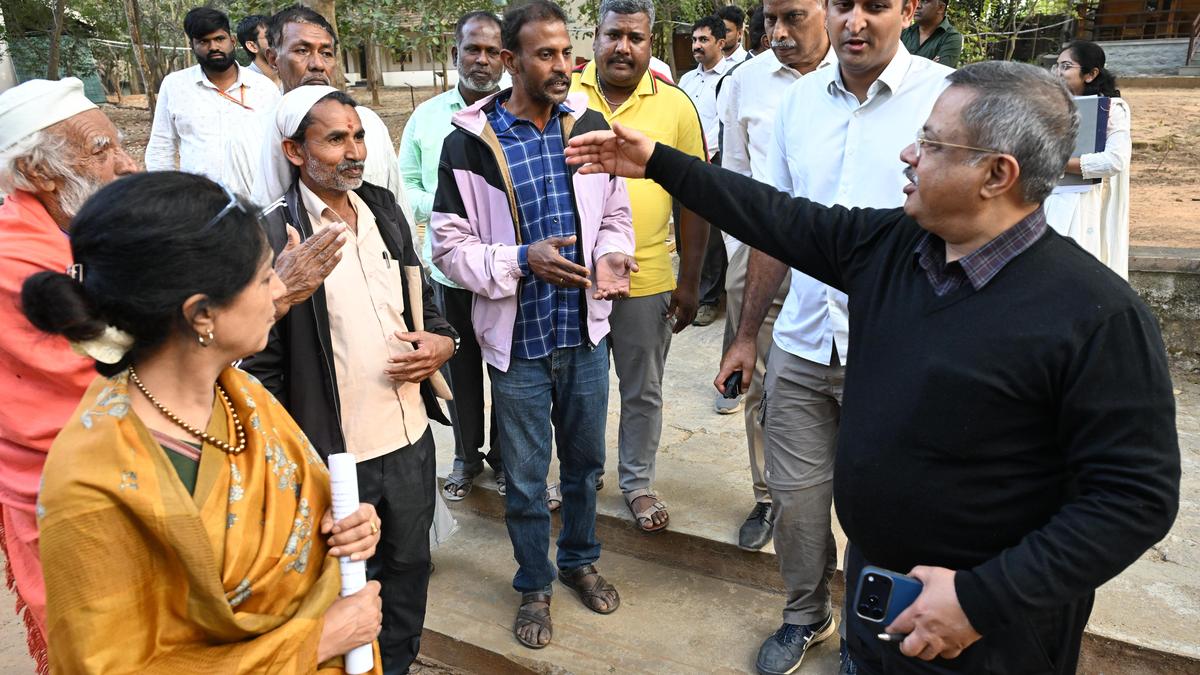
Chandra Prakash Goyal, a member of the Central Empowered Committee (CEC) constituted by India’s Supreme Court, visited Bannerghatta National Park (BNP) on Friday to meet local farmers, petitioners and forest officials as part of an inquiry into changes to the park’s Eco-Sensitive Zone (ESZ).
Bannerghatta National Park ESZ review and concerns
The visit follows a petition challenging the reduction of the ESZ around BNP. Petitioners contend that the final notification issued in 2020 differs from the earlier 2016 notification and that the reduction excludes ecologically critical areas, including established elephant corridors. They argue that applying a uniform one-kilometre ESZ norm fails to reflect site-specific ecological requirements.
Mr Goyal conducted a field visit to interact directly with those affected and gather evidence for the CEC report to be placed before the Supreme Court. He was accompanied by senior Forest Department officials, including Principal Chief Conservator of Forests and Head of Forest Force Meenakshi Negi, who briefed the committee on local conservation issues and the rationale behind the notifications.

“Bannerghatta is a very important national park for Karnataka,” Mr Goyal said. He noted the petition highlights variations between the 2016 and 2020 notifications and that the differences may be detrimental to wildlife, particularly elephants. The case has been transferred to the CEC so the committee can prepare a report for the court.
The next hearing is scheduled for 7 January, and Mr Goyal said the CEC will submit its recommendations ahead of that date. He added the committee will aim to give the report an ecological balance while addressing legal and administrative concerns.
Questions about illegal mining around BNP also arose during the visit. Mr Goyal reiterated that mining is banned within one kilometre of a national park or any protected area, and that local administration would take action if operations fell inside the restricted zone.
Local farmers raised separate but related issues. Somashekar, from Kadajakkanahalli village, said Anekal taluk was once known as the ragi bowl of Karnataka but has seen shrinking arable land due to encroachment. Another farmer, Shivashankar of Hindalwadi village, claimed politicians were permitting large-scale housing colonies that violate environmental norms and erode traditional livelihoods.
The CEC’s fact-finding visit is likely to focus on reconciling conservation priorities with the rights and livelihoods of local communities. Any recommendations the panel makes to the Supreme Court could affect future land-use decisions, mining permissions and development approvals around Bannerghatta National Park.
The case highlights a broader tension between development pressures and environmental protection that many Indian protected areas face. How the CEC and the court resolve differences between the 2016 and 2020 ESZ notifications will be closely watched by conservationists, local residents and policymakers.
Key Takeaways:
- Central Empowered Committee member Chandra Prakash Goyal visited Bannerghatta National Park to assess changes to the Eco-Sensitive Zone ahead of a Supreme Court hearing.
- Petitioners argue the 2020 ESZ notification reduced protection compared with 2016, potentially affecting elephant corridors and other ecologically critical areas.
- Forest Department officials briefed the CEC; the panel will submit a report to the Supreme Court before the hearing on 7 January.
- Local farmers raised concerns about shrinking arable land, illegal mining and large-scale housing developments near the park.








