











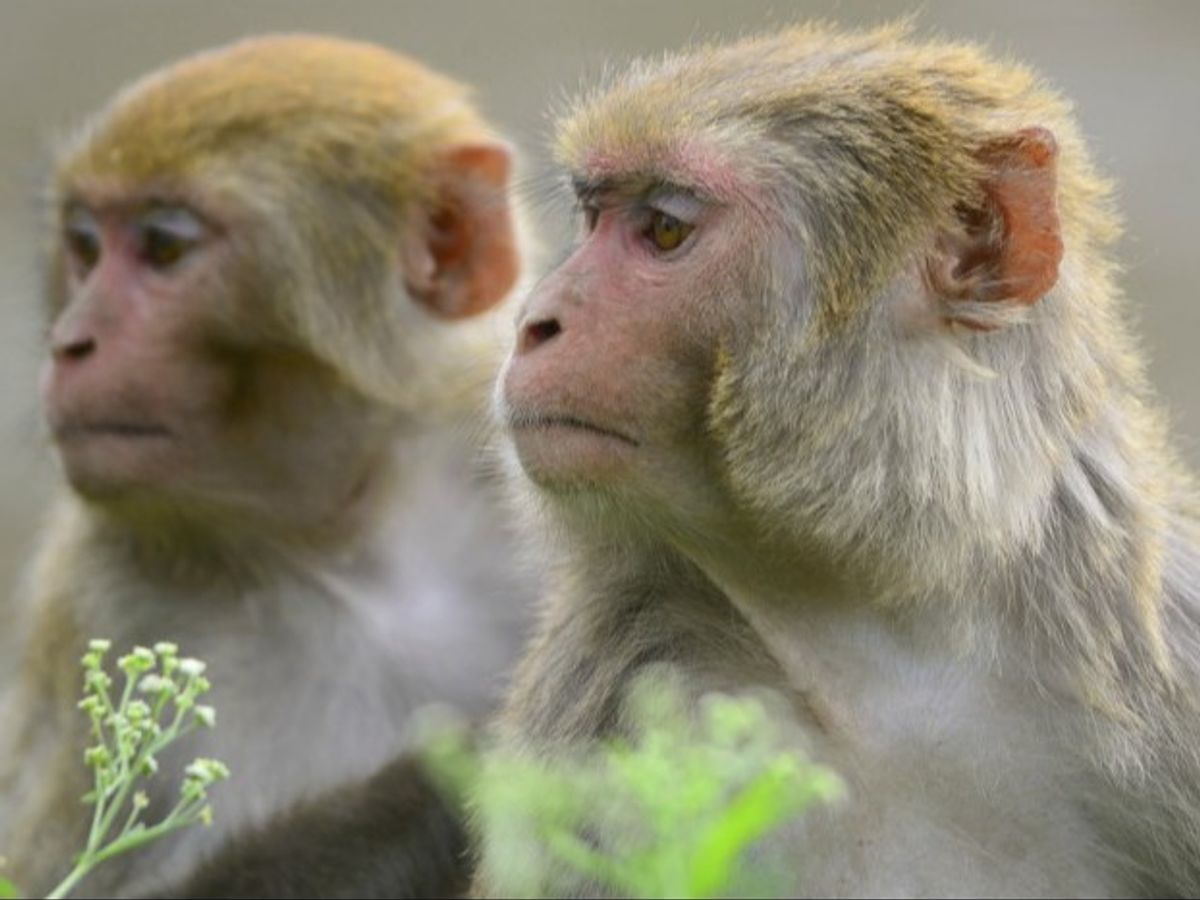
The Delhi government has moved to tackle a persistent monkey problem at the state assembly by recruiting people who can mimic the calls of langurs to scare off rhesus macaques and other monkeys. Officials from the Public Works Department (PWD) say the scheme aims to protect property and ensure the safety of ministers, legislators and staff without harming the animals.
Delhi monkey control: How the langur-call teams will operate
Under a new tender issued by the PWD, the administration intends to employ trained personnel to recreate langur vocalisations in and around the assembly complex. Each recruited worker will be assigned to an eight-hour shift, covering both working days and Saturdays, and will be expected to operate in teams. Officials added that, where appropriate, a live langur will accompany the personnel to enhance deterrence.
Authorities said dozens of monkeys frequent the assembly precincts, often damaging wiring and dish antennas and posing a potential risk to those on site. “Monkeys regularly jump on cables and equipment and have caused damage. There are also legitimate security concerns for officials and visitors,” a senior official said, describing the measure as pragmatic and humane.

Previous attempts to deter monkeys included installing langur cut-outs and statues around sensitive locations. Those efforts saw mixed results: while the cut-outs were used around the capital during the 2023 G20 summit and on approaches to key hotels and venues, monkeys eventually became accustomed to the static figures and sometimes even perched on them.
The new approach seeks to combine behavioural deterrence with on-site personnel trained in animal handling protocols. The PWD has stipulated that staff will receive appropriate equipment and training, and that supervisors will monitor compliance with safety and discipline standards. Insurance cover and oversight arrangements will be in place for the recruited workers.
Municipal authorities and wildlife experts consider the strategy a humane option compared with lethal or injurious methods. By simulating the alarm calls of natural langur predators, the teams aim to trigger an instinctive flight response among the monkeys, reducing their presence without causing harm.
The decision follows high-profile incidents that underscored the problem. In 2017, a monkey entered an assembly session unexpectedly, briefly disrupting proceedings. During the 2023 G20 summit, Delhi authorities deployed langur cut-outs and manually managed monkey populations along main routes and in the Lutyens’ zone to protect visiting delegations and dignitaries.
Officials said they will review the scheme’s effectiveness and refine tactics as needed. They also noted that long-term solutions will include improved waste management and physical measures to prevent monkeys from accessing sensitive infrastructure. The aim is to combine immediate deterrence with policies that address the root causes of human–wildlife conflict in urban areas.
For now, the PWD tender marks a pragmatic step toward reducing disruptions at one of the capital’s most important civic sites while maintaining animal welfare standards. If the initiative proves successful, similar measures could be considered at other vulnerable government and public locations across the city.
Key Takeaways:
- Delhi administration plans to hire personnel trained to mimic langur calls as part of a Delhi monkey control initiative around the state assembly.
- Trained staff will work in eight-hour shifts; officials say the measure is humane and non-lethal, with supervision and insurance cover.
- Authorities previously used langur cut-outs during the 2023 G20 summit, and past incidents — including a 2017 monkey entry into the assembly — prompted renewed action.








