











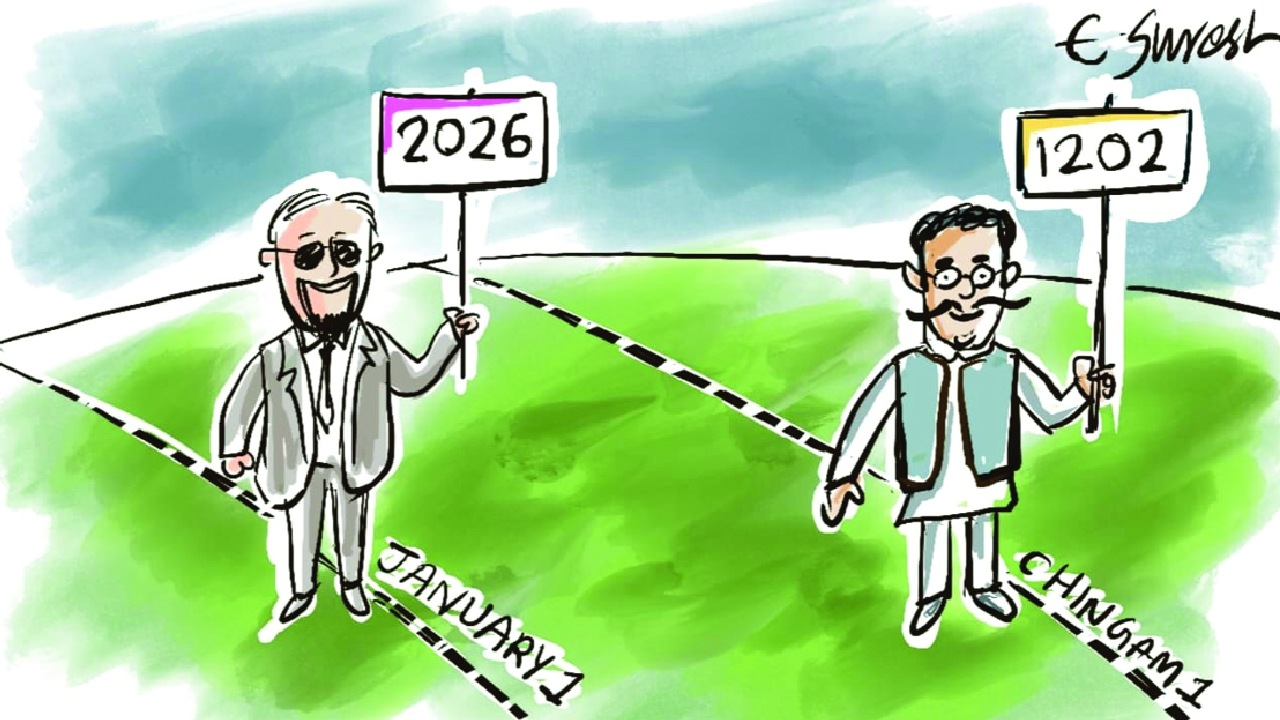
As India balances global engagement with its own civilisational inheritance, a debate over which New Year to observe has gained fresh traction. The Gregorian New Year on 1 January is widely celebrated in urban India, but many commentators and cultural leaders argue that the Hindu New Year, observed across regions in March and April, better reflects the subcontinent’s seasonal cycles, agricultural rhythms and spiritual traditions.
Supporters of wider recognition for the Hindu New Year say the issue is more than nostalgia. They point out that the Gregorian calendar was adopted for administrative convenience during colonial rule and does not mark any natural transition in the Indian climate. By contrast, the Hindu New Year generally coincides with the arrival of spring when trees blossom and daylight increases. That timing makes it a logical moment for communal renewal and practical planning in agrarian communities.
Hindu New Year India: timing and traditions
The Hindu system of timekeeping is based on detailed astronomical observation. Calendars such as Vikram Samvat, Shaka Samvat and a range of regional systems were developed to synchronise human activity with solar and lunar cycles. Across India the new year appears in many local forms: Gudi Padwa in Maharashtra, Ugadi in Karnataka and Andhra Pradesh, Baisakhi in Punjab, Pohela Boishakh in Bengal and Vishu in Kerala are each rooted in local agricultural and cultural calendars.

These festivals share common themes. Families gather, elders give blessings, prayers are offered, and charitable acts are encouraged. Rituals vary: some communities mark the day with special foods, others with processions or symbolic household decorations. The celebrations focus on gratitude, hope and social solidarity rather than the consumer-driven late-night revelry associated with 31 December.
India already recognises the Shaka Samvat as the national civil calendar and uses it in official documents alongside the Gregorian system. Yet the presence of a national calendar has not translated into wide public observance. Advocates say this gap can be narrowed by practical measures: clearer public messaging, inclusion of traditional calendars in school curricula, and cultural events promoted by civic bodies and government offices.
Policy-makers in other nations with long civilisations offer instructive examples. China, Iran and Thailand maintain visibility for traditional new-year festivals while remaining fully integrated into the global economy. Cultural recognition of timekeeping does not hinder international engagement; rather, it can strengthen domestic identity and civic cohesion.
Those calling for greater emphasis on the Hindu New Year stress that the aim is not to reject the Gregorian calendar. India’s modern institutions and global connections rely on an international standard for commerce and diplomacy. The proposal is to observe traditional calendars in parallel, ensuring that cultural practices that teach ecological awareness and ethical reflection remain part of public life.
Public institutions, educational bodies and cultural organisations can play a leading role by issuing official messages, hosting programmes that explain the scientific and seasonal basis of traditional calendars, and celebrating regional festivals in ways that engage urban as well as rural populations. Such steps would help younger generations understand why these observances matter and how they relate to practical concerns like agriculture, weather and community welfare.
Reaffirming the Hindu New Year in public life would be an act of cultural confidence, not insularity. It would recognise a system of timekeeping developed over centuries while keeping India open to global exchange. For many, the Hindu New Year offers a chance for reflection, renewed ethical commitment and a practical alignment of civic life with nature’s cycles. As India charts its future, integrating that heritage into public life would be a visible expression of continuity and civic pride.
Key Takeaways:
- The article argues for greater public recognition of the Hindu New Year to align civic life with seasonal and cultural rhythms.
- It contrasts the colonial origins of the Gregorian calendar with indigenous timekeeping systems such as Vikram Samvat and Shaka Samvat.
- Hindu New Year India celebrations around March–April reflect ecological renewal and strengthen family and community bonds.
- Public institutions, education and cultural programmes are urged to promote these traditions alongside global calendars.








