











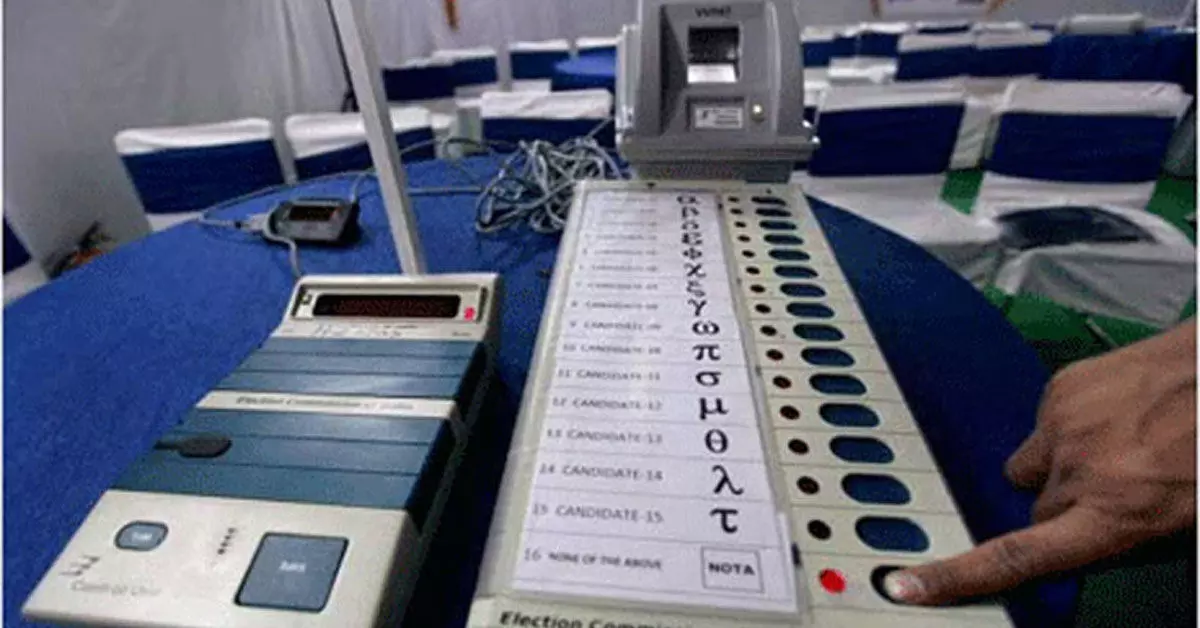
A survey released in Karnataka claiming strong public confidence in electronic voting machines (EVMs) has sparked a political row over timing, methodology and perceived bias. The report, attributed to the state’s oversight and assessment authority, said 83.61 per cent of respondents expressed full trust in EVMs. The sample comprised 5,100 people across 102 legislative assembly constituencies in Bangalore, Mysore, Belgaum and Kalaburagi divisions.
EVM trust in India: survey timing and questions over neutrality
Opposition leaders immediately challenged the report, arguing that it offers a misleading picture because the survey was carried out in May 2025, before a series of public events that sharpened doubts about EVM security. Congress leaders note that Rahul Gandhi held repeated press conferences alleging EVM hacking and electoral fraud in August 2025 and later, and that scepticism grew after the recent results in Haryana and Maharashtra.
Congress spokespersons have accused the survey’s sponsors of presenting an outdated finding as current evidence of public faith in EVMs. “Why release an older survey now, at a time when doubts are at their height, unless the aim is to create false confidence?” a party representative said. The charge has widened into a political debate over whether institutions are being used to shore up credibility.

The poll was conducted by Mysore-based NGO Grassroots Research and Advocacy Movement (GRAAM), led by Dr R. R. Balsubrahmanyam. Congress figures highlighted Dr Balsubrahmanyam’s public admiration for Prime Minister Narendra Modi, including a book that praises him, and argued that this background undermines the perceived impartiality of the research.
State minister Priyank Kharge sought to clarify the government’s position, saying the survey was not commissioned or approved by the state administration. “This is not a government survey,” he told reporters, while adding that the Election Commission had requested the CEO of the state to work with the NGO to carry out the exercise. Critics questioned whether a credible, neutral report could reasonably be expected from actors with political or personal links to central figures.
Experts and commentators have pointed out several technical concerns. A sample of 5,100 across 102 constituencies yields an average of about 50 respondents per seat, which may not capture local variations or sufficiently represent diverse demographics. The timing of fieldwork, framing of questions and the absence of a transparent methodology or raw data disclosure have all been raised as issues that would merit independent scrutiny.
The controversy highlights a broader challenge for electoral institutions. While the report aims to reassure voters about the security and reliability of EVMs, its reception shows that reassurance depends not only on results but on how those results are gathered and communicated. In a charged political environment, any claim about public trust will be measured against subsequent events and the extent to which stakeholders view the data as impartial.
Calls for clarity are growing. Analysts and some civil society figures say an independent audit of the survey methodology, public release of the questionnaire and raw data, and replication by neutral research bodies would be necessary steps to restore public confidence in findings. Until such transparency is provided, political opponents are likely to treat favourable polls with scepticism and use the episode to press for clearer, verifiable assurances on EVM security.
The Karnataka episode underscores the delicate balance between presenting data to reassure the public and ensuring that data itself survives political scrutiny. For the Election Commission and civic groups alike, the lesson is that credible communication requires more than headline figures; it requires accountability in how those figures were produced.
Key Takeaways:
- Survey released in Karnataka claims 83.61% public confidence in EVMs based on 5,100 respondents across 102 constituencies.
- The Congress party questions the timing and neutrality of the May 2025 survey amid rising doubts over EVMs following later allegations and press conferences.
- The poll was conducted by GRAAM, led by Dr R. Balsubrahmanyam, prompting allegations of bias due to his reported views.
- State leaders stress the survey was not government commissioned and critics call for transparent methodology and independent verification.








