











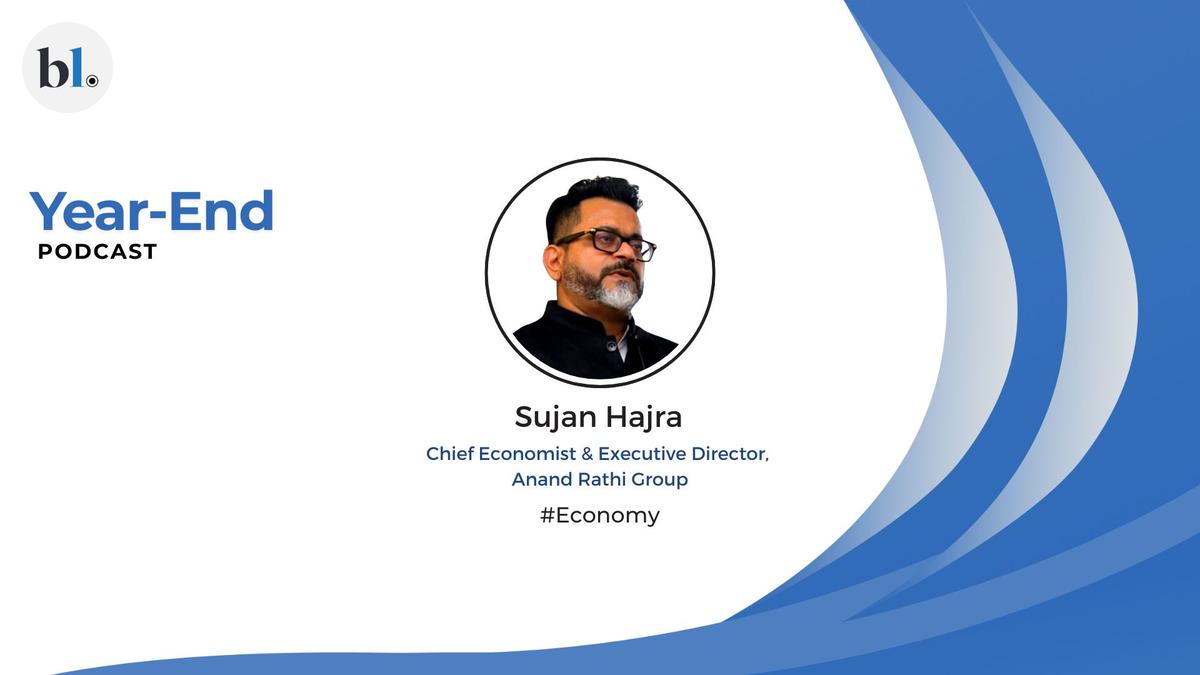
India is set to close 2025 with a mixed but broadly constructive economic picture, as tax revenue shortfalls are largely balanced by one-off receipts and sustained public capital spending. Economists project growth of between 6.5 and 7 per cent in 2026–27 while inflation is expected to moderate to roughly 3.5–4 per cent after base-year revisions.
India economic outlook
Gross tax collections are projected at about 94–95 per cent of budget estimates, implying a shortfall of roughly ₹1–1.1 trillion. That revenue gap, however, is being offset by higher-than-anticipated transfers from the Reserve Bank of India and dividends and payouts from public sector enterprises, keeping the fiscal deficit near the government’s 4.4 per cent target.
“The fiscal position is tighter on the revenue side but manageable once higher non-tax receipts are taken into account,” said an economist on the Year-Ender podcast hosted by BusinessLine. The net effect is a fiscal stance that supports the authorities’ announced targets without forcing abrupt policy shifts.

One of the key supports to demand is robust government capital expenditure. Large public investment programmes are continuing to underpin infrastructure growth, from transport projects to energy and urban development. These projects are sustaining activity in construction and related sectors, even as private investment remains subdued.
Private expenditure has been held back by capacity utilisation that is estimated at around 70–75 per cent. With firms operating well below full capacity, there is less immediate pressure to expand investment. Global headwinds have also constrained business sentiment, delaying fresh commitments by private firms.
Looking ahead to FY27, analysts are optimistic about a return to stronger growth once global conditions stabilize and capacity utilisation improves. The projected 6.5–7 per cent growth rests on continued government capital spending, a gradual pick-up in private investment and stable monetary conditions that keep inflation within a 3.5–4 per cent band.
Policy makers face a delicate balancing act. Sustaining public investment helps close infrastructure gaps and supports short-term demand, but it also requires careful management of financing sources. The reliance on central bank dividends and state-owned enterprise payouts to bridge revenue shortfalls is effective in the near term but may not be repeatable every year.
Monetary policy is likely to remain aligned with the inflation outlook. With inflation forecast to ease following base-year changes, the Reserve Bank has scope to maintain an accommodative stance, provided inflation stays within the anticipated range and global commodity pressures do not resurge.
For businesses, the immediate implication is a continuation of decent growth in public-led sectors while private capex waits for clearer signals on demand and utilisation. For households, controlled inflation and public investment in services and infrastructure should support job creation and income stability over the coming year.
The Year-Ender discussion, hosted by Shishir Kumar Sinha with economist Ranen Banerjee of PwC, highlights that India’s macroeconomic position remains resilient. Short-term revenue slippages have not derailed fiscal targets, and with careful policy calibration the economy appears set for steady growth into FY27.
Host: Shishir Kumar Sinha. Producers: Rowan Barnett and Prethicshaa Gurumoothy. Published 31 December 2025.
Key Takeaways:
- India economic outlook points to 6.5–7% growth in FY27 with inflation easing to around 3.5–4%.
- Gross tax revenue may reach 94–95% of estimates, leaving a shortfall of ₹1–1.1 trillion covered by higher RBI dividends and PSU payouts.
- Strong government capital expenditure is supporting infrastructure while private investment lags due to 70–75% capacity utilisation and global headwinds.
- Fiscal deficit is expected to remain close to the 4.4% target despite revenue pressures.








