











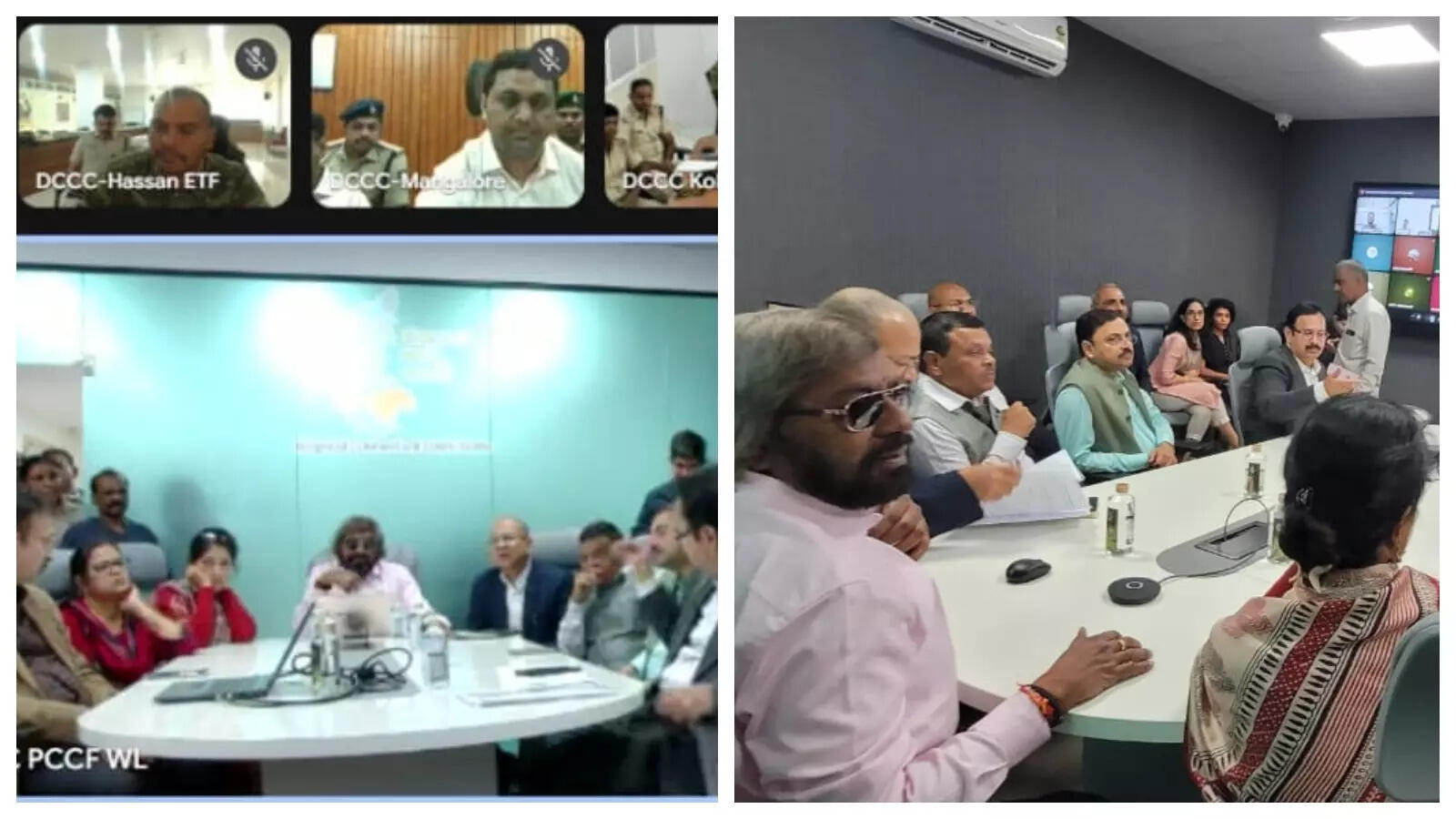
Karnataka has launched a state-level Integrated Command and Control Centre to help curb rising incidents of human-wildlife conflict. Forest, Wildlife and Environment Minister Eshwar B. Khandre inaugurated the command centre at Aranya Bhavan in Bengaluru and announced seven regional control centres designed to speed response, improve coordination and use technology for real-time monitoring.
The new system links citizen reports, field units and senior officials. Residents and people living on forest fringes can call the department helpline on 1926 to report wildlife movements or forest crimes. Calls are logged at the command centre and routed to the appropriate regional unit; senior officers will continue to monitor each case until it is resolved.
Authorities plan to review live video from AI-enabled cameras and analyse satellite imagery at the command centre to provide timely situational awareness. That information will be shared with local offices so they can take preventive steps and reduce risks to people, crops and wildlife.

human-wildlife conflict Karnataka: Integrated monitoring and response
The state command centre will operate in direct coordination with divisional command and control centres (DCCCs) already established or being set up across 11 priority divisions. Earlier this month, DCCCs were opened in the MM Hills wildlife division, Nagarahole tiger reserve, Kali and Madikeri divisions. The latest wave of regional centres covers Bandipur tiger reserve, Bannerghatta National Park, the BRT tiger reserve, Bhadra tiger reserve and the divisions of Hassan, Chikkamagaluru and Mangaluru.
Minister Khandre stressed that technology is essential to manage more than 43,000 square kilometres of forest area in the state, a scale that cannot be secured by staff alone. He said the integrated centre is intended to provide a centralised, tech-driven response capability that complements field personnel.
The minister cited recent wildlife population gains following strict enforcement of the Wildlife Protection Act, 1972. Karnataka now reports significant numbers of elephants and tigers, alongside increases in species such as gaur, sloth bear, leopard, deer and wild boar. While these gains reflect successful conservation, they have been accompanied by higher incidents of crop damage, property loss and occasional threats to human life.
To address these challenges, the command centre will also support the maintenance and monitoring of physical mitigation measures, such as railway barricades, solar fencing and elephant trenches. Satellite analytics and machine learning models are being developed to enhance the centre’s predictive and detection capabilities, allowing faster deployment of response teams where needed.
The initiative is intended to reduce both human casualties and retaliatory actions against wildlife. By leveraging real-time surveillance and a centralised reporting mechanism, authorities aim to improve the speed and quality of responses, helping to protect rural communities while safeguarding wildlife populations.
Senior officials present at the inauguration included the Principal Chief Conservator of Forests and Chief Wildlife Warden Meenakshi Negi, Chief Wildlife Warden P.C. Ray, APCCF Kumar Pushkar and Manoj Rajan, among others. The government has released funds to operationalise the centres and plans further technological enhancements to increase effectiveness over time.
Officials said the integrated command and regional centres represent a significant step in modernising the state’s approach to human-wildlife conflict. By combining citizen reporting, AI-enabled surveillance and satellite data, Karnataka aims to balance conservation gains with community safety and agricultural protection.
Key Takeaways:
- Karnataka has opened a state Integrated Command and Control Centre and seven regional centres to manage human-wildlife conflict using technology.
- The centres connect field reports to departments via a 1926 hotline and route verified complaints to senior officers until resolved.
- AI cameras and satellite imagery will provide timely information to improve human-wildlife conflict Karnataka response and protection measures.
- The initiative covers 11 priority divisions and complements existing measures such as solar fencing, railway barricades and elephant trenches.








