











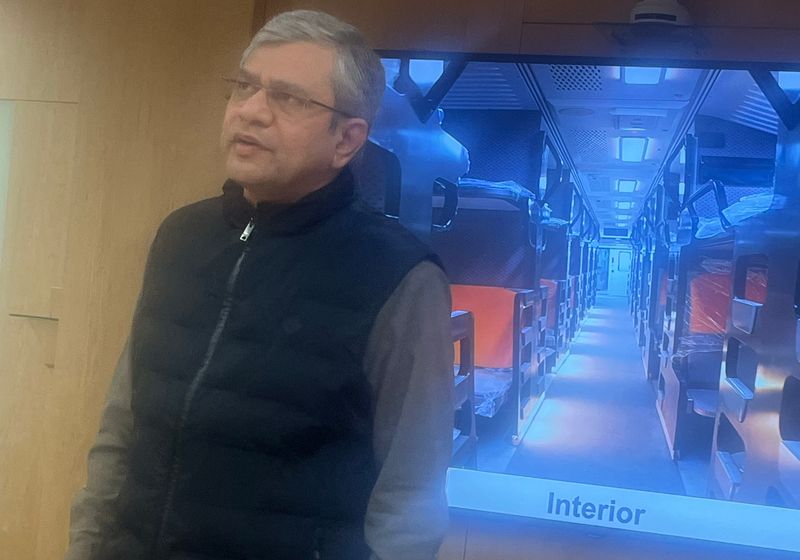
India will soon inaugurate its first Vande Bharat Sleeper Train on the Kolkata–Guwahati route, the government announced, as Prime Minister Narendra Modi prepares to flag off the 16-coach service in the coming days. Union Railway Minister Ashwini Vaishnaw said certification has been completed after a year of finalising the bogie and suspension design.
Vande Bharat Sleeper Train features and tech
The Vande Bharat Sleeper Train will carry 823 passengers and is designed for a top speed of 180 km/h. Officials highlight a new-level suspension system intended to deliver ride comfort they describe as better than the best trains in the world. Other features include redesigned berths and ladders, automatic doors, improved air-conditioning and an air disinfectant system comparable with chair-car technology.
Vaishnaw said the project reflects a broader push to indigenise critical railway components. “The aim is to export propulsion and bogies from India,” he said, adding that 2026 will be a year of reform for the railways. One year was invested in finalising the bogie design and ensuring enhanced suspension performance, he noted.

Service model, fares and passenger experience
The 16-coach train will serve a mix of classes with fares pitched well below typical airfares on the same sector. Officials listed the fares as third AC at Rs 2,300, second AC at Rs 3,000 and first AC at Rs 3,600, while a Guwahati–Kolkata flight typically costs between Rs 6,000 and Rs 8,000. Vaishnaw also indicated a regional catering approach, saying the train leaving Assam will offer Assamese cuisine while services departing Bengal will serve Bangalore cuisine.
Beyond pricing, the sleeper design aims to improve overnight travel comfort for long-distance passengers. The train incorporates automatic doors for safety and convenience, and a revised berth and ladder layout to better suit sleeper operations. The inclusion of advanced air-conditioning and disinfectant technology responds to heightened passenger expectations for hygiene and climate control.
Strategic importance and outlook
The launch represents a notable milestone for India’s push to modernise its passenger rail fleet and to develop exportable rail technologies. By designing key components domestically and securing certification, the Indian rail sector positions itself to compete in both domestic and international markets. Officials have framed the project as part of wider reforms and capacity building set for 2026.
For passengers, the sleeper Vande Bharat promises a cost-effective alternative to air travel on the eastern corridor, combining greater comfort with overnight convenience. For the rail industry, the project offers a testbed for new bogie and suspension designs that, if successful, could be marketed overseas.
As the government prepares the inaugural run, attention will centre on operational reliability, passenger feedback and how quickly the new trains can be rolled out across other long-distance routes. If the service meets expectations, it may accelerate upgrades to India’s long-distance rail services and bolster the country’s case as a supplier of advanced rail technology.
Key Takeaways:
- India will inaugurate its first Vande Bharat Sleeper Train on the Kolkata–Guwahati route, accommodating 823 passengers across 16 coaches.
- The Vande Bharat Sleeper Train offers a design speed up to 180 km/h, new suspension and bogie design, automatic doors and upgraded air-conditioning and disinfectant systems.
- Fares are substantially lower than air travel, with third AC at Rs 2,300, second AC Rs 3,000 and first AC Rs 3,600; ministerial aim includes exporting propulsion and bogies.








