











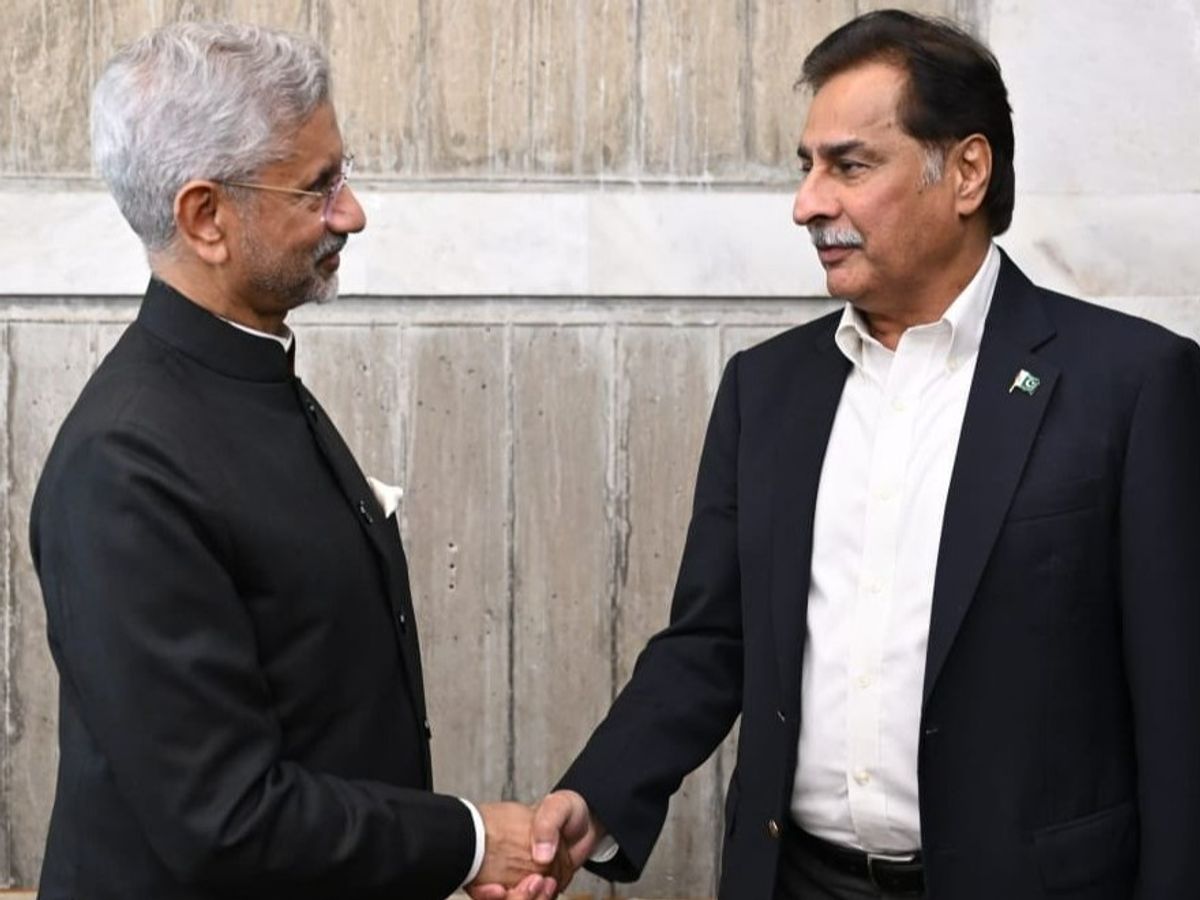
India’s External Affairs Minister S. Jaishankar and Pakistan’s National Assembly Speaker Ayaz Sadiq exchanged a handshake in Dhaka on 31 December, a gesture that has drawn attention after a year of heightened tensions between the two neighbours. The brief meeting took place during the final rites of Bangladesh’s former prime minister Khaleda Zia and included delegations from Nepal, Bhutan and the Maldives.
India Pakistan handshake seen as limited diplomatic outreach
The hand contact was public and cordial, and has been interpreted by many analysts as a necessary, if modest, return to routine diplomatic courtesy at the political level. It followed a turbulent period that included a deadly attack in Pahalgam in April, accusations and counter-accusations over support for cross-border militants, the suspension of the Sindhu water agreement and a brief but intense confrontation between Indian and Pakistani forces in May.
For some observers, the Dhaka meeting represents a pragmatic attempt to keep channels open. Mustafa Haider Syed, a foreign policy analyst in Islamabad, told international media that the timing—at the turn of the year—could be an opportunity to reduce tensions at least at the political level. Former Pakistani ambassador to the United States Sardar Masood Khan described the exchange as a positive step and recalled earlier efforts by third parties to encourage talks when violence surged.

Indian officials, however, continue to stress conditions for meaningful dialogue. New Delhi maintains it will not resume substantive talks until Islamabad takes credible action against militant groups that operate from Pakistani soil and target India. That stance remains the principal barrier to a fuller restoration of official contact.
The symbolic value of the handshake was amplified by contrasts elsewhere. During last year’s Asia Cup cricket tournament, members of the Indian team declined customary handshakes with their Pakistani counterparts, underscoring how deep and varied the strands of strain have become between the countries, from sport to diplomacy.
Experts are divided about whether a single gesture can alter the course of relations. Some Indian analysts caution against attributing excessive weight to the meeting, pointing out that routine etiquette often requires leaders to meet in common forums. Others suggest that small steps, repeated over time, can create the conditions for more substantive talks.
Any durable improvement will depend on progress on security concerns and the restoration of regular diplomatic dialogue. Since May, official exchanges have been all but frozen, and trust deficits remain wide. The Dhaka handshake may be a sign that both sides recognise the need for at least minimal civility in multilateral settings, but it does not resolve the core disputes that have repeatedly derailed negotiations.
For now, the exchange stands as a cautious opening rather than a breakthrough. Observers will be watching subsequent meetings and any follow-up contacts for signs that the gesture was the start of a sustained change rather than an isolated act of courtesy.
Key Takeaways:
- The India Pakistan handshake in Dhaka occurred on 31 December during former prime minister Khaleda Zia’s final rites and drew regional attention.
- Foreign Minister S. Jaishankar and Pakistan parliament speaker Ayaz Sadiq publicly exchanged pleasantries amid delegates from Nepal, Bhutan and the Maldives.
- Experts are divided: some see a modest step towards restoring normal diplomatic contact, while others warn against reading it as a rapid policy shift.
- Core issues, including cross-border terrorism allegations and suspended agreements, remain obstacles to sustained dialogue.








