











Key Takeaways:
- India Russia partnership deepened in 2025 across energy, defence and trade to counteract sanctions and tariffs.
- Key agreements included a RELOS defence pact, defence procurement, and plans for $100bn trade by 2030.
- Cooperation expanded into civil aviation, labour mobility and Arctic projects to diversify strategic ties.

India and Russia strengthened their strategic partnership through 2025 as both countries navigated an increasingly fraught global order. Against a backdrop of Western sanctions on Moscow and rising tariffs on New Delhi, the two governments accelerated cooperation in energy, defence, trade and people-to-people links, culminating in Russian President Vladimir Putin’s tenth visit to New Delhi in December.
India Russia partnership strengthens through sanctions and tariffs
The year began with tough measures against Russia’s oil sector, yet India signalled it would maintain energy ties. New Delhi and Moscow pursued practical arrangements to ensure supplies and to build resilience into energy trade. Officials said these steps stabilised markets and helped both countries plan longer term, with a shared goal of taking bilateral trade to $100 billion by 2030.
Defence cooperation remained a central pillar. The Reciprocal Exchange of Logistics Agreement (RELOS) was finalised to improve coordination on exercises, disaster relief and joint operations, and was ratified in Russia late in the year. India also moved ahead with a range of procurements and co-production plans: upgraded T-72 engines, delivery of a Krivak-class frigate, and renewed interest in advanced Russian air-defence and fighter capabilities.
Defence, industry and civil aviation links
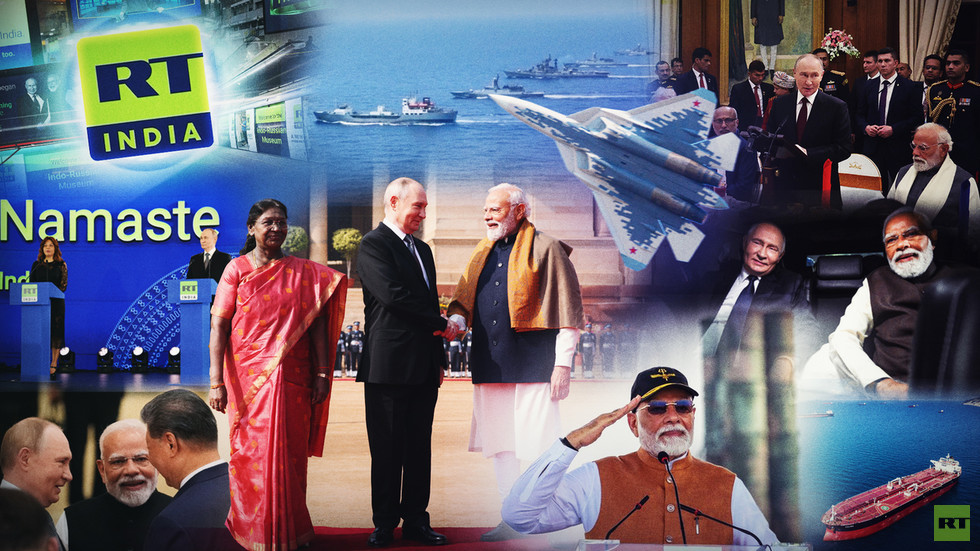
Moscow displayed the Su-57 stealth fighter at Aero India, prompting fresh debate in New Delhi over options for a fifth-generation platform and possible co-development. The BrahMos joint venture expanded production in Lucknow and New Delhi approved a purchase of additional supersonic cruise missiles. India also signed a pact with Russia’s United Aircraft Corporation for local production rights to the SJ-100 passenger jet, a move aimed at easing supply-chain pressures and boosting regional connectivity.
Across the year, joint naval drills in the Bay of Bengal and missile strikes that relied on Russian-acquired air-defence systems underscored the practical interoperability between the two militaries. Technology transfer and local manufacture under the Make in India initiative featured in several deals.
Expanding economic and people links
Political and economic engagement went beyond arms and energy. Ministers agreed to pacts on temporary labour and measures to curb illegal migration, reflecting Russia’s projected need for millions of workers and India’s large working-age population. Negotiations progressed on a preferential trade arrangement with the Eurasian Economic Union that could widen market access for Indian exporters.
The leaders also outlined cooperation in the Arctic and nuclear sectors, focusing on new sea routes and resources such as rare earths. Russia’s icebreaking expertise and India’s maritime training plans point to deeper strategic collaboration on polar navigation and alternative trade corridors.
Media and diplomacy
Media ties grew as RT launched operations timed with the Delhi summit, part of a broader push to amplify Global South perspectives. High-level visits and frequent ministerial contacts reinforced the political will behind the agreements.
As 2026 approaches, both capitals signal that their partnership will broaden beyond traditional areas into manufacturing, civil aviation and labour mobility. The practical orientation of the 2025 agenda aims to reduce vulnerability to external pressure and to create tangible economic and strategic benefits for both nations.








