











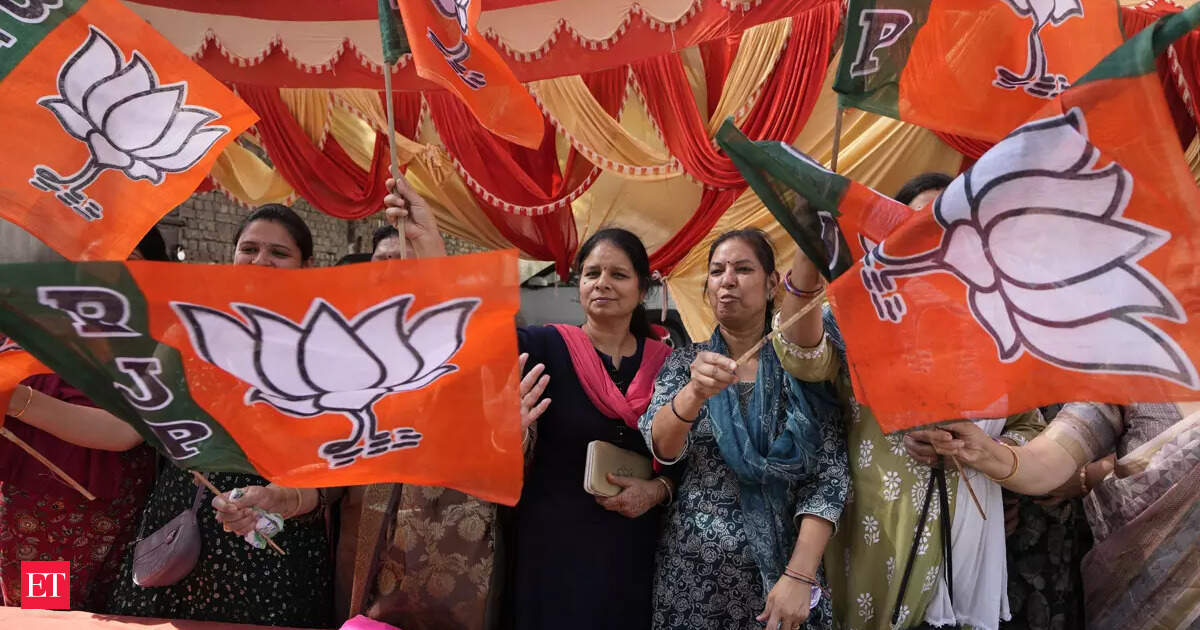
The Bharatiya Janata Party (BJP) ended 2025 with a substantial boost to its national standing after emphatic victories in the Delhi and Bihar assembly elections. The wins, driven by aggressive campaigning, targeted messaging and coalition management, leave the party well placed nationally but facing difficult tests in several southern and eastern states in 2026.
In February the BJP returned to power in Delhi, overturning more than two decades of absence from the capital’s administration by defeating the Arvind Kejriwal-led Aam Aadmi Party. The campaign centred on allegations of corruption within the AAP administration, promises of development and a highly organised ground operation. The party’s focus on governance and anti-corruption messaging resonated with a wide cross-section of voters, helping it reclaim the city assembly.
The BJP’s performance peaked in November with a decisive showing in Bihar, where the National Democratic Alliance won 202 of 243 seats and the BJP emerged as the largest party with 89 seats. The campaign in Bihar appealed to a mix of development promises and reminders of alleged law-and-order failures under previous governments. Announcements such as the inclusion of caste enumeration in the next census also blunted opposition claims of anti-OBC or anti-Dalit policies.

Observers noted that welfare transfers prior to polling may have influenced outcomes in some areas, while legal challenges to the results were largely absent, undercutting opposition allegations of electoral malpractice. The Bihar outcome is particularly significant in a state where caste equations traditionally determine results, and it consolidates the BJP’s influence within its NDA partners.
BJP electoral dominance 2025
Beyond the high-profile assembly results, the BJP made gains in local bodies. In Maharashtra the party secured the largest share of seats across most divisions in recent municipal council and nagar panchayat polls. In Kerala the party improved its civic footprint, signalling a modest inroad in a state long resistant to its national appeal. Yet analysts caution that victories in civic contests do not always translate into assembly-level success, particularly in states dominated by strong regional parties.
Looking to 2026, West Bengal represents the BJP’s most formidable challenge. While the party has become the principal opposition, Mamata Banerjee’s Trinamool Congress remains a powerful force. Union leaders have targeted the TMC on issues of alleged corruption and demographic change, promising stricter border enforcement if elected. Political strategists say that while the BJP’s narrative has gained traction in parts of the state, overcoming entrenched regional loyalty will be difficult.
Tamil Nadu and Kerala are also seen as hard battlegrounds. In Tamil Nadu the BJP seeks a suitable ally to penetrate a Dravidian political environment dominated by the DMK, while Kerala’s complex political dynamics will test the party’s gains from local polls. The party’s internal renewal, signalled by the appointment of a younger national working president, indicates preparations for a longer campaign cycle.
For India’s international partners and the BRICS bloc, a clearer domestic mandate could bring policy continuity and predictability in foreign and economic policy. The BJP’s strengthened position at home may influence New Delhi’s approach to trade, multilateral engagement and regional security. Yet political volatility in key states could still shape the government’s domestic focus and its capacity to project consistent positions abroad.
Key Takeaways:
- BJP consolidated control in 2025 with decisive wins in Delhi and Bihar, signalling strengthened national standing.
- The party’s strategy combined corruption allegations against rivals, targeted welfare transfers and meticulous campaigning to win key electorates.
- Looking ahead to 2026, West Bengal, Assam, Tamil Nadu and Kerala present diverse challenges despite gains in civic polls such as Kerala and Maharashtra.
- Leadership changes and a clearer national mandate could shape India’s domestic stability and its role in BRICS.








