











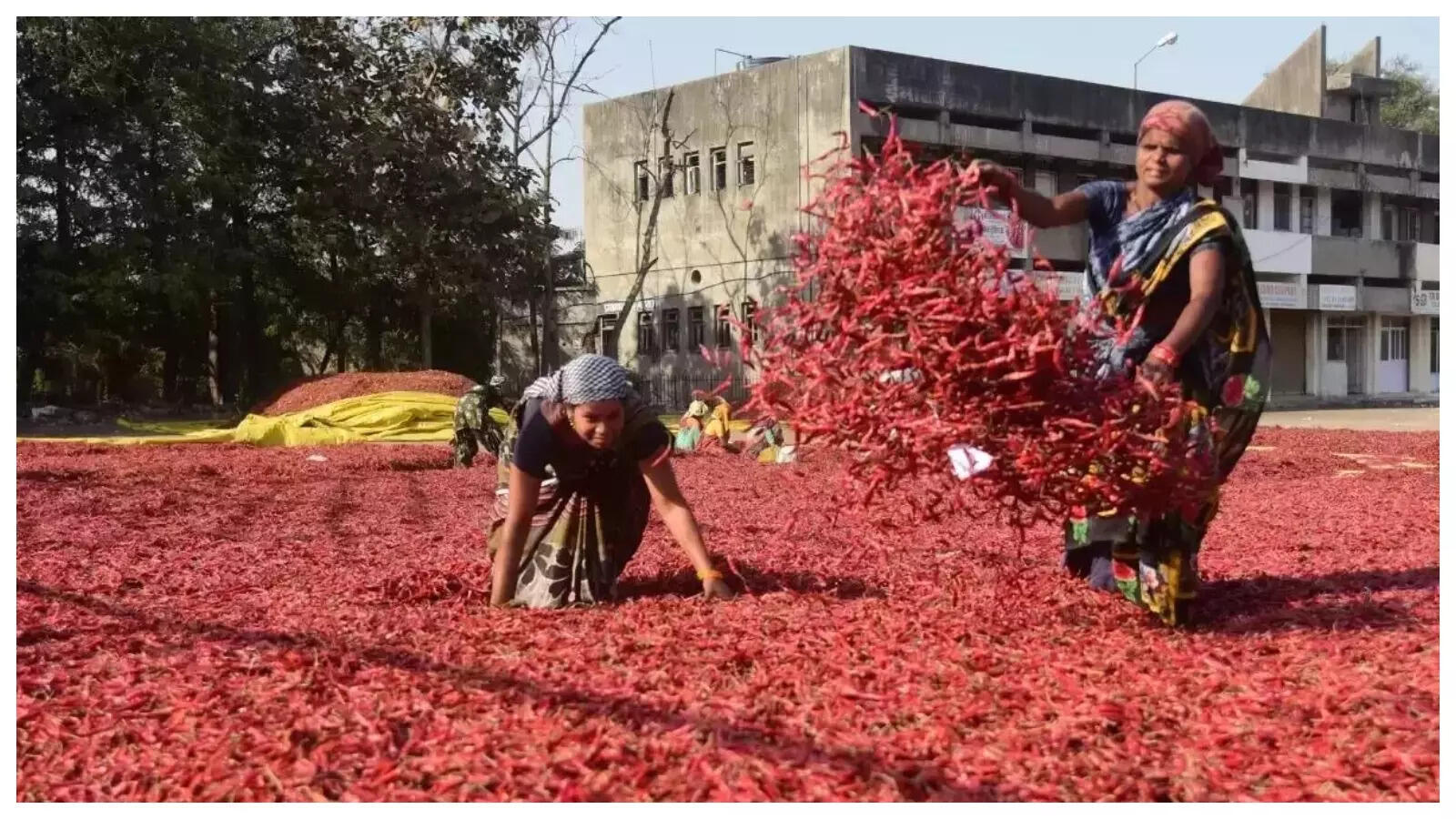
Farmers and traders in Byadagi, Karnataka, are reporting a welcome recovery in red chilli prices at the start of the year after two consecutive years of depressed rates. The improvement is driven by tighter arrivals, reduced acreage and continued demand for high-quality varieties.
Byadagi red chilli prices rise as supply tightens
Local markets that have handled more than Rs 2,000 crore of trade over the past five years are offering significantly better rates to growers compared with the recent past. Traders say the market peaked in 2021–22 when growers received near-record returns, and while that level has not been repeated, current prices represent a meaningful rebound from the lows seen over the last two seasons.
On December 29, traders recorded retail deals of around Rs 50,000 for kaddi (stalk) chillies and more than Rs 60,000 for dabbi (boxed) chillies. In the week to last Friday typical sales ranged from Rs 25,000 to Rs 35,000 for kaddi, Rs 30,000 to Rs 40,000 for dabbi and Rs 8,000 to Rs 15,000 for Guntur varieties. Market participants expect prices to firm further if arrivals remain constrained.

Several factors have reduced local supply. Farmers and traders point to a drop in acreage, crop losses from disease and lower yields. One farmer from Narayanpur said average output per acre fell from about 25 quintals previously to roughly 10–12 quintals this season. Traders also report that seed varietal inflows from other states have been inconsistent, so the usual supply channels have not filled the gap.
“Demand always exists for good-quality chillies and we pay accordingly,” said Sureshgouda Patil, president of the Traders’ Association and a former legislator. He urged farmers to prioritise quality so they can access better prices as markets reward superior produce.
Local traders are calculating that the shortage of traditional local varieties grown across Kundagol, Annigeri, Antur, Bentur, Gadag and surrounding areas could lift prices further. The shortage is not uniform; while some states continue to supply seed-variety chillies, local production of the preferred varieties has shrunk sharply.
Market analysts warn that any increase in arrivals could moderate prices, but for now the balance favours sellers. With limited stocks and steady demand from buyers, high-grade chillies remain sought after. This dynamic is expected to benefit smallholders who have retained quality standing despite reduced acreage.
For the wider agricultural economy, the revival in Byadagi chilli prices offers short-term relief for growers who endured two years of weak returns. If the improved rates hold through the season, this could support rural incomes in the key chilli-growing districts of Karnataka.
Traders say they will monitor arrivals closely over the coming weeks. With firm demand and constrained local supply, Byadagi growers may see sustained price support, provided crop health and quality remain acceptable.
Key Takeaways:
- Byadagi red chilli prices have risen sharply as supply tightens after two years of decline.
- Local yields and acreage have fallen, lifting demand for higher-quality chillies and supporting stronger rates for farmers.
- Recent rates reached Rs 50,000–60,000 for kaddi and Rs 60,000-plus for dabbi, with expectations of further increases as arrivals stay low.








