











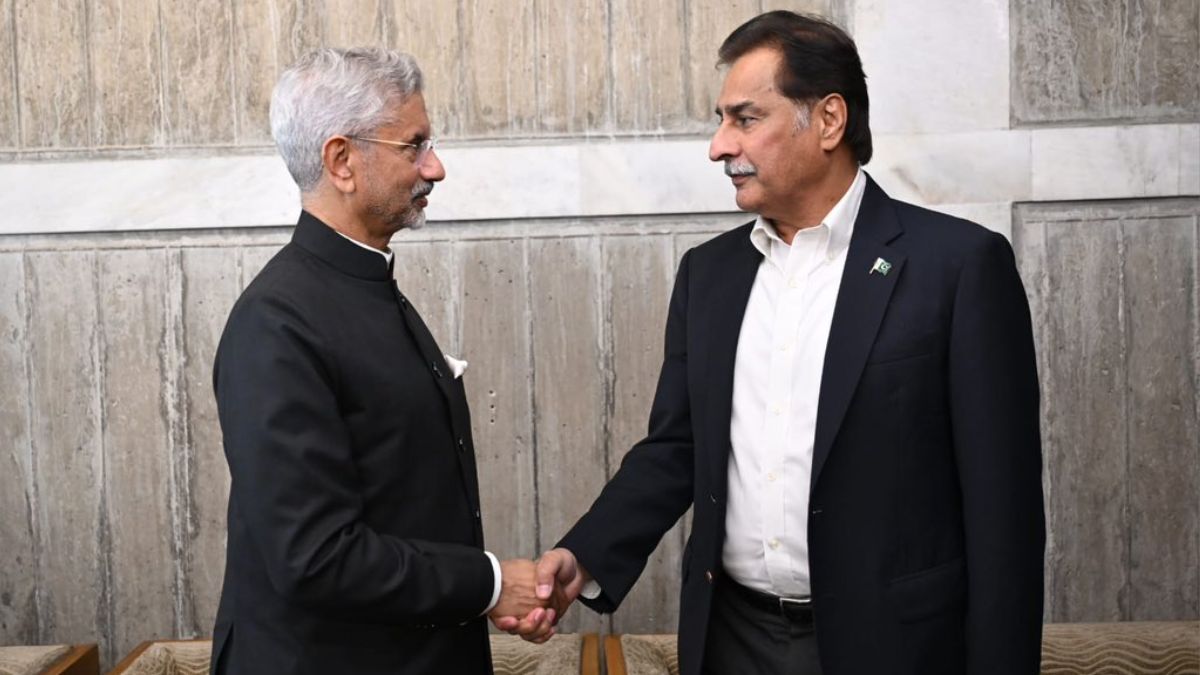
Indian Foreign Minister S. Jaishankar and Pakistan’s National Assembly Speaker Sardar Ayaz Sadiq exchanged a courteous handshake in Dhaka on Wednesday ahead of the funeral of former Bangladeshi prime minister Khaleda Zia. The brief but widely noted interaction was captured in photographs shared publicly by Muhammad Yunus, head of Bangladesh’s interim government, and drew attention across the region.
The meeting took place as dignitaries from across South Asia and beyond gathered in Bangladesh’s capital to pay their respects. The handshake, carried out in a solemn setting, was a restrained diplomatic gesture that underscored the importance of maintaining civil engagement even amid complex bilateral relations.
India Pakistan diplomatic gesture and its regional context
While there was no formal bilateral meeting announced between India and Pakistan on the sidelines of the funeral, the exchange between Jaishankar and Sadiq was interpreted by observers as a sign that diplomatic channels remain open. Moments such as these can carry symbolic weight, signalling an appetite for at least limited cordiality during multilateral or humanitarian occasions.

The photograph posted by Muhammad Yunus on X showed both leaders offering a brief greeting before proceeding with funeral formalities. For many in the region, the image served as a reminder that gestures of politeness can coexist with ongoing political disagreements, and that respectful conduct at high-profile events can help preserve avenues for dialogue.
Khaleda Zia, former leader of the Bangladesh Nationalist Party (BNP), died on Tuesday morning at the age of 80 after an extended illness. She had been hospitalised since 23 November and received treatment for multiple ailments, including infections affecting her heart and lungs. Her passing prompted messages of condolence from leaders across South Asia, including Indian Prime Minister Narendra Modi, who recalled his 2015 meeting with her and noted her influence on India–Bangladesh ties.
The presence of senior representatives from neighbouring countries at the funeral underscored Bangladesh’s role as a focal point for regional diplomacy. Ceremonial occasions can provide rare opportunities for in-person interactions between officials who might otherwise meet only at formal summits or through diplomatic channels.
Analysts said the handshake should not be read as a breakthrough in India–Pakistan relations. However, it does demonstrate that both sides can observe common courtesies in public and refrain from confrontational optics during sensitive moments. Such gestures can be useful in preserving the dignity of diplomatic engagement and keeping lines of communication open.
For Dhaka, the attendance of international delegations at Khaleda Zia’s funeral highlighted the cross-border significance of her political legacy. As Bangladesh prepares for the next phases of its domestic and foreign-policy agendas, these moments of international interaction serve as a reminder of the practical value of measured diplomacy.
In sum, the brief greeting between S. Jaishankar and Sardar Ayaz Sadiq at the funeral was a modest but constructive diplomatic moment. It offered a public example of civility between representatives of two countries with a long and complicated history, and indicated that, at least on ceremonial occasions, respect and restraint continue to guide official conduct.
Key Takeaways:
- Indian Foreign Minister S. Jaishankar and Pakistan National Assembly Speaker Sardar Ayaz Sadiq exchanged a courteous handshake at the funeral of former Bangladeshi prime minister Khaleda Zia.
- The image of the meeting, shared by interim government head Muhammad Yunus on X, highlighted a restrained diplomatic moment during a major regional event.
- India Pakistan diplomatic gesture signals civility and could ease tensions in regional relations amid ongoing diplomatic engagements.
- Khaleda Zia, 80, died after a prolonged illness; leaders across the region, including Prime Minister Narendra Modi, expressed condolences.








