











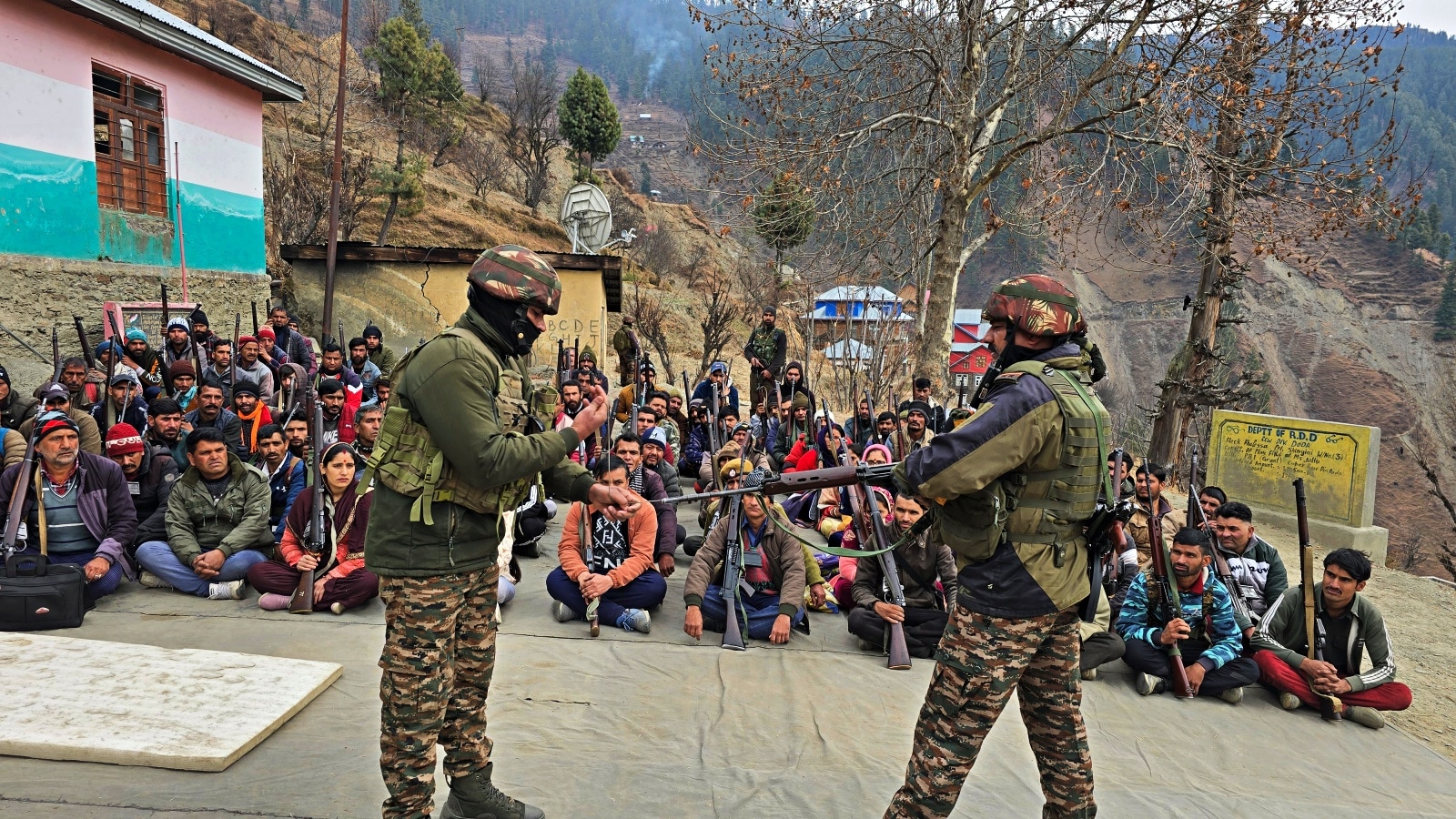
Security forces in Jammu and Kashmir have begun training village defence groups (VDGs) drawn from 17 villages in Doda district to handle automatic weapons and conduct forest patrols in preparation for an anticipated rise in militant activity during the winter months. Officials said the programme forms part of a broader security push across Jammu province to strengthen local defences and improve civil-military coordination.
Village defence training India: aims and structure
According to police sources, the village defence training India initiative provides recruits with instruction in weapon safety and handling, small-unit patrolling techniques, navigation in forested terrain and basic first aid. Sessions are led by paramilitary and police instructors with oversight from district commanders. Trainees are also briefed on legal responsibilities, rules of engagement and procedures for passing intelligence to law enforcement.
Authorities described the approach as pragmatic. Villagers often live in remote areas that are difficult to secure by regular patrols alone, and local knowledge can be decisive in detecting suspicious movements. Police officials said trained VDGs will act primarily as an early-warning force and a force multiplier for security agencies rather than an independent paramilitary unit.

Coordination and safeguards
Officials emphasised that the training comes with clear command-and-control mechanisms. VDGs will operate under the supervision of local police and border security elements and will be deployed only in coordination with security agencies. The state has, officials say, put procedures in place to register arms issued for the programme, maintain inventories and ensure accountability.
Human rights observers have previously warned against the risks of arming civilians without robust oversight. In response, district authorities have stated that the training includes legal briefings and that grievance and oversight mechanisms will be available to reduce the chances of misuse. Police spokespeople said any allegations of abuse will be investigated and that regular audits of arms and deployments will be carried out.
Strategic context
Security forces frequently adjust tactics in Jammu and Kashmir as militant groups alter their operational patterns with the seasons. Winter can bring both increased activity and fresh challenges for surveillance due to difficult terrain and low temperatures. By training local volunteers, authorities aim to reduce response times and expand the reach of patrols across forested and mountainous areas.
Beyond immediate security considerations, officials framed the programme as part of a broader effort to reassure communities and maintain normal economic and social life in affected areas. Local leaders in some villages welcomed the training as a means to protect schools, markets and passage routes that are important to daily life.
Security analysts say community-based measures can be effective when coupled with sustained policing, intelligence operations and development efforts that address local grievances. The success of the village defence training India programme will depend on continued oversight, clear rules of engagement and the integration of civilian defence units within established security frameworks.
As the training continues, district authorities have promised regular updates on outcomes, inventories and any incidents that involve VDGs, underlining their intention to balance enhanced local security with legal and administrative controls.
Key Takeaways:
- Village defence groups (VDGs) from 17 villages in Doda district are receiving arms and patrol training ahead of the winter season.
- Training covers automatic weapons handling, forest patrolling, basic first aid and coordination with police and security forces.
- Officials say the programme aims to improve local resilience against terrorist infiltration while maintaining strict oversight and legal safeguards.








