











The Union Government has set out plans to liberalise open schooling, introduce guidelines that encourage the use of artificial intelligence in teaching, and draft technical education standards designed to improve employment and entrepreneurship outcomes for graduates.
Education Ministry officials said the Viksit Bharat Shiksha Adhishthan (VBSA) Bill, 2025, will provide the regulatory framework to enable many of these changes. The Bill, introduced in the 2025 Winter Session of Parliament, would subsume the functions of the National Council for Teacher Education and reshape oversight of higher and teacher education.
AI in teaching: guidance and teacher preparation
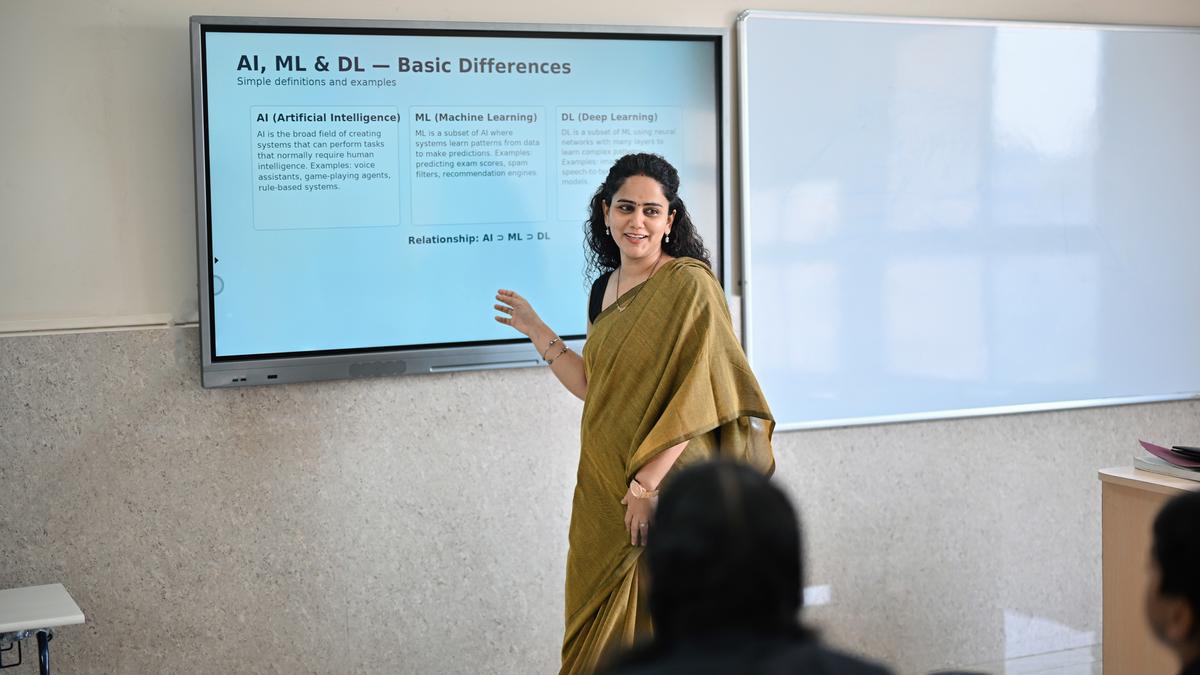
Officials emphasised that AI in teaching must be accounted for in teacher education and classroom practice. The government plans to issue guidelines that will help teachers adopt AI tools responsibly, focusing on pedagogical enhancement rather than replacement. The guidance is expected to cover classroom tools, assessment support, data privacy and teacher training so that educators can use AI to supplement lesson planning and personalise learning.

“There is a need to ensure that standards for technical education are set with a focus on equipping students with the skills to acquire jobs and start entrepreneurships,” a senior Ministry official said, noting that teacher training must reflect the changing role of technology in education.
Technical standards tied to employability
Alongside AI guidance, the Ministry is drafting new technical education standards aimed at making vocational and technical graduates more readily employable and better prepared to launch businesses. The measures will target curricula, industry linkages and certification practices so that course content aligns with labour market needs.
Officials said the VBSA Bill’s wider remit will allow regulators to promote competency-based frameworks and strengthen institutional accountability. That, in turn, should help bridge the gap between classroom training and employer demands.
Expanding and liberalising NIOS
The government also plans to expand the National Institute for Open Schooling (NIOS) system. Currently, open schooling often requires institutes to be linked to formal schools in order to offer courses. Officials are discussing opening pathways so that other institutions, including Industrial Training Institutes, can offer NIOS programmes.
NIOS provides open basic education for learners aged 14 and above, offering certifications equivalent to Classes 3, 5 and 8, as well as secondary, senior secondary, vocational and life-enrichment programmes. Officials argue that widening access to these programmes could reduce school dropout rates by providing flexible pathways to complete secondary education and obtain vocational credentials.
Next steps and timelines
The VBSA Bill was referred to a joint parliamentary committee after objections from the Opposition. While that committee has not yet been constituted, officials expressed hope that the government will bring the Bill back for passage during the Budget Session later this year. Implementation of AI guidance and NIOS reforms is likely to proceed in phases, with pilot projects and collaborations with industry and teacher training institutes.
Education analysts say the combined approach — regulating teacher education, setting technical standards linked to employability, and expanding open schooling — could strengthen India’s human capital. If implemented effectively, the measures may support broader digital inclusion and create clearer routes from learning to work for millions of learners.
Key Takeaways:
- Government will issue guidelines to promote AI in teaching, aiming to support teachers and improve classroom outcomes.
- The Viksit Bharat Shiksha Adhishthan (VBSA) Bill, 2025, would subsume the NCTE and enable new technical education standards focused on jobs and entrepreneurship.
- Plans to expand and liberalise the National Institute for Open Schooling could allow ITIs and other institutes to offer open programmes, reducing dropout rates.
- Officials expect the Bill to be taken up for passage after parliamentary committee consideration, aiming for action during the Budget Session.








