











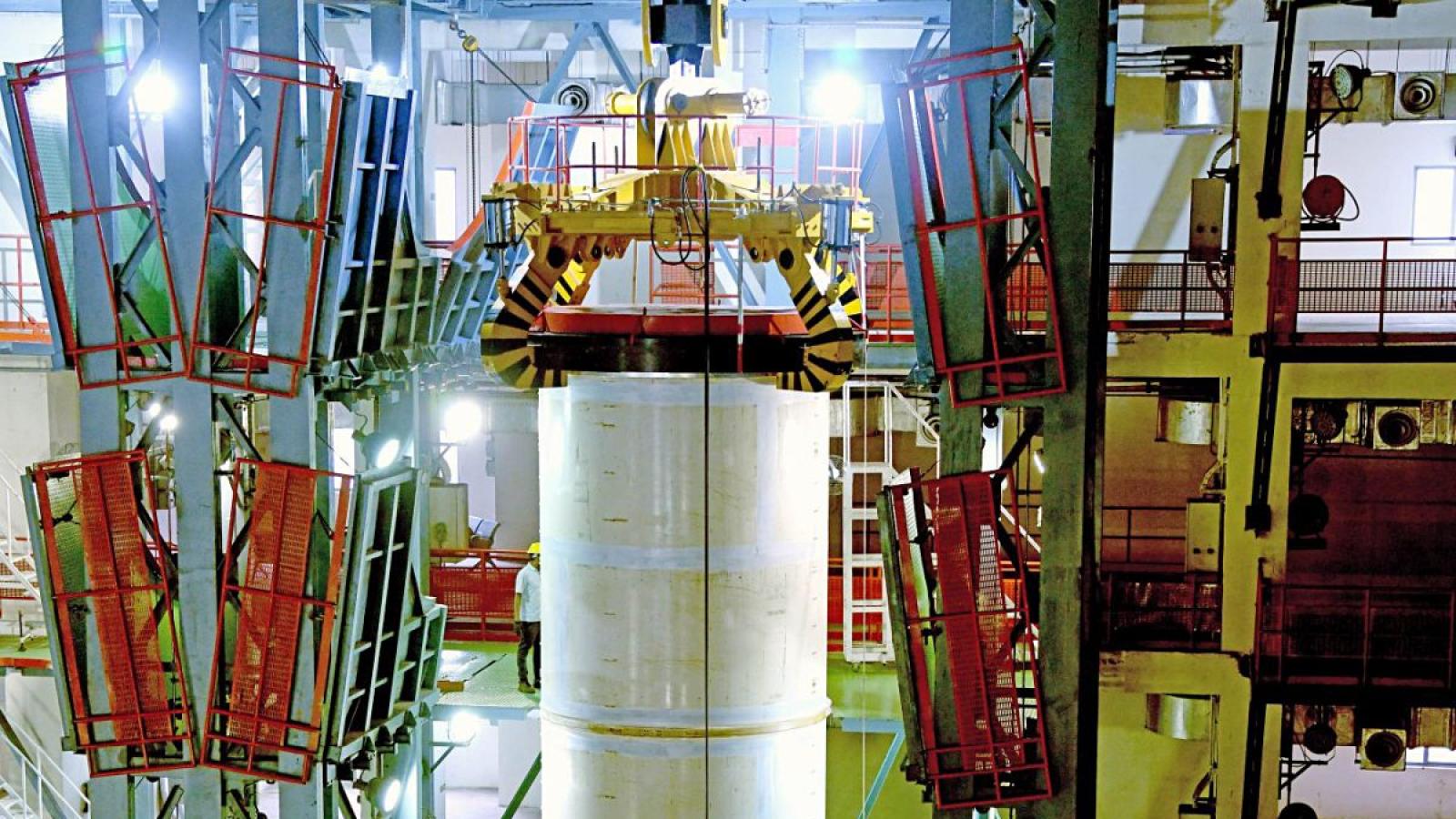
India will conduct an uncrewed test flight of its Gaganyaan spacecraft in 2026, a key step towards the country’s first crewed mission expected in 2027. The Indian Space Research Organisation (ISRO) has begun assembly work on the Human-Rated Launch Vehicle Mark-3 at the Satish Dhawan Space Centre, and officials say the planned G-1 orbital test with humanoid robot Vyommitra is due by March.
Gaganyaan 2026 to validate crew systems with Vyommitra
The G-1 mission will carry Vyommitra, a humanoid robot designed to simulate astronaut tasks and test life-support and safety systems in low Earth orbit. Science and Technology Minister Jitendra Singh told Parliament that the uncrewed flight will validate critical crew systems before a human flight is attempted, with a crewed mission targeted for 2027.
ISRO’s work on human-rated launch hardware is advancing alongside efforts to broaden India’s space industry. Assembly of the Human-Rated Launch Vehicle Mark-3 began on the 10th anniversary of the LVM3-X/CARE milestone, signalling the agency’s commitment to meeting the timelines for Gaganyaan 2026.

Industry leaders say the programme will benefit from recent milestones, including Group Captain Shubhanshu Shukla’s voyage to the International Space Station on a commercial flight. Shukla’s 18-day mission conducting microgravity experiments provides practical experience that ISRO can apply to its astronaut training and mission planning.
Private sector momentum and satellite technology demonstrations
India’s private launch companies are also stepping up. Agnikul Cosmos plans reusable launchers and aims to convert upper stages into functioning satellites to cut launch costs, a move the company says will improve launch economics. Srinath Ravichandran, Agnikul’s founder and CEO, said the firm expects regular monthly launches after its first orbital success.
Skyroot Aerospace unveiled its Vikram-1 rocket with the backing of government leaders and is preparing commercial payload launches. Other start-ups, including Digantara Industries and GalaxEye, have outlined plans to expand surveillance and Earth observation constellations, while SSLV is scheduled to place a dedicated small satellite before March 2026.
ISRO will also test new satellite technologies. The TDS-01 mission will demonstrate a high-thrust electric propulsion system, quantum key distribution capability, and an indigenous travelling wave tube amplifier. Officials note that an all-electric satellite can reduce propellant mass dramatically, lowering launch costs and increasing payload efficiency.
Additionally, the Polar Satellite Launch Vehicle (PSLV) will be built by Hindustan Aeronautics Limited and Larsen & Toubro under contract, marking a broader industrial role in launcher production and signalling growth in domestic manufacturing capacity.
Wider impact for India and partners
Leaders in the Indian Space Association say 2026 will consolidate gains in quantum technologies, hypersonpectral constellations and engine manufacturing, while highlighting the need for private launch infrastructure. The combined push by ISRO and private firms aims to position India as a major supplier of launch services and satellite solutions for defence, agriculture, disaster management and commercial users.
With Gaganyaan 2026 intended to demonstrate human-rated systems and private firms preparing regular launches, the coming year could be one of the most consequential yet for India’s space sector.
Key Takeaways:
- India will conduct an uncrewed Gaganyaan test flight in 2026, validating crew systems with humanoid robot Vyommitra.
- Gaganyaan 2026 aims to clear the way for a crewed mission as early as 2027.
- Private firms Agnikul, Skyroot and others are preparing orbital launches, while ISRO pushes new satellite technologies.
- Demonstrations such as the TDS-01 and PSLV-N1 advances strengthen India’s sovereign space capabilities.








