











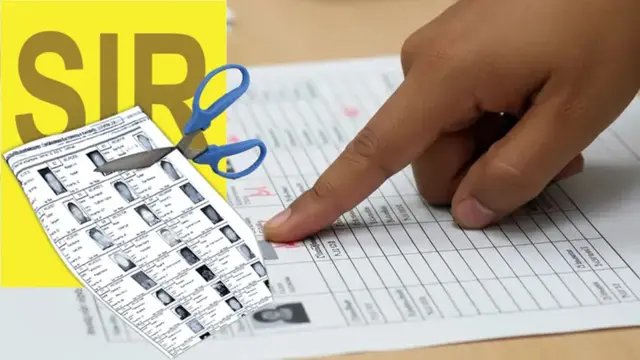
Political parties in Kerala have urged election officials to avoid conducting hearings wherever possible during an intensive review of the electoral rolls, saying the process should be reserved for cases that cannot be resolved otherwise. The appeal came at a meeting convened in Thiruvananthapuram by Chief Electoral Officer Rathan U. Khelkar, where representatives from several parties outlined practical steps to reduce hardship for vulnerable voters.
Voter list hearings must be limited to unavoidable cases
Speakers told the meeting that hearings should be held only when unavoidable during the voter list re-verification. The request reflects concerns arising from recent booth reorganisation, which left many families split across different polling booths. Party representatives argued that the election authorities should use family grouping to remedy such errors wholesale, rather than summon individual voters to hearings.
“When a householder’s family members have been assigned to different booths after reorganisation, it is far more efficient to correct the roll through family grouping than to conduct multiple hearings,” said CPI(M) state committee member and MLA D.K. Murali. He added that the current time limits for conducting hearings are impractical for officials attempting comprehensive mapping.

Proposals to protect elderly, bedridden and expatriate voters
Attendees urged that elderly voters, non-resident Indians and those confined to bed should be exempted from appearing at hearings. Party representatives said alternative mechanisms must be used to confirm their entitlement without requiring them to travel or attend formal proceedings.
There were also strong calls to ensure that those born outside India who are entitled to be on the rolls are not disadvantaged by the absence of an online facility. Participants alleged that the lack of a web-based option for overseas-born Indians suggested a deliberate oversight and demanded prompt corrective action.
Administrative changes sought to speed up SIR completion
Several procedural changes were proposed to make the Special Intensive Revision (SIR) more effective. Speakers recommended that the list of people given notice for hearings be handed directly to booth-level officers, and that Electoral Registration Officers (EROs) be empowered to make final decisions in routine cases. There was a suggestion to allow booth-level officers greater latitude to collect application forms — specifically Form 6 and Form 6A — directly from applicants, an activity that party representatives said is currently not happening consistently.
Political parties asked to be included more formally in the SIR process so they can have confidence in the outcome. The inclusion of booth-level officers in hearings was described as essential to ensure transparency and speedy resolution of disputes.
The meeting drew a wide range of party representatives, with C. Lenin, Rajaji Mathew, M.K. Rahman, J.R. Padmakumar, Adv. Muhammad Sha, Adv. Mathew George, K. Anandakumar, K.J. Jayakumar and K.S.A. Halim among those taking part. The participants emphasised cooperation between the election machinery and political parties to ensure that the voter roll revision proceeds without causing unnecessary inconvenience to large or vulnerable sections of the electorate.
Key Takeaways:
- Political parties in Kerala urge hearings only when unavoidable during intensive voter list re-verification.
- Proposal to apply family grouping and exempt elderly, bedridden voters and expatriates from hearings.
- Calls for greater authority for EROs, direct involvement of BLOs in notices, and inclusion of party representatives in SIR completion.
- Concerns raised over lack of online facilities for overseas-born Indians and failure to collect Form 6/6A directly by BLOs.








