











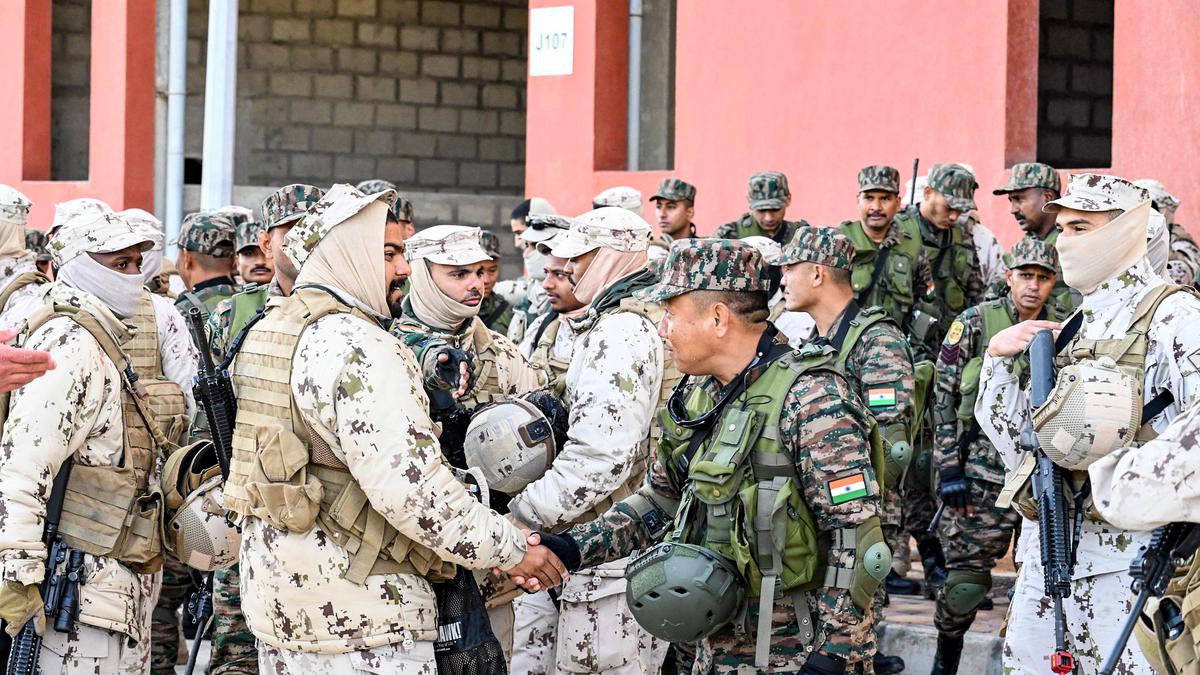
India and the United Arab Emirates have concluded the second edition of their bilateral training exercise, DESERT CYCLONE II, following a closing ceremony at Al-Hamra Training City in Abu Dhabi. Conducted between 18 and 30 December, the exercise brought together personnel from the Indian Army and the UAE Land Forces for intensive urban operations training designed to improve joint operational readiness.
India UAE joint military exercise enhances interoperability
The programme combined classroom instruction with extensive field-based drills to foster interoperability, mutual trust and coordinated action in built-up environments. Training scenarios emphasised sub-conventional operations conducted under a United Nations mandate, reflecting both nations’ commitment to stability and responsible multinational engagement.
Practical exercises included fundamentals of urban combat, marking and clearing of buildings, improvised explosive device awareness, casualty evacuation and first aid. Troops also rehearsed comprehensive mission planning and executed heliborne operations, air assault missions and platoon-level joint assault drills. These activities focused on standardising tactics, techniques and procedures between the two militaries.

The Indian contingent comprised 45 personnel, mainly drawn from a battalion of The Mechanised Infantry Regiment. The UAE contribution came from the 53 Mechanised Infantry Battalion. Despite the relatively small size of the Indian detachment, the exercise featured complex, integrated scenarios that tested command and control, logistics and combined manoeuvre in dense urban terrain.
Room intervention and building clearance exercises formed a central component of the field training. Both forces exchanged and practised drill sequences to ensure compatibility of methods and operating tempos. The progressive nature of the drills allowed commanders to assess unit performance at squad, platoon and battalion levels and to refine coordination for joint offensive and defensive operations.
Medical evacuation and first aid training were prioritised to reduce battlefield casualties during urban engagements. Troops carried out casualty evacuation drills under simulated fire and conducted triage and stabilisation procedures before transfer to higher-level medical facilities. The inclusion of IED awareness training addressed one of the principal threats in sub-conventional operations, with both armies sharing detection and mitigation techniques.
Exercise DESERT CYCLONE II culminated in integrated demonstrations of offensive and defensive urban operations, showcasing improved combined operational readiness. Observers noted clear improvements in communication protocols and joint mission planning, outcomes that will benefit future multinational deployments and peace-support operations under UN frameworks.
Beyond tactical gains, the exercise strengthened professional bonds between the Indian Army and the UAE Land Forces. Exchanges between personnel and staff resulted in closer working relationships and an enhanced understanding of each other’s operational practices. Defence officials on both sides described the exercise as a practical step towards deeper defence cooperation and increased stability in the region.
With security challenges in urbanised theatres becoming more complex, bilateral training such as DESERT CYCLONE II offers participating states a controlled environment to develop interoperable capabilities. The two countries have signalled their intention to continue such engagements, with future iterations likely to expand scope and scale to address evolving threats and multinational cooperation requirements.
Key Takeaways:
- India UAE joint military exercise DESERT CYCLONE II ran from 18–30 December in Abu Dhabi, reinforcing defence ties.
- Training combined classroom instruction and field drills focused on urban operations, IED awareness and casualty evacuation.
- Forces practised room intervention, building clearance, heliborne operations and platoon-level assaults to boost interoperability.
- The exercise involved 45 Indian personnel and the UAE 53 Mechanised Infantry Battalion, preparing both armies for future multinational operations.








