











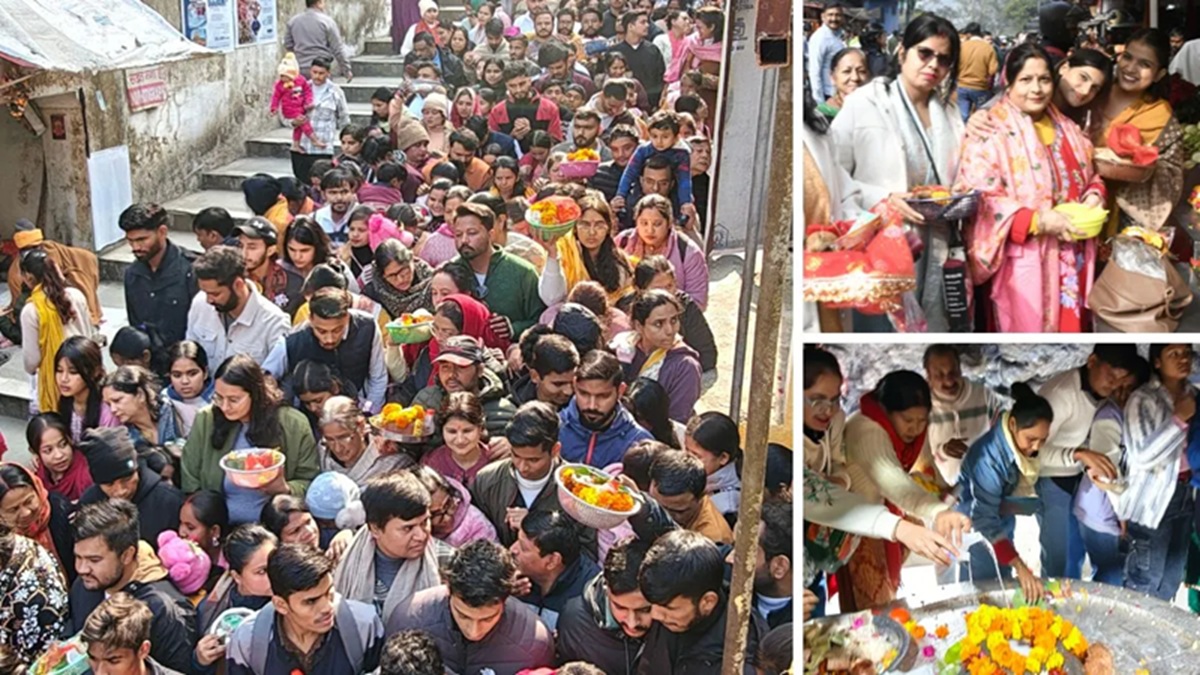
Devotees across India greeted 2026 with devotional fervour as millions visited major temples and shrines on New Year’s Day. Pilgrimage centres from Ayodhya to Amritsar, Varanasi to Vaishno Devi reported long queues, extended opening hours and a celebratory mood as worshippers offered prayers for peace, prosperity and health in the year ahead.
India New Year temple visits saw record attendance at major shrines
In Ayodhya, hundreds of devotees began queuing before dawn, with the temple authorities forced to start darshan earlier than scheduled to manage the rush. By mid-afternoon more than 150,000 people had visited Ram Lalla, and organisers reported the figure reached roughly 300,000 before gates were temporarily closed. Officials increased the number of queues to expedite entry and minimize wait times.
Varanasi’s Kashi Vishwanath witnessed sustained crowds through the day. From early morning until late evening, approximately 550,000 devotees attended, taking part in rituals and the morning and evening aartis. Ujjain’s Mahakaleshwar also recorded strong turnout, with over 300,000 visitors participating in the traditional bhasma aarti and other ceremonies.

Chitrakoot and surrounding pilgrimage sites reported exceptionally high footfall. Swami Kamtanath Dham in Chitrakoot said about one million devotees performed parikrama and sought blessings on the first day of the year. In Jammu and Kashmir, despite light rain and cool winds, queues stretching one to one-and-a-half kilometres formed to reach the Vaishno Devi shrine.
Mathura and Vrindavan welcomed devotees to temples including Banke Bihari and the Govardhan and Barsana shrines, where enthusiasm remained high throughout the day. In the north-west, Khatu Shyam, Nathdwara and Mehandipur Balaji saw steady streams of visitors. Himachal Pradesh’s Shaktipeeths such as Naina Devi, Chintpurni and Jwalamukhi drew large numbers, demonstrating strong regional participation.
Authorities at many sites reported logistical enhancements to handle the surge. Temple administrations and district officials co‑ordinated to provide extra security staff, medical aid posts, drinking water points and temporary shelter. In some locations darshan timings were extended, additional queues were opened and crowd-control measures were reinforced to ensure orderly movement and safety for pilgrims.
Orchha, often referred to locally as part of Bundelkhand’s religious circuit, welcomed more than 100,000 devotees to receive blessings at the Ram Raja temple. The day had a festival-like atmosphere at most religious tourism hubs, with families and groups travelling from nearby towns and states to begin the year with communal prayer.
Religious tourism officials noted the New Year rush provides significant local economic activity for towns dependent on pilgrimage travel. Hotel occupancy, transport services and small businesses around temple precincts reported increased demand linked to the surge of visitors.
Overall, the first day of 2026 saw India’s major temples and pilgrimage centres operate at near-capacity as devotees observed traditional rites. With special arrangements in place, authorities sought to balance the celebratory spirit with safety and crowd management as the nation began the new year.
Key Takeaways:
- India New Year temple visits drew millions to major pilgrimage sites nationwide.
- Ayodhya, Varanasi, Ujjain, Vaishno Devi and Chitrakoot recorded unusually high footfall.
- Authorities implemented extended darshan hours, extra queues and crowd-control measures for safety and convenience.
- Religious tourism created festival-like atmosphere across states despite cold weather in the north.








