











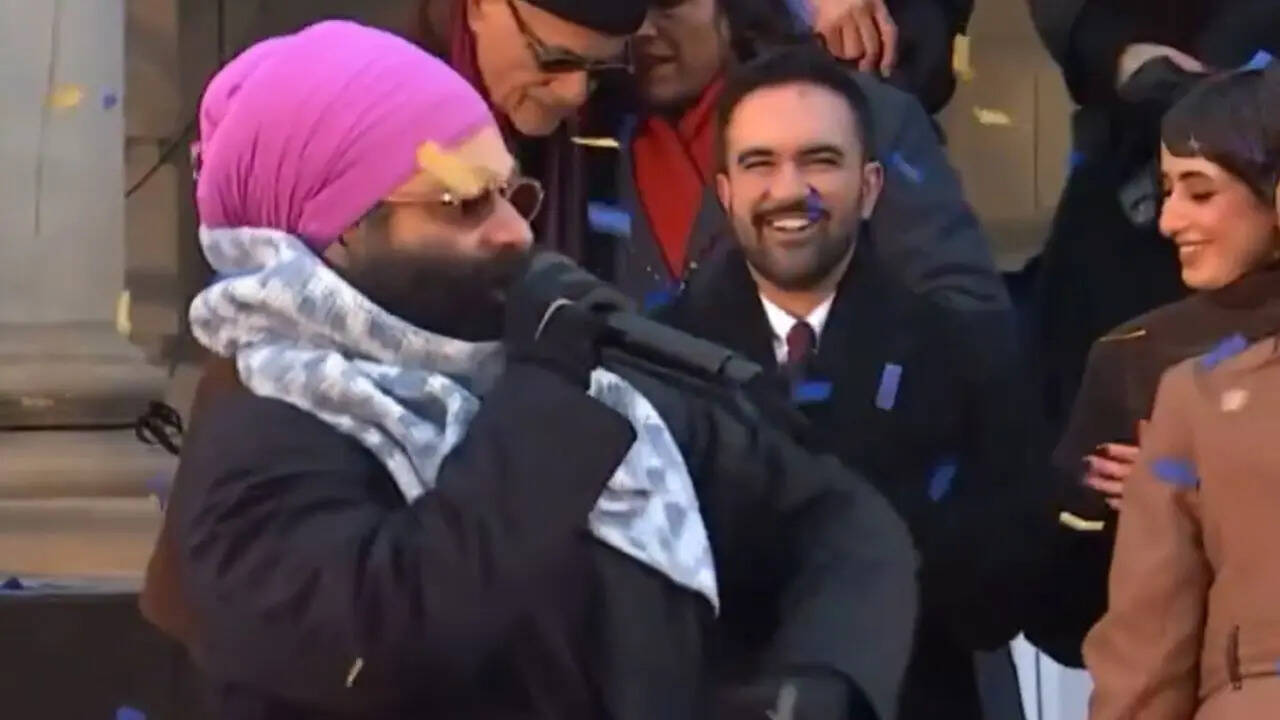
Zohran Mamdani ended his inauguration ceremony in New York with a lively Punjabi performance that quickly circulated online, sparking both celebration and debate. Mamdani, 34, who was sworn in on 1 January as the city’s first Muslim mayor, chose to close the official proceedings with Toronto-based artist Babbulicious performing the Punjabi track “Gaddi Red Challenger.” Videos of the performance were widely shared across social platforms, capturing a festive scene of dancing and applause.
Punjabi music at Mamdani inauguration draws mixed reactions
Supporters framed the musical finale as an extension of Mamdani’s outreach to the South Asian community. Born to an Indian mother and a Ugandan father of Indian origin, Mamdani has frequently acknowledged his heritage during the campaign. He released campaign material in Hindi and even played the Bollywood hit “Dhoom Machale” during his victory speech, signalling a deliberate effort to engage the desi diaspora in New York.
The inauguration programme itself reflected the city’s diversity. DJ mOma opened the event, followed by Grammy-winning singer Lucy Dacus performing “Bread and Roses.” Actor Mandy Patinkin and the PS22 Chorus of Staten Island delivered a rendition of “Somewhere Over the Rainbow,” while Babbulicious provided the closing set. Hundreds of attendees, including Mamdani and his wife, Rama Duwaji, were seen enjoying the performance, and the atmosphere on video appeared celebratory.

Yet the online reaction was not uniformly positive. As clips of the closing performance gained traction, some social media users criticised the choice of Punjabi music for an inaugural civic ceremony. Alongside messages of praise and celebration, the viral videos attracted critical and, at times, hostile comments. The episode quickly became part of a broader conversation about identity, representation and inclusivity in public life.
Political analysts say such moments often provoke strong responses because they blur the lines between personal identity and public office. “When a public official foregrounds a particular cultural reference, it can be seen as an embrace of diversity by some and exclusionary by others,” one commentator observed. In Mamdani’s case, supporters argue the performance reflected New York’s pluralism and his connection to communities that have historically had limited visibility in city leadership.
Organisers described the musical choices as intentional, designed to represent a range of voices and traditions that make up the city. The inclusion of a Punjabi artist, alongside performances by established American musicians and community choirs, aimed to showcase cultural plurality rather than prioritise any single tradition.
For many attendees captured on camera, the music offered a moment of joy and unity. For critics, it raised questions about the role of cultural signalling in official ceremonies. Whatever view one takes, the performance has ensured that Mamdani’s inauguration will be remembered not only for its historic political milestone but also for its cultural boldness.
As the debate continues online, the episode highlights how cultural expression in political settings can amplify discussion about representation and belonging. Mamdani’s choice to celebrate his heritage in such a visible way confirms that cultural identity will remain a component of his public persona as he begins his term.
Key Takeaways:
- Zohran Mamdani closed his inauguration with a live Punjabi performance, highlighting his South Asian roots and outreach.
- The Punjabi music at Mamdani inauguration drew widespread attention online, receiving both praise and criticism.
- The ceremony showcased New York’s multicultural lineup, underscoring inclusivity in public events.








